
Watering & care · Sep 2, 2026 · By Nell Harding
Your Lawn Has About Six Mows Left
Cool season grass runs on a thermostat, and the thermostat is about to click off. Here is the week by week countdown from six mows out to the last cut, and the two jobs that matter more than any of the mowing.
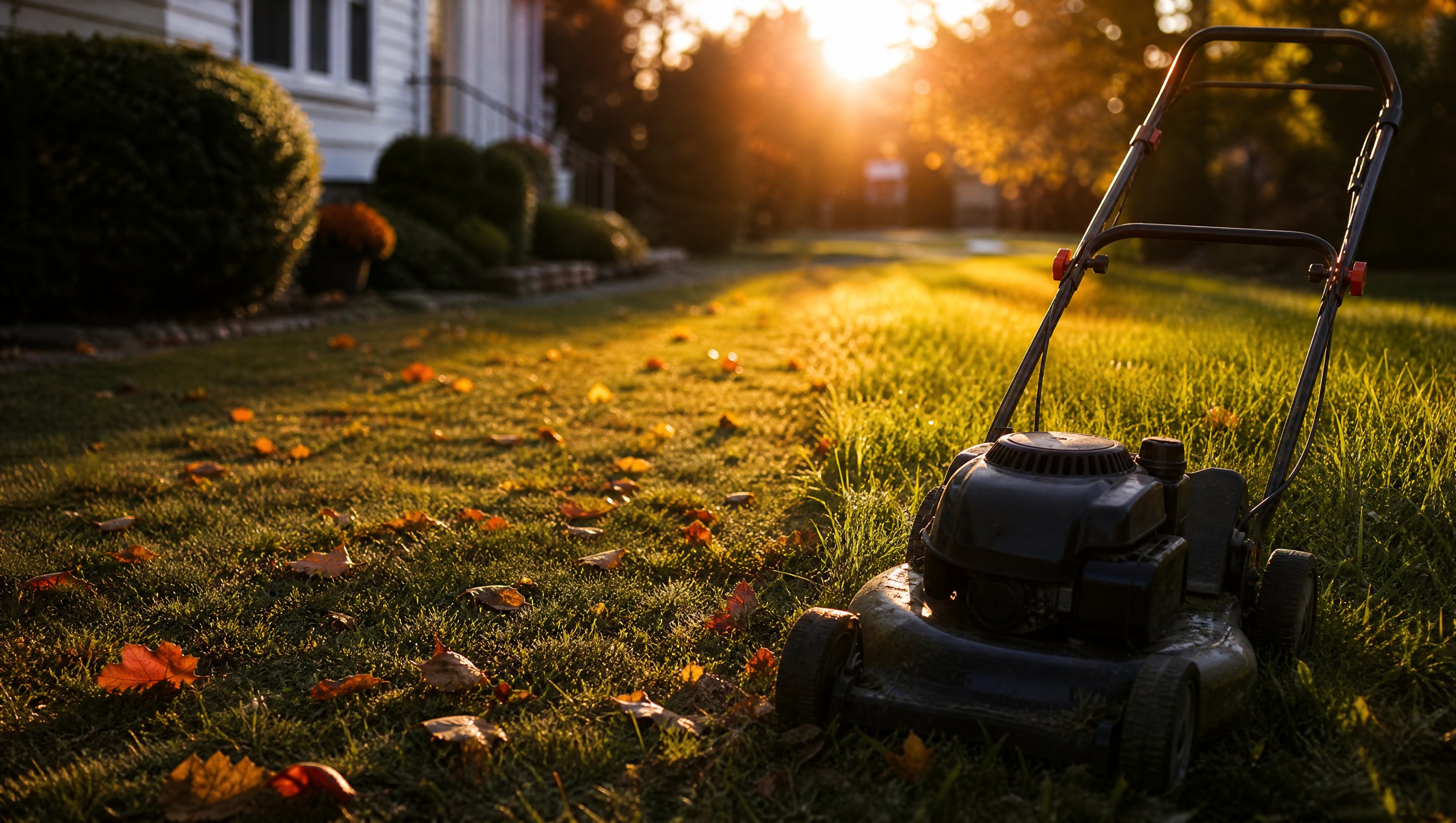

The mower is starting to run a little easier than it did in June, and that is not your imagination. Most of us grow cool season grass, and cool season grass has a thermostat. It grows hardest in mild air and cooling soil, and by the first hard frost it simply stops. From the first week of September that is roughly six weekly cuts, give or take a warm spell. Here is how to spend them.
The thermostat in the lawn
Fescue, bluegrass, and ryegrass, the grasses in nearly every lawn north of the transition zone, do their best growing when the air sits in the fifties to seventies and the soil holds above the mid forties. That is why a lawn looks its worst in August and its best in late September. The heat is off it and the roots are working again.
The same thermostat closes the season. As the soil cools through October, growth slows week by week, and after the first hard frost the blades stop lengthening altogether. The grass is not dead. It is dormant on top and busy underneath, storing sugar in the crown and pushing roots deeper, which is exactly the work that decides how it comes through winter.
If you grow a warm season lawn, Bermuda, zoysia, or St. Augustine, the calendar is different. Those grasses brown out on their own after frost and want no feeding now. Everything below is for the cool season lawn.
Six mows out
Look up your average first frost date. Every zip code has one in the weather service records, and the whole countdown hangs on it. Write it on the calendar in the shed. Then raise the mower deck if you dropped it for summer. Three inches is right for most of September. Taller grass shades the soil, keeps the roots cool, and crowds the fall weeds that are germinating right now.
Five mows out
Feed the lawn. This is the single most useful thing you will do for it all year, and most people do it at the wrong end of the season. Spring feeding grows blades. Fall feeding grows roots, because the plant is no longer spending its energy on top growth. A slow release nitrogen fertilizer put down in the first half of September carries the lawn through winter and gives you the early green in April that the neighbors will ask about.
Overseed thin patches the same week. Cool nights and warm soil are the best germination conditions of the year, and the new grass has two months to root before the ground freezes. Rake the bare spots, scatter seed, press it in with the back of the rake, and keep it damp for two weeks.
Four mows out
Keep cutting weekly, and keep the clippings on the lawn. They are mostly water and nitrogen, and in September they break down in days. Watch the clippings basket if you bag. When a weekly cut fills it half as full as it did in August, the soil has cooled and the season is closing faster than the calendar suggests.
This is also the week to deal with the leaves that have started to fall. A light scatter of leaves can be mowed straight into the lawn and disappears. A thick mat cannot. It blocks light, holds moisture against the crowns, and invites the winter molds. Mow them in while they are thin.
Three mows out
Water if it is dry. A fall lawn wants about an inch a week, and September droughts are common and easy to ignore because the grass is not complaining the way it does in July. A lawn that goes into winter dry goes into winter weak. One deep soak beats three sprinkles.
Two mows out
Start lowering the deck a notch each cut. Not all at once. Taking a third of the blade off in one pass shocks the plant and opens the soil to light for the weeds. Two steps down over two weeks gets you to the winter height without stress.
The last mow
The last cut of the year goes shorter than the summer height, somewhere around two to two and a half inches. Grass left long lies down flat under the first snow, mats, and rots, and the gray patches you find in March are snow mold that started that way. Grass cut short stands up, dries, and breathes.
You will know it is the last cut because the lawn tells you. The clippings are sparse, the growth between cuts is barely visible, and the frost has come once or twice. After that the mower goes into the shed, the blade gets sharpened for spring while you remember to do it, and the leaves take over the job of covering the ground.
What the countdown buys you
A lawn managed through these six weeks comes out of winter thick, deep rooted, and early. A lawn ignored through them comes out thin, and thin lawns are where the crabgrass and dandelions get their start in May. Six mows is not much. It is the whole difference.
