
Kitchen garden · Sep 2, 2026 · By Nell Harding
A Tomato Will Not Turn Red Below Fifty
The red in a tomato is made inside a narrow band of warmth, and the first cold nights switch it off. Here is what to pick, what to leave, and how to ripen a September haul on the kitchen counter.
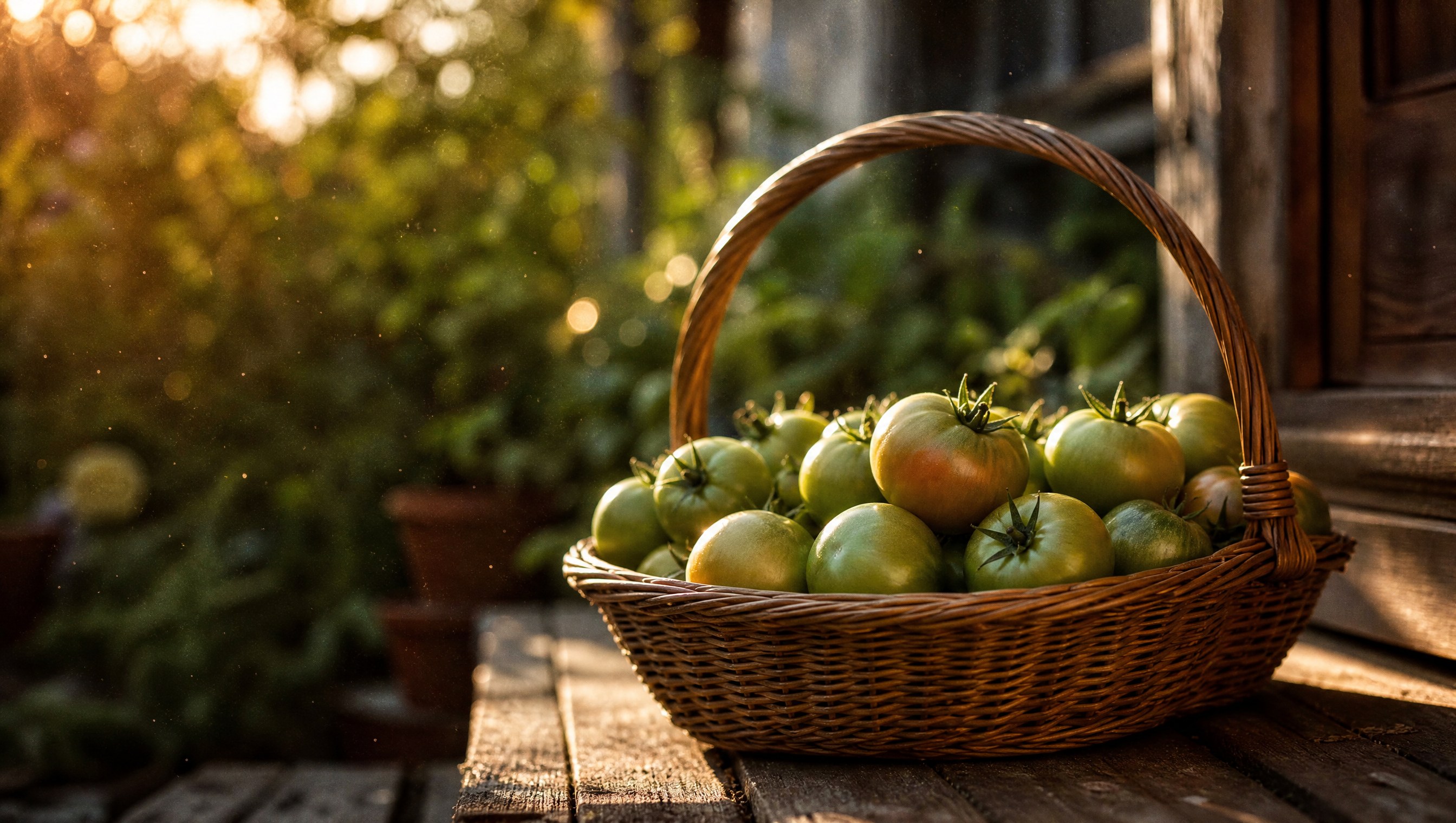

In 1934 a chemist named Richard Gane proved that ripening fruit gives off a gas, and that the gas is what ripens fruit. It is called ethylene, your tomatoes are making it right now, and the first cold nights of September are about to switch the whole factory off. Knowing that changes what you do in the tomato row this month.
Why the color stops
The red in a ripe tomato is a pigment called lycopene, and the fruit builds it only inside a narrow band of temperature, roughly fifty to eighty five degrees. Above that band the pigment stalls, which is why August fruit sometimes hangs orange for a week in a heat wave. Below it the pigment stalls the other way. On a night in the forties the fruit stops turning, and if it stays out through several such nights it goes mealy, cracks in the next rain, or simply rots on the vine green.
The plant is not dying. It is still alive and still photosynthesizing on the warm afternoons. But the last step of ripening, the one that makes a tomato a tomato, has a thermostat, and the thermostat is closing.
The vine is no longer the best place
Here is the part most gardeners do not believe until they try it. A tomato that has shown the first blush of color at the blossom end has already sealed itself off from the plant. There is a layer of cells at the stem that closes at that stage, and after it closes the fruit gets nothing more from the vine. Everything it needs to finish is already inside it, including its own supply of ethylene.
That fruit will ripen on your kitchen counter just as well as it would on the plant, and in September it will ripen better, because the counter stays above fifty and the garden does not. Flavor develops from the sugars and acids already in the fruit. Vine ripened is a marketing phrase, not a chemistry one, once the blush has appeared.
What to pick, week by week
Watch the overnight forecast. The first night predicted in the forties is the signal. That afternoon, walk the row and pick everything showing any color at all, from the faintest yellowing at the bottom to full orange. Leave the fruit that is still hard and fully green for now, unless frost itself is forecast.
Bring the picked fruit inside and lay it in a single layer, stem side up, somewhere between sixty five and seventy degrees. A countertop out of direct sun is right. Check daily and pull the ones that are ready. Most finish inside a week.
If you want them faster, put a few in a paper bag with a ripe banana and fold the top over. The banana leaks ethylene, the bag holds it, and the tomatoes respond in two or three days. If you want them slower, spread them out and keep them cooler, but never below fifty.
The refrigerator rule
Never refrigerate a tomato that is not fully ripe, and try not to refrigerate one that is. Cold below fifty does two things. It stops the lycopene, so a partly ripe tomato stays partly ripe forever. And it breaks down the volatile compounds that make a tomato smell and taste like one. A tomato from the fridge is a red thing with the flavor of a wet paper towel, and that is the chemistry, not snobbery. Once a tomato is dead ripe and you cannot eat it today, a day or two in the fridge is a fair trade. Before that, the counter.
The green ones before frost
When actual frost is forecast, the fully green fruit comes in too. A full sized green tomato, one that has reached its final size and gone from dark green to a paler whitish green, will ripen indoors over two or three weeks. It is slower and a shade less sweet than a blush picked fruit, but it beats the compost pile. Small, dark green, immature fruit will not ripen and is better fried or pickled.
Some gardeners pull the whole plant, roots and all, and hang it upside down in the garage. It works, but not because the plant is feeding the fruit. It works because the garage stays above fifty and the fruit ripens on its own ethylene exactly as it would in a bag. Picking is less trouble.
The cold that helps
The same thermostat explains one more thing. Tomatoes set fruit poorly when nights drop below the mid fifties, so the flowers still opening on the plant in September will almost never make a tomato. Pinching the tops of the plants now sends the last of the energy into the fruit that already exists instead of into flowers that will fail. It feels brutal. The plant does not mind, and the fruit gets bigger.
