
Planting & timing · Sep 1, 2026 · By Nell Harding
Spring Is Planted in the Fall
Tulips and daffodils will not bloom without months of real cold first. The chill is the ingredient, not the obstacle. Here is why the ugliest purchase at the garden center is the best trade of the year, and how to plant it so it pays out in April.
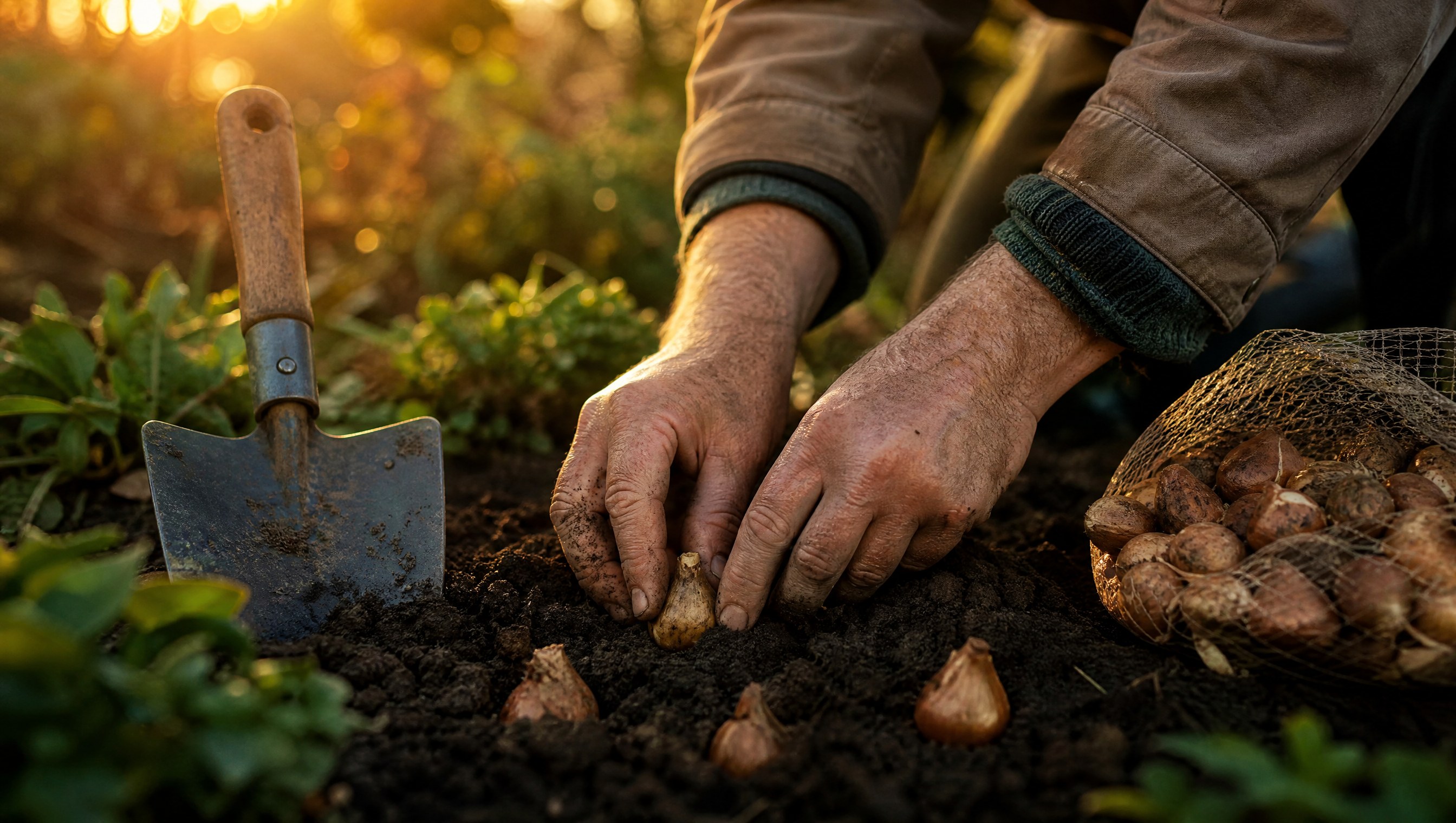

The best looking garden purchase of the year is also the worst looking one. It is a net bag of brown papery lumps, sold in September, planted in a cooling bed, and then apparently forgotten for half a year. What comes up in April looks nothing like what went down in fall, and that gap is not a delay. It is the recipe working.
The chill is the ingredient
Tulips, daffodils, crocuses, and hyacinths are built for climates with real winters, and they use the cold as information. Inside every bulb you plant this fall, next spring's flower already exists in miniature, fully formed, packed in food, waiting. What it waits for is a long unbroken stretch of soil temperatures near and below the mid forties. Most spring bulbs want somewhere around twelve to sixteen weeks of it.
During those weeks the bulb is not sleeping. Cold triggers the chemistry that converts starches, finishes the flower bud, and releases the stem to lengthen when warmth returns. Skip the chill, as anyone who has tried tulips in a warm climate without pre cooling learns, and you get a tuft of healthy leaves and no flower at all. The winter you wait through is doing the growing.
When the window opens
The rule of thumb is soil, not calendar. Bulbs go in once the soil at planting depth has cooled below about sixty degrees, which usually means nights running reliably cool for a couple of weeks. In the northern tier that window opens in September. Across the middle of the country it is October's work. In the upper South, November is often better, and the Deep South needs pre chilled bulbs from the refrigerator to fake the winter entirely.
Earlier is not better. A bulb planted into warm soil can sprout this fall, spending in October what it saved for April. But do not let the window close on you either. Bulbs need a few weeks to grow roots before the ground locks up, and rooted bulbs come through winter far stronger. If you find a forgotten bag in December, plant it anyway. A late bulb in the ground beats a perfect bulb in the garage every time.
How to plant a promise
Depth is the one rule worth memorizing. Plant a bulb about three times as deep as the bulb is tall. A two inch tulip bulb wants a six inch hole, a little deeper in sandy soil, a little shallower in heavy clay. Deep planting keeps bulbs cold and steady, protects them from squirrels and from frost heave, and helps tulips return for more years before dwindling.
Pointy end up, roots down. If a bulb keeps its secret, plant it on its side and the stem will sort itself out. Set bulbs in odd numbered drifts rather than soldier rows, a dozen in a rough oval reads as a colony, and the effect in April is of something that chose to grow there.
Water once, well, after planting. That single soak settles the soil and starts the roots. After that, autumn rain handles the schedule in most regions, and soggy beds are the one real enemy, since bulbs rot in standing water faster than they fail at anything else. If your bed puddles after rain, work in grit or choose daffodils, which forgive more than tulips do.
The squirrel question
Fresh dug soil is a signpost to every squirrel in the county, and tulip and crocus bulbs are on their menu. The cheap fixes work. Plant at full depth, firm the soil hard, water to erase the digging smell, and lay a piece of chicken wire over the bed for the first month, pinned at the corners. The shoots grow through the mesh in spring and the squirrels move on long before. Daffodils need none of this. They are unpalatable and squirrels leave them entirely alone.
For the pot gardener the trade works too. Layer bulbs in a container, tulips deep, crocuses shallow, overwinter the pot against the house wall or in an unheated garage so it chills without freezing solid, and April delivers a bouquet you assembled in September.
There is a reason the old garden books all give fall bulbs their own chapter. Planting them is the plainest act of faith the garden asks of us. You bury something homely in a cooling bed, walk away into winter, and trust the recipe. Come April, the bed you gave up on in February answers. Spring is not found at the garden center then. It was planted by you, half a year early, on an afternoon like this one.
