
Planting & timing · Sep 29, 2026 · By Nell Harding
Your Kalanchoe Can Bloom Again by January
The kalanchoe that flowered on your counter last winter is not a one-time plant. It is waiting for long, dark nights, and fall is about to hand them over. Here is the six-week routine, and the one thing that can quietly undo it.
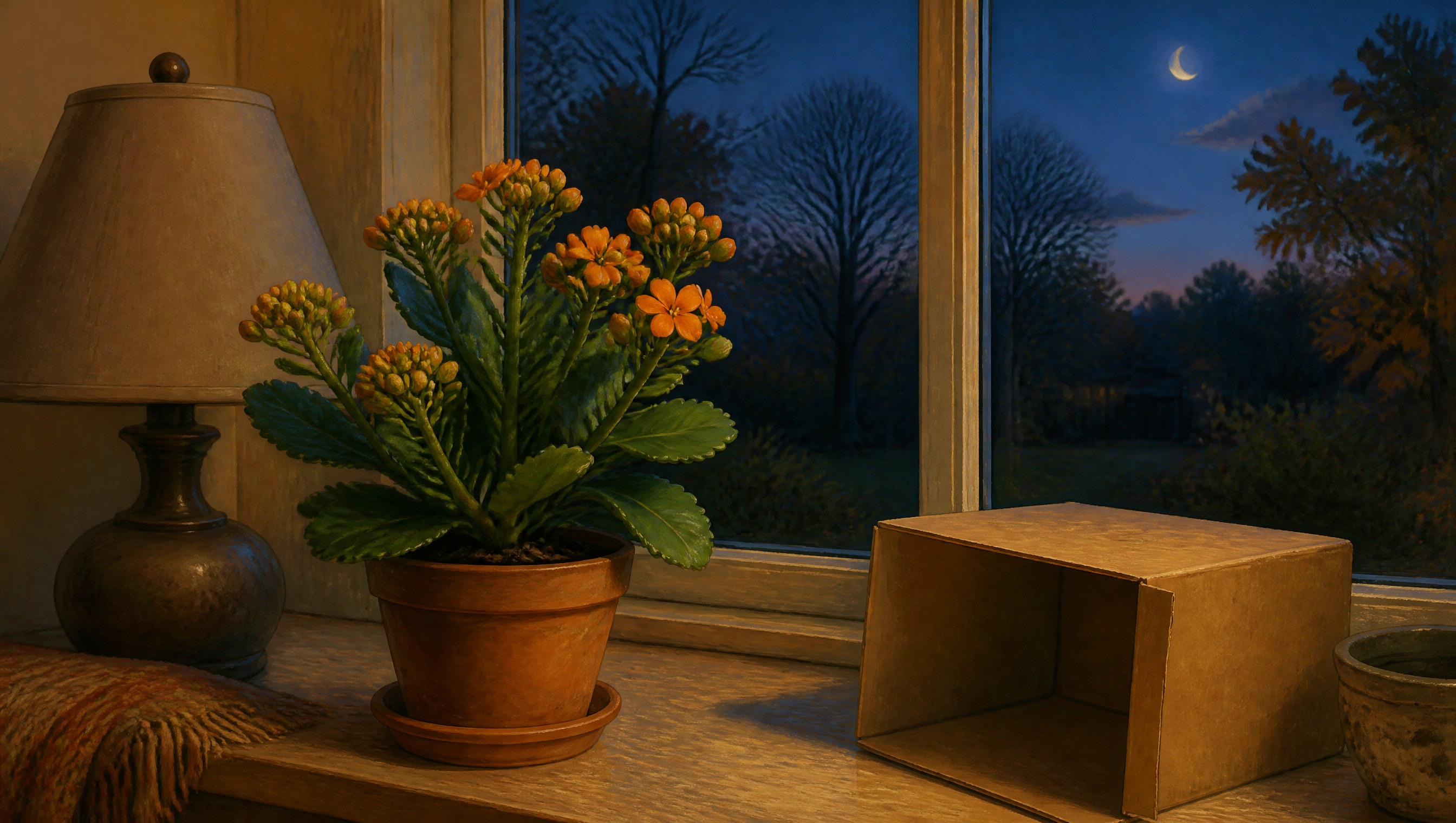

Most kalanchoes come home from the grocery store in full bloom, covered in tight clusters of red, orange, pink or yellow flowers. A few weeks later the flowers fade, and the plant carries on as a pot of thick, glossy green leaves. Many people assume that was the show and the plant is done. It is not. A kalanchoe blooms on a schedule set by the length of the night, and the nights are about to get long enough to start it again.
A PLANT THAT COUNTS THE DARK
Clemson Cooperative Extension puts it simply: kalanchoes, like poinsettias, require short day lengths, which means long nights, before they will form flower buds. The plant is not responding to cold, or to fertilizer, or to how much you water it. It is responding to how many hours of unbroken darkness it gets each night.
The North Carolina Extension Gardener Plant Toolbox gives the number. In the fall and winter, it says, the florist kalanchoe needs total darkness for 14 hours a day for at least six weeks. If the plant fails to bloom, the same source says, it may be because it never received the period of darkness required to reset the bloom cycle.
That makes sense once you know where it comes from. The Plant Toolbox notes that the florist kalanchoe is native to northeast Madagascar and belongs to the stonecrop family. It is a succulent that evolved to flower in the season of longer nights, and it still keeps that calendar on a kitchen windowsill.
WHEN THE CLOCK STARTS
Clemson says the natural day lengths between October 1 and March 1 allow flower buds to form, and that natural winter day lengths supply a kalanchoe with a night of 14 to 16 hours. In other words, from the start of October, the season does most of the work for you. About six weeks of those natural winter nights are enough for the buds to form.
The flowers take longer than the buds. Clemson says a plant exposed to naturally short days in early October should begin flowering by January, about 12 weeks from the start of the long nights. So a kalanchoe that settles into long nights this week is on track for flowers in the dead of winter, when almost nothing else in the house is blooming.
THE ONE RULE: NO LIGHT AT NIGHT
The catch is that a lamp counts as daylight. A plant that sits in the living room with the lights on until eleven every night never gets its long night, no matter what the calendar says. Clemson's advice is to keep the plant in a room where the lights are not turned on during the naturally dark hours.
A spare bedroom, a guest room or a cool sunny corner that nobody uses after dark all work well. If the only good spot is a room you use every evening, Clemson suggests controlling the day length yourself by placing the plant in a closet in the late afternoon and bringing it back out to a bright spot each morning.
The New York Botanical Garden describes a version of the same trick for gardeners who want flowers by a certain date. Its houseplant guide suggests covering the whole plant with a box or a black cloth from 6 pm to 7 am each night, and says that doing so from September 1 until October 1 sets buds for the winter holidays. If you are not aiming for a holiday date, the Garden says, a kalanchoe will bloom in midwinter to spring under normal houseplant conditions.
THE HIDDEN SETBACK
Darkness is not the only thing the plant is paying attention to. Clemson warns that temperatures above 80 degrees during the long night period can cause a heat delay, which holds back flower development. A pot parked on top of a radiator, beside a heating vent or on a sunny sill above a baseboard heater can get its darkness and still stall.
Cooler nights help in other ways too. Clemson lists ideal temperatures of 45 to 65 degrees at night and 50 to 70 during the day, and says cool night temperatures prolong the life of the flowers once they open.
WHEN YOU CAN STOP
The routine does not last all winter. Clemson says that once the flower buds are large enough to be seen above the foliage, day length is no longer crucial, and the plant can go anywhere regardless of night lighting. At that point it can move back to the living room, the kitchen table or wherever you want to enjoy it.
EVERYDAY CARE
Kalanchoes are forgiving, but they do not like wet feet. Clemson says they can be damaged by over watering and advises letting the soil dry slightly between waterings. The Plant Toolbox recommends six to eight hours of bright light every day to keep the plant blooming well, and the New York Botanical Garden notes that plants become lanky and floppy if the light is too low.
After this winter's flowers fade, the Botanical Garden suggests cutting back the stems and pruning lightly to reshape the plant, then giving it a rest of about 30 days with less water, no fertilizer and slightly less light. Clemson adds that it can spend the summer outdoors in a bright, lightly shaded spot after the danger of frost, and should come back inside before the first frost of fall, ready for its next season of long nights.
