
Kitchen garden · Sep 8, 2026 · By Nell Harding
Who Is Eating Your Tomatoes? A Field Guide to the Bite
A bitten tomato is a signed confession. The shape of the hole, where it sits on the fruit, and whether it happened by day or by night name the culprit, and each one wants something different from you.
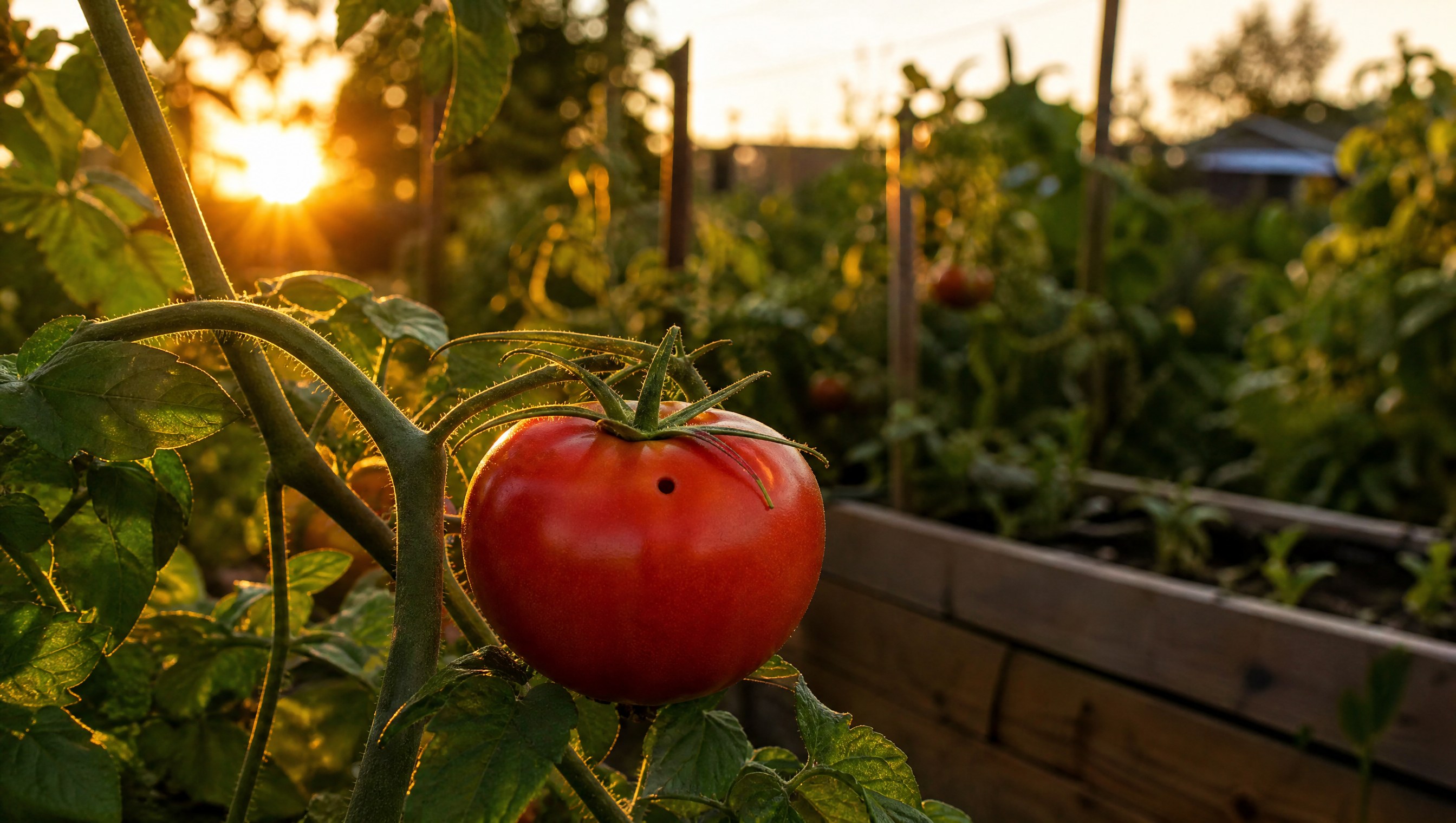

The first bitten tomato of September gets blamed on the hornworm, because the hornworm is the tomato pest everyone has heard of. It is almost never the hornworm. A hornworm strips leaves and leaves the fruit alone, and the thing that took a chunk out of your best Brandywine has a different signature entirely. Learn three shapes of damage and you can name the visitor from the kitchen window.
One clean pointed hole, near the top: a bird
Mockingbirds, robins, jays, and sparrows peck tomatoes, and they are not really eating them. In a dry spell a ripe tomato is the wettest thing in the yard, and a bird drives its beak in for the juice. The hole is small, pointed, and dry-edged, usually on the shoulder or top of the fruit, and usually in the reddest one on the plant. The tell is the pattern: a bird works several fruits and takes one hole from each rather than finishing any of them.
The fix is water. A birdbath or a shallow dish set twenty feet from the bed, kept full, cuts the pecking in most gardens within a few days. Netting over the plants works too, but it snags fruit and fingers, and the water dish is cheaper. A pecked tomato is still fine to eat once the hole is cut away, if you get to it before the fruit flies do.
One big scoop out of the side, in daylight: a squirrel
A squirrel takes one large bite out of the side of a ripening fruit, decides it is not ripe enough, and moves to the next one. Sometimes it pulls the fruit off and carries it a few feet before dropping it half-eaten on the mulch. It does this in broad daylight, often in the morning, and like the bird it is usually after moisture as much as food. Chipmunks leave the same mark at a smaller scale.
If the same scoop appears overnight, the squirrel is innocent. Rats and raccoons leave a similar bite and work after dark. Timing is the only thing that separates them, so look at the bed at dusk and again at dawn. For the daytime raider, the water dish helps here too, and picking fruit at first blush, when the bottom just turns pink, takes the prize off the vine before it is worth a bite. It ripens on the counter in a few days with no loss of flavor.
Smooth shallow pits low on the fruit, and a silver trail: a slug or snail
Slugs and snails cannot climb far up a tomato plant, so they work the fruit that touches or hangs near the soil. The holes are smooth-edged and shallow, often two or three together near the bottom of the fruit, and the giveaway is the dried mucus trail across the skin or the mulch, silver in the morning light. The damage appears overnight and the culprit is gone by the time you are up.
The fix is to get the fruit off the ground. Tie up low trusses, set a tile or a small pot under any fruit that rests on the soil, and pick low fruit at first blush. Keep the mulch pulled back a hand's width from the stems so the slugs have less cover, and go out with a flashlight an hour after dark once or twice to see how many you are dealing with.
Fine, and the leaves are gone: the hornworm
Now the hornworm. A tomato hornworm eats leaves, and it eats them fast, so the sign is a plant that looks stripped almost overnight with bare stems where leaves were. It will chew green fruit occasionally, leaving large ragged wounds, but the leaves go first. Look for black pellet droppings on the leaves and soil below the damage, then follow them up to the stem and check the underside. The caterpillar is the size of your finger and the exact green of the plant. Pick it off by hand. If it is carrying what look like grains of white rice on its back, leave it; those are the cocoons of a parasitic wasp that is doing your job for you.
The rule of thumb
Day damage on the fruit is a bird or a squirrel. Night damage low on the fruit is a slug. Night damage high on the fruit is a rat or a raccoon. No fruit damage but no leaves is a hornworm. Almost everything on the list is after water first, and a full dish twenty feet from the bed does more than any trap. The rest is picking a little earlier than you would like to.
