
Planting & timing · Oct 4, 2026 · By Nell Harding
Where Bumble Bee Queens Sleep Through the Winter
By now most of the summer's bumble bees are gone, but the new queens are not. Each one is looking for a place to sleep until spring, and your garden beds may be it. Here is where they go, what happens to the rest of the colony, and what to skip in your fall cleanup.
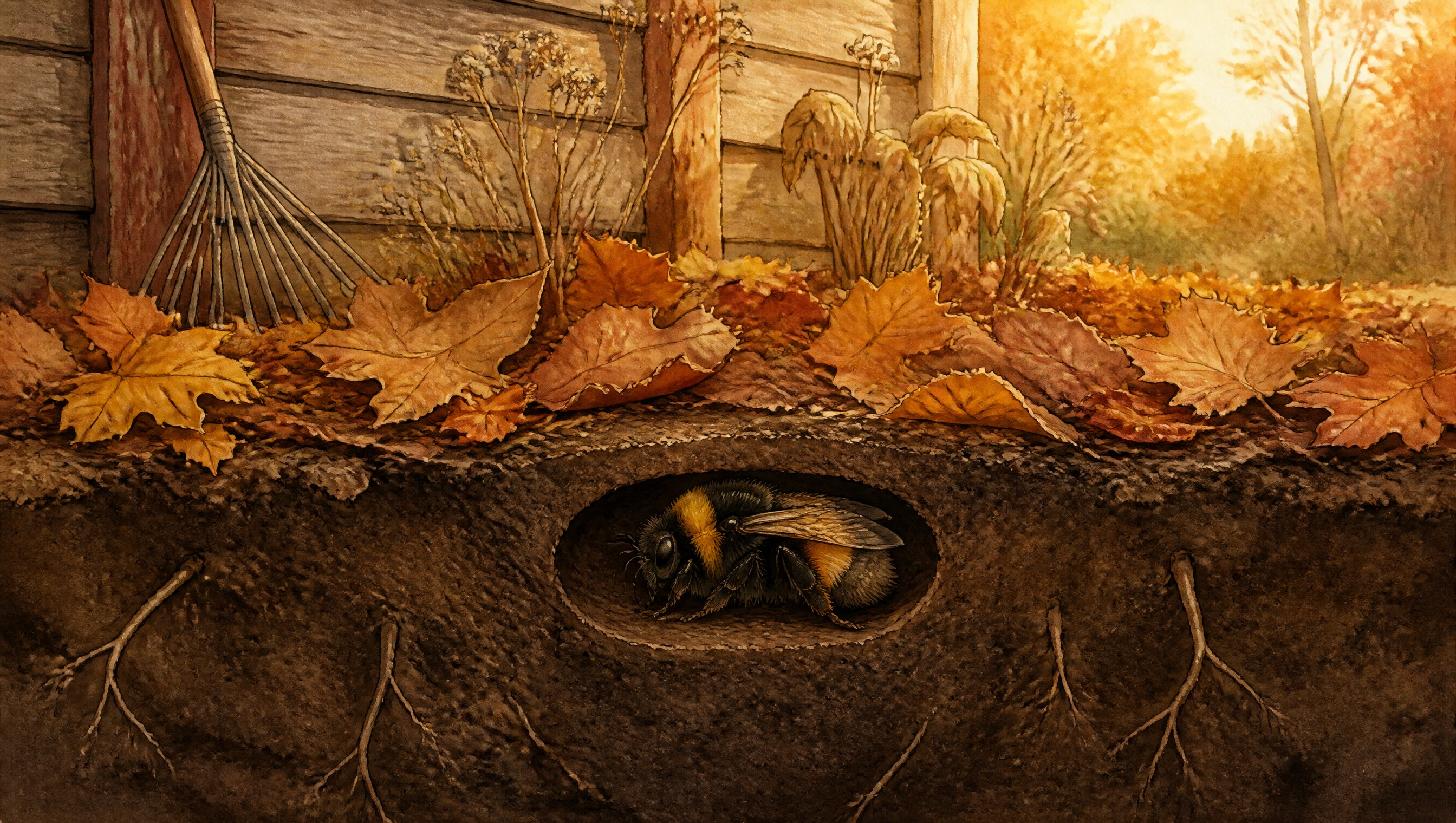

On a warm afternoon in early fall you can still find a big, slow bumble bee working the last asters. She may be one of the most important insects in your yard. Within a few weeks she will crawl into the ground somewhere and stay there until spring, and every bumble bee you see next year will trace back to queens like her.
WHY ONLY THE QUEEN
A bumble bee colony does not last the winter. Victoria MacPhail of York University, writing for the Xerces Society, explains that the newly mated queen leaves the colony to overwinter, while the rest of the colony dies off.
In spring, she says, the queen emerges, finds a new nest site and starts laying eggs to raise a new generation. The whole colony of next summer begins with one queen who made it through the cold.
WHERE SHE SLEEPS
Not deep. The Xerces Society says that at the end of summer, mated queen bumble bees burrow only an inch or two into the earth to hibernate for winter.
That is shallow enough for a spade, a tiller or a rake scraped down to bare soil to reach her. The fall chores that feel most thorough are the ones most likely to find a sleeping queen.
The Bumblebee Conservation Trust says queens hibernate in a variety of places, from well-drained, soft soil to leaf litter, hollow trees or inside tree bark. MacPhail adds that people have reported finding queens in loose soils, mossy ground, leaf litter, and near tree trunks or walls.
The Trust also notes a preference for spaces that are north-facing, so they get less winter sun and the ground does not heat up and wake them too early. A shady bed on the north side of the house or shed is exactly that kind of place.
WHY THE LEAVES MATTER
An inch or two of soil is not much of a blanket. The Xerces Society says an extra thick layer of leaves is welcome protection from the elements.
That does not mean the whole lawn has to stay buried. Xerces says the leaves do not need to be left exactly where they fall: you can rake them into garden beds, around the bases of trees, or into other set-aside areas.
It also recommends avoiding shredding the leaves with a mower. Raking keeps them whole, which gives the best cover and protects the insects and eggs already living there.
IF YOU DIG ONE UP
It happens, especially when you are planting bulbs or turning a bed late in the season. The Bumblebee Conservation Trust says not to panic: gently cover her back over with the same material she had dug into, and leave her be.
That small kindness matters. One queen left in peace this winter can mean a whole colony working your garden next summer.
