
Planting & timing · Aug 2, 2026 · By Nell Harding
Garlic is the easiest crop you're not growing yet
One October afternoon, eight months of neglect, and a July harvest that stores until spring.

First shared on the Facebook page in July 2026, and kept here since the site opened in August.
If a crop existed that asked for one afternoon of work, no watering for most of its life, no pest patrol, and repaid you with a braid of something you use in nearly every dinner, most gardeners would assume it was a catalog exaggeration. It is garlic, and the catch is only that it runs on a calendar most beginners find backwards: you plant it in fall, and it spends winter in the ground on purpose.
The timing rule is simple: plant garlic two to four weeks before the ground freezes hard, which for most temperate gardens means October, give or take. The clove needs enough autumn to grow roots but not enough warmth to send up tall green growth that winter will burn. In mild-winter regions, November and even December work; the goal everywhere is roots down, shoots barely up, before the cold arrives.
Winter is not the enemy of this crop; it is an ingredient. Garlic needs a stretch of cold, several weeks below about 40 degrees, to trigger the clove to divide into a full bulb. Spring-planted garlic that misses this cold period grows a green stalk over one sad, undivided round. The gardeners disappointed by garlic are nearly always spring planters. The ground does the vernalizing for free while you ignore it.
Start with seed garlic from a garden center or farm stand rather than the supermarket, at least in year one. Grocery garlic is often a soft-neck variety from a faraway climate and sometimes treated to resist sprouting, both of which stack the deck against you. One pound of seed garlic is roughly fifty cloves, which is fifty bulbs next July from a bed the size of a card table.
The choice you will face at ordering is hardneck versus softneck. Hardnecks are the cold-climate champions: bigger cloves, richer flavor, and a June bonus crop of curling flower stalks called scapes that stir-fry beautifully. Softnecks suit mild winters, store longer, and make the braids you see in kitchen photographs. Cold winters, pick hardneck; mild ones, softneck; on the fence, plant a row of each and let July vote.
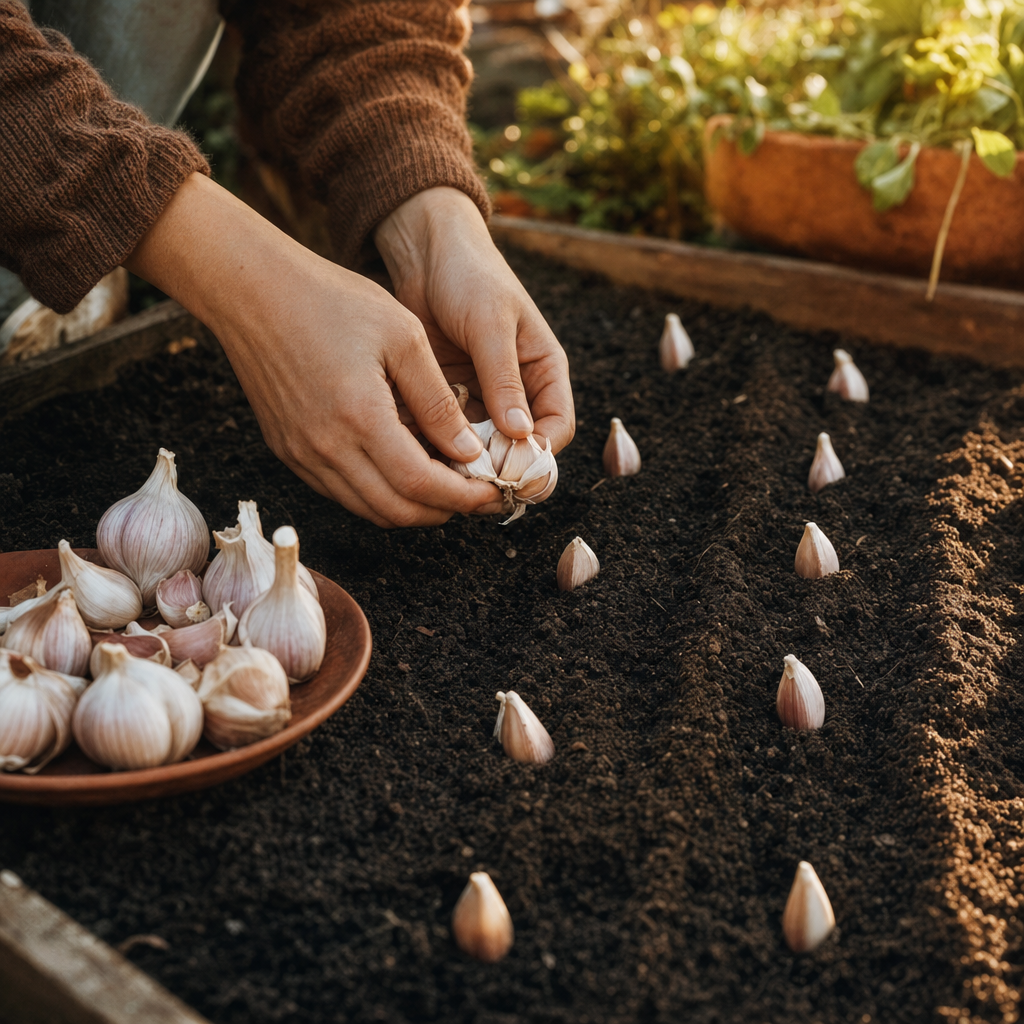
Planting is the whole job, so here it is in full. Break the bulbs into cloves a day or two ahead, keeping the papery skins on. Choose your sunniest bed, loosen it, and work in compost. Push each clove in pointy end up, two inches deep, six inches apart. Cover, water once, and blanket the bed with four to six inches of straw or shredded leaves. That mulch is the winter coat and the spring weed barrier in one.
Then comes the part gardeners struggle with most: do nothing. No watering through winter, no checking. Green shoots will appear in early spring through the mulch; from then on, garlic wants what any leafy bed wants, an inch of water a week and weeds pulled while small, because garlic hates competition more than almost any crop.
If you planted hardnecks, June brings the scapes: curly, whip-like stalks rising from the center. Snap them off when they make one full curl. It feels wrong to remove them; do it anyway, because a plant left to flower spends bulb energy on the bloom, and the scapes themselves are a harvest, garlicky and green, brilliant chopped into eggs or blended into pesto.
Harvest arrives in July, when the bottom three or four leaves have browned but the top five or six are still green. Loosen with a fork and lift; never yank the stalks. Every green leaf on the plant is one layer of protective wrapper on the bulb, which is why you harvest at half-brown rather than waiting for the plant to die back completely like onions.
Cure the lifted plants whole, tops and all, in a dry, shaded, airy spot for two to three weeks, then trim roots, cut stalks (or braid your softnecks), and store somewhere cool and dark. Hardnecks keep four to six months; softnecks eight or more. Set aside your biggest, best bulbs and plant their cloves in October. From year two onward, your garlic is free, and each generation adapts a little more to your particular patch of ground.
One afternoon in October, one in June for scapes, one in July for the harvest. Three afternoons a year for a crop you cook with three nights a week. That is the best labor-to-dinner ratio in the whole garden, and the window to join opens in about ten weeks.
