
Watering & care · Aug 2, 2026 · By Nell Harding
Mulch is the closest thing gardening has to a cheat code
Less watering, fewer weeds, better soil, and the only real skill is not overdoing it.
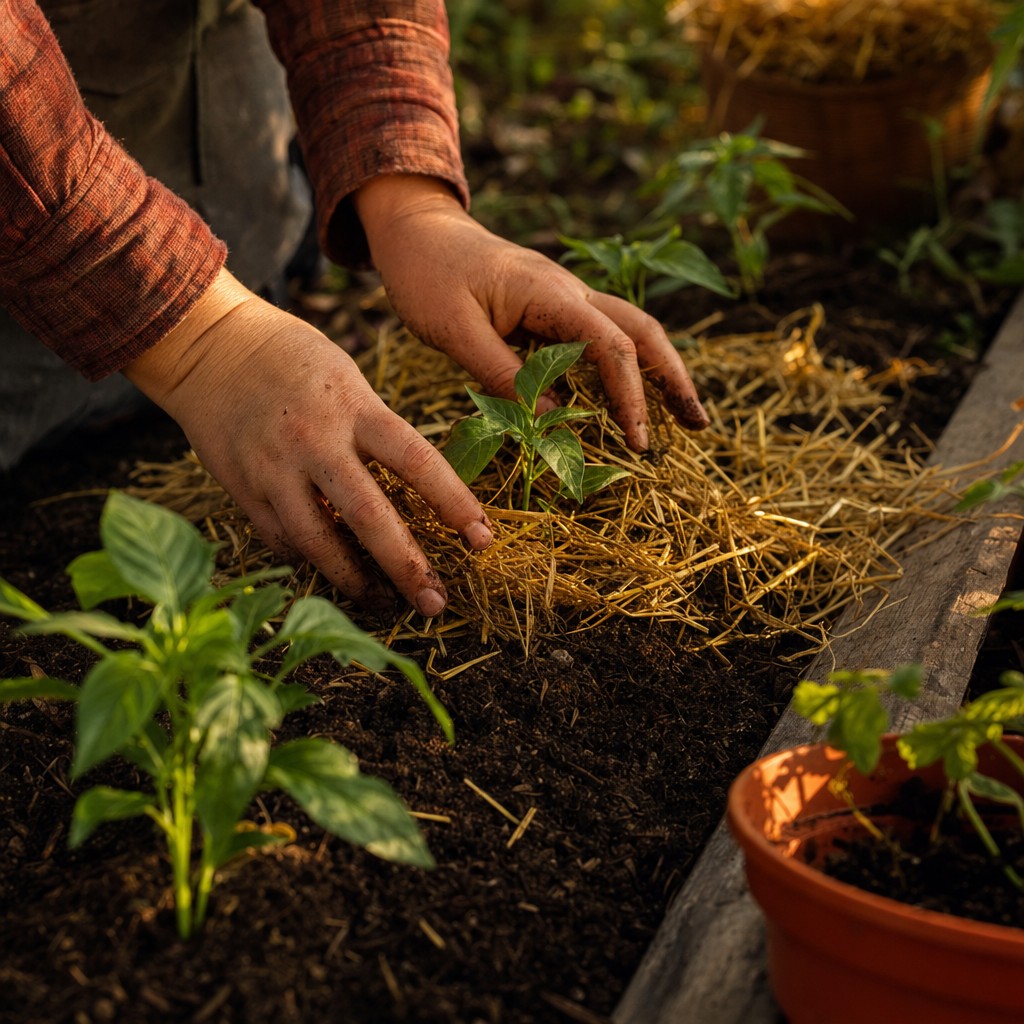

First shared on the Facebook page in June 2026, and kept here since the site opened in August.
If a product promised to cut your watering in half, smother most of your weeds before they sprout, keep roots cool in July and warm in November, and slowly improve your soil while doing it, you would suspect a scam. Then you would learn the price: it is a pile of dead leaves. Mulch is the rare garden practice where the folklore undersells the truth, and the only real mistakes are which kind, and how much.
Start with what a bare soil surface actually endures. Summer sun bakes the top inches into a crust that sheds water; every rain splashes soil (and the diseases living in it) up onto lower leaves; each degree of heat pulls moisture straight into the air; and every square inch of open ground is a landing strip for weed seed. Bare soil in a vegetable bed is not neutral. It is a slow leak.
A two-to-three-inch blanket of organic mulch reverses each of those. Evaporation drops sharply, which in practice means watering roughly half as often through summer. Weed seeds germinate in darkness and die, and the stragglers pull out of loose mulch like they are embarrassed to be there. Soil temperature swings flatten out, which roots visibly prefer. And splash-borne diseases like early blight on tomatoes lose their elevator from soil to leaf.
The compounding part happens underneath. Organic mulch is a slow-motion compost pile spread thin: worms and soil life eat it from below and haul it downward, and by next season the bottom layer has become dark crumbly soil. Gardens mulched for a few years develop the kind of loose, rich topsoil that people assume took decades. It took laziness, applied consistently.
Which mulch matters less than the marketing implies, but each has a lane. Straw (not hay, which arrives loaded with seed) is the vegetable bed classic: light, cheap, easy to move for sowing. Shredded leaves are free and arguably the best all-rounder; run the mower over the fall pile and stockpile bags of them. Wood chips are the champion for paths and around perennials, shrubs, and trees, where they sit undisturbed for years. Grass clippings work in thin layers if your lawn is unsprayed; pile them thick and they turn to slime.
Two mulch myths need retiring on the way past. First, wood chips on the surface do not steal nitrogen from your plants; the borrowing happens only in the thin film where wood touches soil, far from root depth. Only mixing chips INTO the bed causes real trouble. Second, properly sourced mulch does not attract termites; they want buried wood mass, not a thin dry blanket.
Now the mistakes, because there are exactly two and both are visible from the street. The volcano: mulch piled cone-shaped against a tree trunk, which holds moisture on bark, invites rot and rodents, and slowly kills the tree it was decorating. Mulch should sit like a donut, an inch or two clear of every stem and trunk. And the too-deep bed: past about four inches, mulch stops being a blanket and becomes a raincoat, shedding light rain before it ever reaches soil. Two to three inches, topped up once a year, is the whole recipe.
Timing has one nuance worth knowing. Mulch locks in the soil condition it covers, so mulch AFTER the soil has what you want in it: after spring soil has warmed (mulching cold soil in April keeps it cold and slows tomatoes), and ideally after a good rain. In practice: sow or transplant, water deeply, then tuck the blanket around everything.
The fall version of this advice is the best deal in gardening: when the leaves come down in October, they are not yard waste, they are next year's soil arriving for free. Shred them, blanket every empty bed, and let winter and the worms do the incorporation. Beds put away like this wake up in spring weed-free, moist, and workable a week earlier than bare ones.
If your garden currently has bare soil showing between plants, this weekend's single most profitable hour is spent covering it. Nothing else in this almanac pays back an hour so reliably.
