
Planting & timing · Sep 9, 2026 · By Nell Harding
The Ground Is Still in August: Why Fall Planting Works
The air turned cool this week. Six inches down, the soil is still running weeks behind it, and roots keep growing in that warmth long after the leaves are gone. That lag is the whole secret of fall planting, and it tells you exactly what to put in now and what to leave for spring.
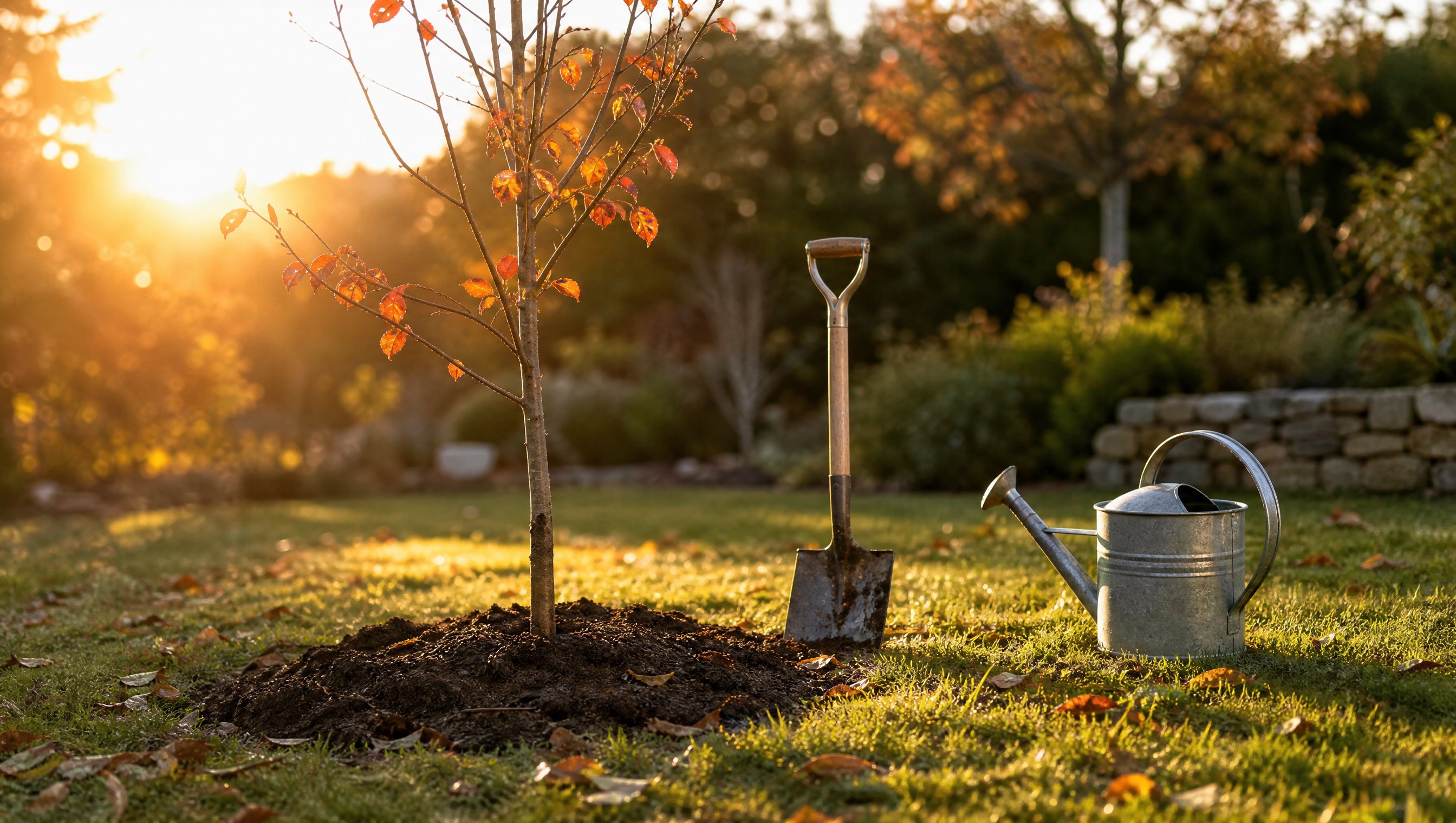

Every September somebody stands in a garden centre holding a shrub on clearance and asks whether it is too late. The honest answer is that the question is aimed at the wrong thermometer. The air has cooled. The ground has not, and the ground is where the plant will spend the next six months. Understand one slow fact about soil and the whole fall planting calendar writes itself.
Soil is slow
Soil holds heat the way a stone step does. It takes all summer to warm through and all autumn to cool, and at six inches down, where most roots live, the seasonal swing runs weeks behind the air. In spring that lag is the frustration: seventy degree afternoons in April while the bed is still too cold to sprout a bean. In fall it turns into a gift. When the first cool week arrives, the soil is still carrying the warmth of August, and it keeps carrying it well into November.
You can measure it yourself. Push a kitchen thermometer three or four inches into a bed at breakfast and then read the air. The bed wins, and it will keep winning for weeks. A mulched bed holds its warmth longer still, which is one of the quieter reasons mulch matters in fall.
What the roots do with the gap
A woody plant reads two thermometers. When the air drops below the soil, it stops making leaves and shoots and puts everything it has into roots. And the roots keep growing as long as the soil stays above roughly forty degrees, which in most of the North is weeks after the leaves are down. Extension guides give that forty degree figure as the working line, and root growth slows well before it stops, but the shape of the thing is the point. Above ground the plant looks finished for the year. Below ground it is busier than it has been since May.
A tree or shrub set out now, about six weeks before the first hard frost, spends those weeks knitting into its new ground with no leaves to feed and no heat to fight. It is not being asked to grow. It is being asked to settle. By spring it comes out of dormancy already at home, and the first summer, the one that kills so many spring plantings in a July heatwave, goes much easier. That is the whole case for fall planting, and it is a strong one.
The fall planting list
Deciduous trees and shrubs lead the list. Maples, oaks, serviceberry, dogwood, fruit trees, lilac, hydrangea, viburnum, spirea, anything that drops its leaves. Plant them at the depth they grew in the pot, never deeper, loosen the roots that circled the container, water the hole as you fill it, and mulch a wide ring, keeping the mulch a hand's width off the trunk.
Perennials go in the same window. Peonies in particular want fall, with the eyes no more than two inches down. Daylilies, hostas, coneflowers, and grasses divide and move happily now, because the warm soil re-roots the divisions before the cold arrives. Spring bulbs are fall planting in miniature. A tulip or daffodil set in now grows a full root system in the warm October soil, then sits through the cold it needs to bloom. Garlic works exactly the same way and is planted at the same time.
Grass seed for a cool-season lawn goes down now too, for the same reason. Warm soil sprouts it fast, cool air keeps it from wilting, and the weeds that plague a spring seeding have quit for the year.
The honest exception
Broadleaf evergreens are the fall plantings that die, and they die in a way that makes people swear off fall planting altogether. Rhododendron, azalea, holly, boxwood, mountain laurel, anything that keeps a real leaf through winter. Those leaves keep losing water on every sunny, windy winter day, and once the ground freezes the new roots cannot replace it. The plant dries out standing up, and the damage shows in March as brown, curled leaves. In the North, plant those in spring, or in very early September at the latest, and wrap or shelter a first-winter evergreen from wind and afternoon sun. Needled evergreens are hardier about it but still prefer the early side of the window.
The other loser is anything tender. A perennial rated to your zone will settle. A plant that was going to need protection anyway will not have the roots to survive its first winter if it goes in late.
Water, and keep watering
The mistake that undoes fall planting is putting the hose away when the air cools. The plant is growing roots in that warm soil and it needs water to do it, and a dry September and October are common. Give a new planting a deep soak every week or two, more in sand, less in clay, right up until the ground freezes. Not daily. Roots need air between drinks. Then stop, and the mulch does the rest.
In the South the same physics runs later. Soil there stays warm into December, and the fall planting window for trees and shrubs is November and December rather than September. The rule is the same everywhere: plant when the air is cooler than the ground and there are still several weeks before the soil drops to forty. The ground will tell you when. It is the one thermometer in the garden that never panics.
