
Kitchen garden · Sep 4, 2026 · By Nell Harding
What to Do with Tomato Vines When the Season Ends
The vines come out in the next few weeks, and what you do with them decides how much blight you plant next spring. Here is the order to pull them in, what goes in the compost and what goes in the bag, why your hands come out yellow, and how to get the stain off.
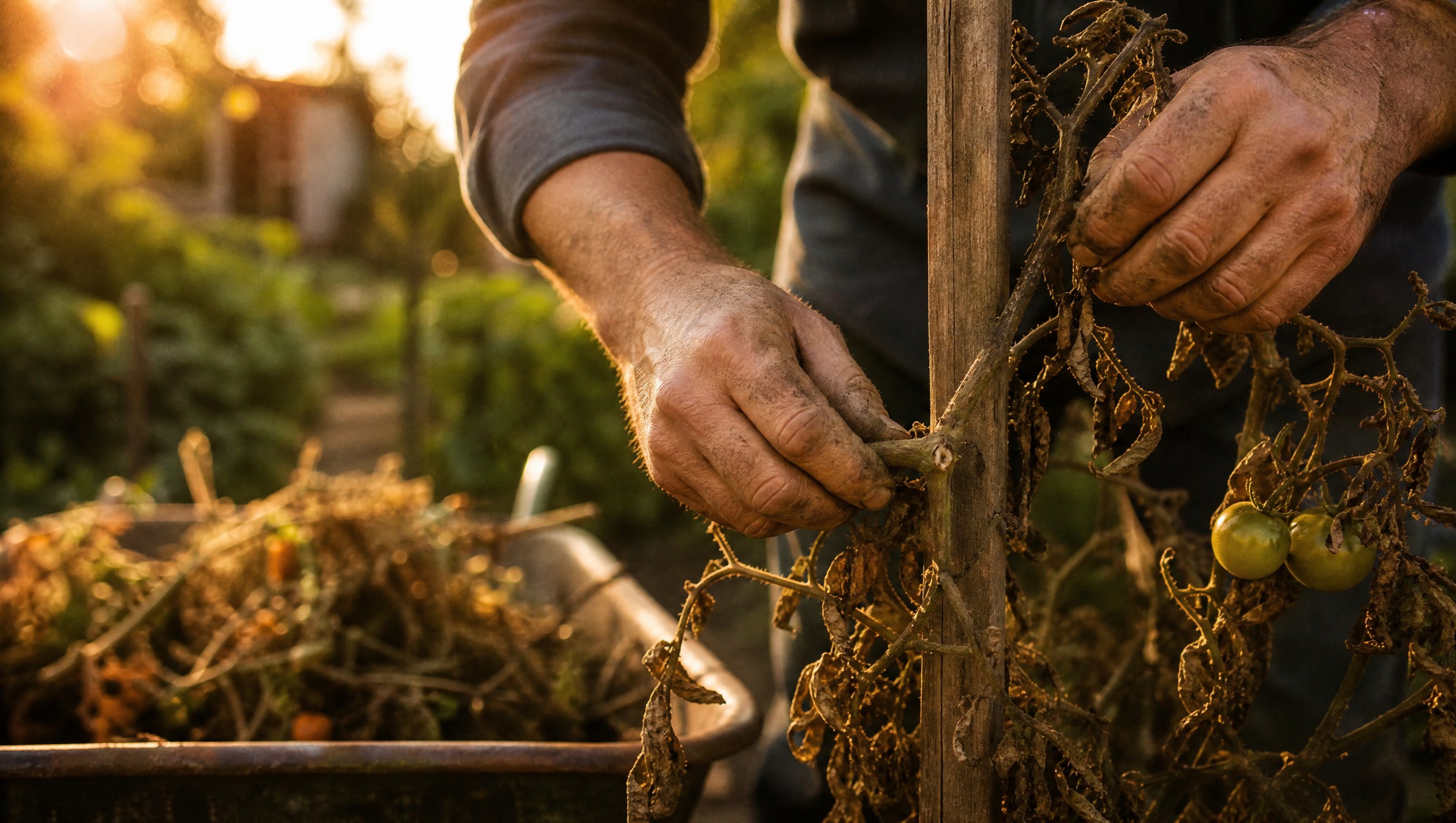

There is a week in September when the tomato patch stops being a tomato patch and becomes a pile of vines with a few red things on it. The leaves go yellow from the bottom up, the new flowers at the tips will never set, and the fruit that is still green is ripening slower every day as the nights cool. That week is when the vines come out. How you take them out, and where they go afterward, is one of the few fall jobs that decides how next year starts, because the diseases that finished this year's plants are waiting on the vines for a ride into spring.
Start by deciding what to pick. Any tomato that has turned even faintly pink at the blossom end will ripen indoors, on a counter, out of the sun, and it will taste like a tomato rather than like the supermarket. Fully green fruit that has reached full size and gone from a hard dark green to a paler, slightly glossy green will usually ripen too, given two or three weeks in a paper bag with a ripe apple, which breathes out the ethylene that does the work. Small, hard, dark green fruit will not, and it is better used green, fried or pickled, than left to rot on a windowsill.
Strip the fruit first, all of it, before you touch the vine. A tomato plant that has been pulled and dragged sheds its fruit into the mud, and half of it splits. Work the row with a basket, then come back for the plants.
Why your hands come out yellow
Anyone who has spent an afternoon in the tomatoes knows the stain. It starts green, dries to a brownish yellow, and it smells, for the rest of the day, like the inside of a tomato plant. It is not dirt and it is not sap in the ordinary sense. Every stem and leaf on the plant is covered in fine hairs, and the shorter hairs carry a round gland at the tip that holds a droplet of sugar and oil. The sugar has fatty acids attached to it, which is what makes it turn sticky the instant it meets air. Brush past a plant and thousands of those glands rupture at once. The oil is the smell. The sugar is the stain.
It is the plant's armor. Those sticky droplets gum the feet of whiteflies and aphids that land on the leaf, and the oils taste bitter enough that a caterpillar chewing into the leaf gets a mouthful before it gets to the leaf itself. Wild tomatoes from the Galapagos make so much of it that plant breeders are crossing the trait back into garden varieties, because a plant that traps its own pests needs no spray. So the stain on your hands at the end of the day is the plant's whole defense budget, transferred to you. It comes off with oil before soap. Rub a teaspoon of cooking oil into your hands, work it in for a minute, then wash with ordinary soap. Soap alone spreads it around.
What goes in the compost and what does not
This is the decision that matters. A tomato vine that died of old age, cool nights, and the calendar can go in the compost, and it will rot down into good soil by spring. A tomato vine that died of disease should not go anywhere near it, and the trouble is that most of them died of disease, at least partly. If the leaves came off from the bottom up with round tan spots ringed in dark brown, that is Septoria leaf spot. If the lower leaves went yellow with dark rings like a target, that is early blight. If the whole plant collapsed in a wet week with greasy gray patches on the stems and fruit, that is late blight, the one that took Ireland's potatoes, and it is the one you take seriously.
Septoria and early blight survive the winter on plant debris in the soil. A home compost pile rarely runs hot enough, long enough, all the way through, to kill them. Late blight does not survive on dead tissue in most of the country, since it needs living plant matter, but it rides through on any potato tuber left in the ground, and it can travel from a compost pile on the wind to a neighbor's garden while there is still green growth around. So the rule is simple. Vines that showed disease get bagged, or burned where that is allowed, or hauled to a municipal compost that runs hot. Vines that did not go in your own pile. When in doubt, bag.
The stakes and cages need the same thinking. Spores overwinter on the surface of wood and wire. Scrape off the clinging vine, then either wash the cages with a stiff brush and a bucket of water with a cup of household bleach in it, or leave them out in the winter weather where sun and freezing do most of that work for you. Twine gets cut and thrown away. It is not worth saving.
The bed after the vines
Once the vines are out, rake the bed clean of every leaf, every dropped fruit, and every green tomato you missed. Fallen fruit is where next year's volunteer seedlings come from, and volunteers are charming right up until they carry last year's blight into the middle of your new planting. Then plant something. Bare soil between now and spring loses its structure to rain and its nitrogen to the water table. A quick cover of winter rye, or a thick blanket of shredded leaves, holds the soil and feeds it.
Do not put tomatoes back in that bed next year, or peppers, potatoes, or eggplant, which are the same family and carry the same diseases. Three years away is the old rule and it is a good one. If you only have one bed, the leaf mulch and a clean pull-out this fall are the next best thing, and they are worth a great deal more than any spray in July.
The last thing to do is the one nobody does. Write down what happened. Which variety collapsed first, which one held on into September, whether the trouble came from the bottom up or the top down. The tomato patch tells you the same story every year until you start listening to it, and the moment to listen is the afternoon you pull the vines, with the stain still on your hands.
