
Watering & care · Oct 7, 2026 · By Nell Harding
Wear Gloves When You Cut Back Euphorbia
Euphorbias, the spurges, are tough, handsome plants, and fall cleanup is when most of us cut them back. Every cut stem leaks a milky sap that can irritate skin and harm eyes. Here is what the sap does, and how to handle the plant safely.
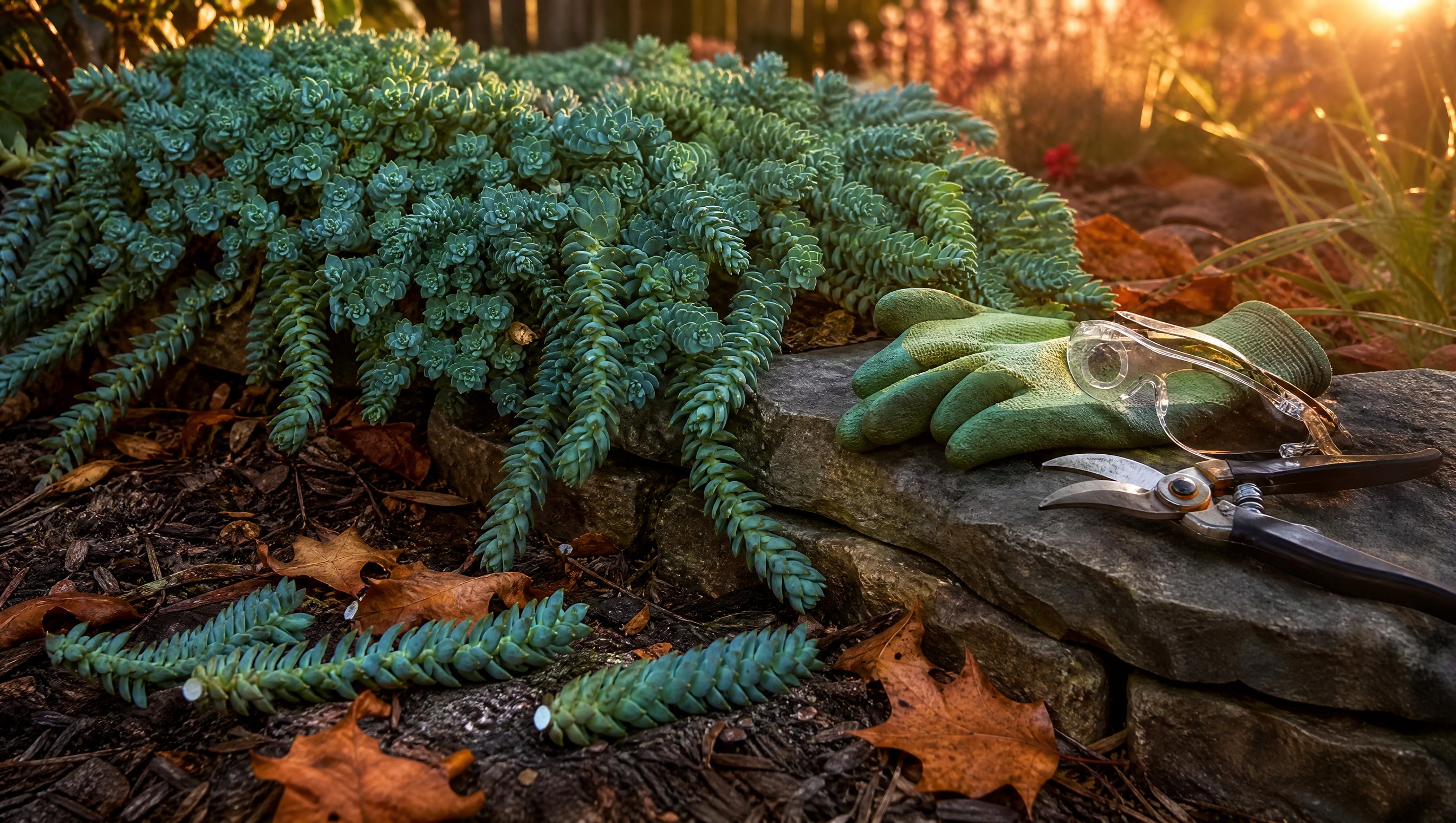

Fall cleanup is when the shears come out for everything in the bed, including the euphorbias. Donkey-tail spurge spilling over the edging, cushion spurge gone shaggy, a Mediterranean spurge that needs tidying. They are easy plants to grow and easy plants to forget about, right up until you cut one and a bead of white sap wells up at the cut.
THE SAP IS THE PROBLEM
NC State Extension's plant toolbox notes that all euphorbias emit a toxic milky latex when cut, with varying degrees of toxicity.
That milky white sap is found in all parts of the plant, and NC State says it can cause mild to severe contact dermatitis, a skin rash.
Not everyone reacts the same way. Susan Mahr of University of Wisconsin-Madison Extension writes that the sap can cause skin irritation or severe dermatitis in susceptible individuals. If you have cut spurge bare-handed for years without trouble, you may simply be one of the lucky ones.
PROTECT YOUR EYES
The eyes are the real worry. NC State warns that if the sap gets into the eyes, it can cause temporary to permanent damage to the cornea.
Mahr's advice is to be especially careful when working with the plant, so that no sap gets into cuts or into your eyes. That means no rubbing your eyes or wiping your face with a glove that has been handling cut stems.
HOW TO CUT IT BACK
Mahr's rule is simple: wear gloves, or wash the skin immediately if any sap gets on it. NC State says the same for anyone handling any part of these plants: be sure to wear protective gloves.
Work slowly, cut one stem at a time, and lay the cut pieces straight into a bucket or a bag instead of carrying them in an armful.
For donkey-tail spurge, Mahr's main cut actually comes earlier in the year. She advises cutting the old stems to the base when the flowers start to fade, to prevent reseeding and keep the plants compact and tidy.
That reseeding is worth taking seriously. Mahr notes that donkey-tail spurge readily reseeds and can be an aggressive plant, taking over large areas under favorable conditions if it is not deadheaded.
KEEP IT AWAY FROM MOUTHS
Mahr writes that the milky sap is poisonous if eaten, and NC State notes that eating plant parts can blister the lips and mouth. Its advice is to avoid ingesting any part of the plant and to keep these plants away from pets and children.
In practice, that means gathering up every cut stem when you are done, rather than leaving them on the lawn or the patio where a curious dog or a toddler can find them.
THIS WEEK
Before you start your fall cleanup, set out gloves and a pair of glasses or safety glasses next to the pruners. Cut the euphorbias with them on, bag the stems as you go, and wash up before you touch your face.
