
Watering & care · Oct 7, 2026 · By Nell Harding
Leave the Little Bluestem Standing for Winter
By October little bluestem has turned copper and wine-red, with silvery seed tufts all along its stems. It looks like something to cut back with the rest of the bed. Here is who eats those seeds, who spends the winter in the clumps, and when to finally cut it.
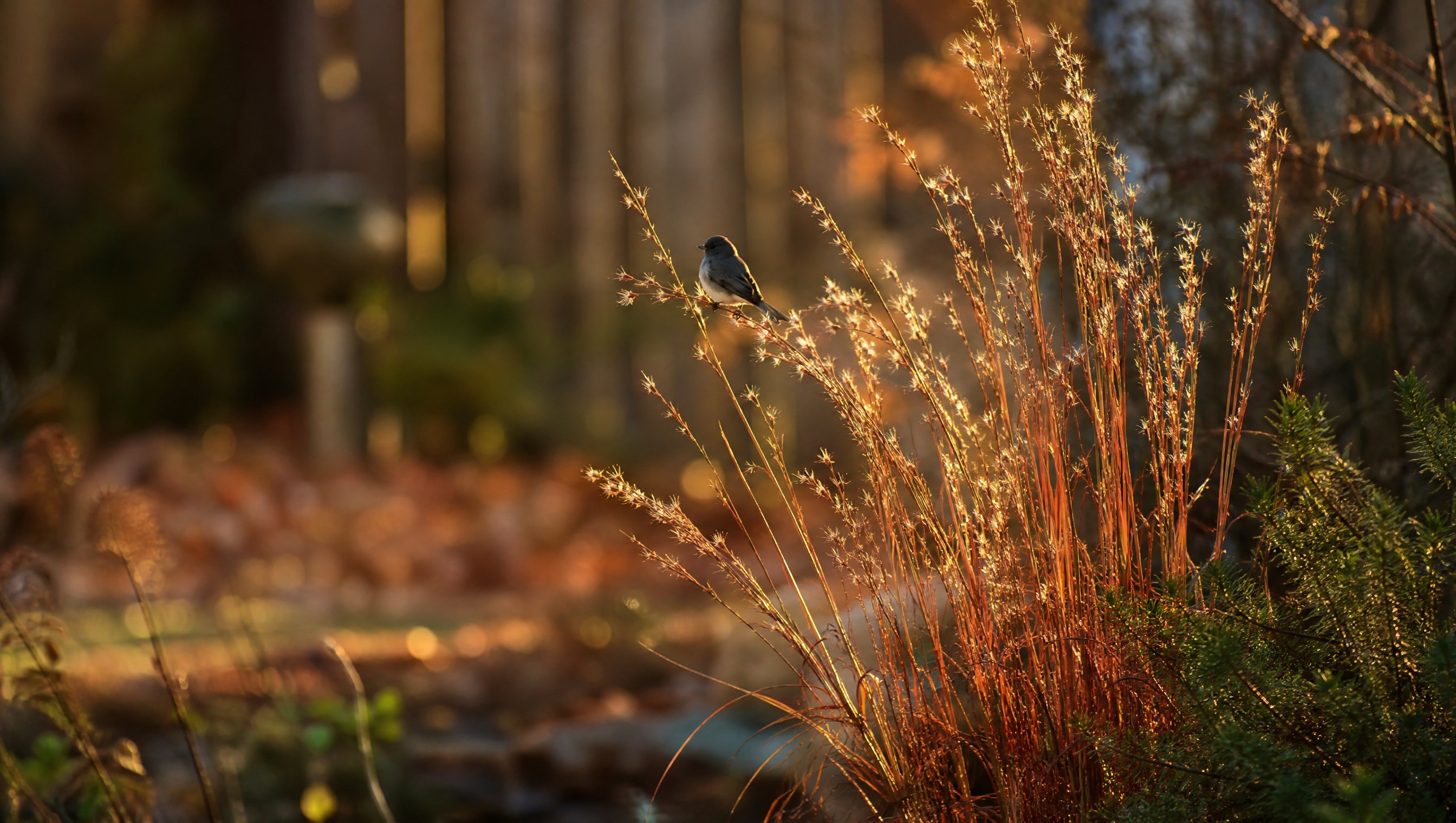

All summer little bluestem was a quiet blue-green clump at the edge of the bed. Now it has come into its own, the stems gone copper and red and dotted with small silvery tufts of seed that catch the low sun. It is also exactly the kind of plant that gets sheared off in a tidy fall cleanup. This year, leave it standing.
A WINTER PANTRY
Sarah W. Middeleer of Connecticut Audubon writes that many songbirds, including finches, juncos and chipping, field and tree sparrows, eat the high-value seeds of little bluestem in winter.
Illinois Wildflowers names the same kind of visitors: the field sparrow, the tree sparrow, the slate-colored junco and other small songbirds eat the seeds, particularly during the winter.
Cut the clumps to the ground in October, and that winter food goes to the compost pile instead.
WHO SLEEPS IN THE CLUMPS
The seeds are only half of it. Middeleer notes that dusky skipper caterpillars overwinter in tube tents above the clumps, small shelters built right in the grass.
Skippers are small butterflies, and little bluestem feeds several of them. Illinois Wildflowers lists the caterpillars of the dusted skipper, cobweb skipper, Ottoe skipper, Indian skipper, swarthy skipper and crossline skipper among those that feed on its leaves.
THE WINTER LOOK
Leaving it is no hardship to look at. Middeleer describes the autumn stems turning copper and red, and says that together with the silver, feathery dried flowers they create a dramatic display.
Illinois Wildflowers notes that the stems and leaves become various shades of tan, brown or wine-red during the autumn and winter, so the color holds long after the rest of the bed has gone brown.
It is not a giant, either. Middeleer gives it a height of two to four feet, so a few clumps will not take over the view.
WHEN TO CUT IT
Middeleer writes that the usual recommendation is to cut back the old stems in late winter or early spring.
She also offers a gentler option: wait for a stretch of warmer weather before you cut, which lets the insects wintering in the stems come out at their own pace.
THIS WEEK
When you cut back the bed, work around the little bluestem. Leave the clumps whole, seed heads and all, and come back to them once the warm days of spring arrive.
