
Watering & care · Oct 6, 2026 · By Nell Harding
Leave the Joe-Pye Weed Standing for Winter
By October the tall Joe-Pye weed at the back of the border has gone to fluffy, faded seed. It is tempting to cut it down with the rest of the fall cleanup. Here is why gardeners and botanic gardens say to let it stand, who uses it over the winter, and when to finally cut it back.
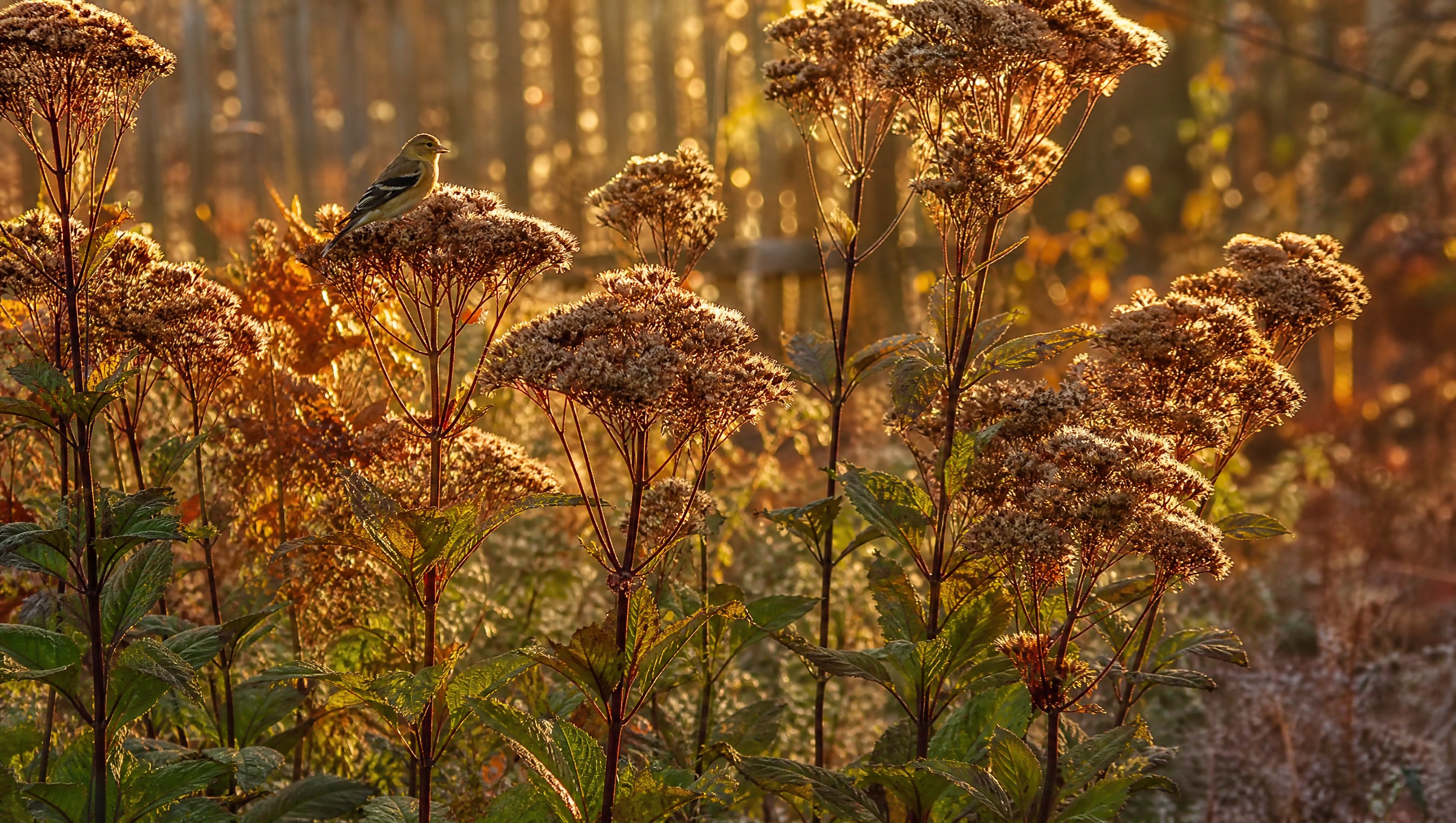

In late summer the Joe-Pye weed at the back of the bed was a tower of dusty pink blooms with butterflies all over it. By October the flowers have faded to big, soft domes of seed, the leaves are turning tan, and the whole stand looks ready for the shears. Before you cut it, consider leaving it right where it is.
A WINTER PANTRY
Brooklyn Botanic Garden, in a piece by Ellie Shechet on leaving perennials standing for birds, calls Joe-Pye weed an easy wildflower for home gardeners to grow, and notes that in the winter these plants offer seeds for birds.
The same article names the kinds of birds that pick through standing perennials for seeds once the weather turns, among them goldfinches, juncos, chickadees, titmice, cardinals, nuthatches and woodpeckers.
Penn State Extension's Nancy Knauss and Pamela Hubbard make the same point about the garden as a whole. Many birds, they write, rely on the seed heads of dried perennials for food, and it is common to see goldfinches working a stand of purple coneflower.
A PLACE TO SHELTER
The stems matter too. Brooklyn Botanic Garden notes that Joe-Pye weed's hollow stems give solitary bees and other insects an inviting place to spend the winter, and one expert quoted there describes a standing stem as a little protection, a winter house.
Penn State adds that beneficial insects may hide in or near native plants through the winter as pupae, caterpillars or eggs, with the plants giving them shelter from predators.
They give one example from nearby: the viceroy, a native butterfly, rolls itself in a leaf and drops to the ground, where it stays until spring. That, Penn State says, is a good reason not to rake up all the plant debris around the bed either.
IT LOOKS GOOD, TOO
Leaving it is not just for the wildlife. Knauss and Hubbard suggest letting the seeds of Joe-Pye weed and Sedum 'Autumn Joy' display their large, round, lacy globes all winter long, and point out that in a snowy winter some plants give the garden real height and structure.
THE ONE EXCEPTION
If a plant had disease or insect pest problems this year, Penn State says to cut it back in fall to reduce the chance of infection the following season. A clean, healthy stand can stay.
WHEN TO CUT IT DOWN
Penn State's advice is to leave perennials standing until spring, then cut them back before the new shoots appear.
Brooklyn Botanic Garden quotes a more specific signal: wait until you see pollinators flying around and temperatures are consistently around 50 degrees Fahrenheit. In the Northeast, that is around March or April.
So this fall, walk past the Joe-Pye weed with the shears. Come back for it in spring, when the bees are flying again.
