Garden myths · Jun 23, 2026 · The 2026 edition
Do you really have to prune tomato suckers?
Gardening's most confident advice, tested: what pruning actually buys you, and when it buys nothing.
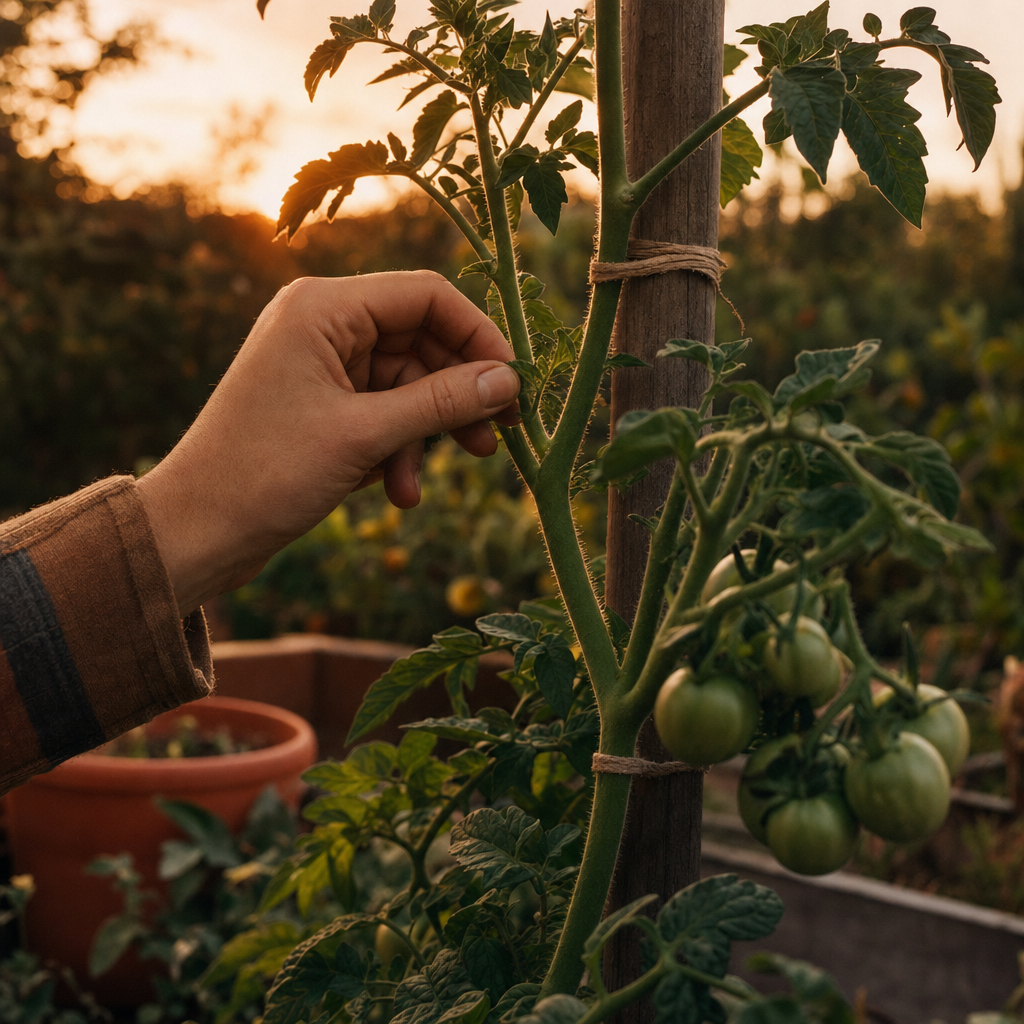
Somewhere in every gardener's first summer, a neighbor points into their tomatoes with genuine alarm: you have to pinch those suckers, they steal energy from the fruit. It is delivered as settled law. It is actually a choice with real trade-offs, it depends entirely on which kind of tomato you planted, and for a large share of home gardens the honest answer is: no, you do not.
First, the vocabulary. A sucker is the shoot that appears in the crotch between the main stem and a leaf branch, at 45 degrees. Left alone it becomes a full stem with its own leaves, flowers, and fruit. That last part matters: the word 'sucker' implies a parasite, but every sucker is a future fruiting branch. Nothing about it sucks.
The real question is architecture. Determinate (bush) tomatoes, including most patio and paste varieties, grow to a preset size, set essentially all their fruit at once, and stop. Pruning them removes fruit, full stop; the plant was never going to sprawl. Rule one, no exceptions: do not prune determinate tomatoes beyond the leaves touching the soil.
Indeterminate varieties, the big beefsteaks, cherries, and most heirlooms, are vines that grow until frost kills them. Left totally unpruned, one plant becomes a six-foot bramble with dozens of fruiting stems. Pruned to one or two leaders, it becomes a tidy cordon you can train up a single stake. Both are legitimate tomato plants. They are just different bargains.
Here is the bargain, stated straight, because this is where the folklore overpromises. Pruning gives you: somewhat larger individual fruit, a few days earlier ripening, dramatically better airflow (which means less disease pressure in humid climates), and a plant that fits a small space. Pruning costs you: total yield. The controlled comparisons are consistent on this: the unpruned sprawler almost always produces more pounds of tomatoes, just smaller ones, later, on a wilder plant. 'Suckers steal from the plant' is backwards; suckers ARE the plant making more tomatoes.
So the decision tree is short. Small space, humid summers, staking single plants, chasing big slicers? Prune to one or two stems and enjoy the tidiness. Room to sprawl in a cage, dry climate, growing cherries (whose fruit cannot get 'bigger' in any way you would notice), or simply want maximum harvest? Let it bush out and skip the weekly pinching chore entirely. Neither camp needs to apologize.
If you do prune, technique is two sentences. Pinch suckers young, at two to four inches, with fingers on a dry morning; snapping small green shoots heals in hours, while cutting thick woody ones leaves wounds. And never remove more than a third of the foliage: leaves are the sugar factory, and tomatoes flavored by a well-leafed plant beat the sunscalded fruit of an over-pruned one.
Two prunes ARE worth doing on every tomato, both kinds, and they get lost in the sucker debate. Strip the lowest leaves so nothing touches soil; that is the splash-borne blight ladder, and removing it is pure win. And about a month before your first frost, top the plant, cutting the growing tips, so the vine stops making new green fruit it cannot ripen and pours everything into what is already hanging.
The sucker sermon survives because it once solved a real problem: market growers in humid climates, packing plants tight, staking high, selling by fruit size. Their rule migrated into backyards where the constraints mostly do not apply, and it kept its confident tone in transit. Your neighbor is not wrong for their garden. They are just not automatically right for yours.
So this season, run the honest experiment: prune one indeterminate plant to a clean cordon and let its twin sprawl in a big cage. Weigh what you pick. Whichever side wins in your climate, on your table, is your answer for the next decade, and it will be an answer you own instead of one you inherited.
New entries land here through the season.
Follow the garden day to day on Facebook