Garden myths · Jul 24, 2026 · The 2026 edition
Eggshells in the garden: what they actually do (and don't)
Half the internet swears by them, half calls them a myth. The truth is quieter than both camps.
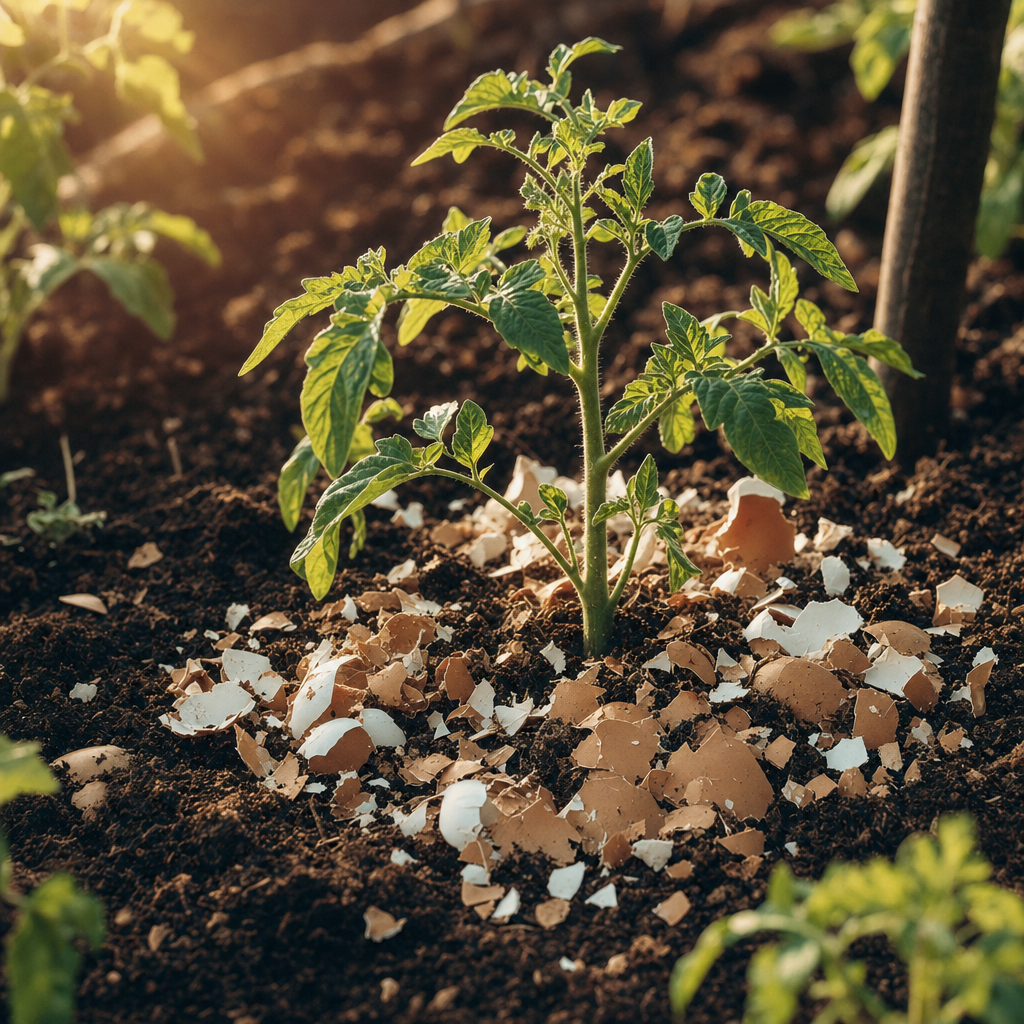
Few kitchen scraps carry as much garden folklore as the eggshell. They are credited with stopping blossom end rot, repelling slugs, feeding tomatoes, and deterring cats, and dismissed just as loudly as compost-bin decoration. As usual, the truth sits in the middle, and it depends almost entirely on one thing: how finely you crush them.
Start with what an eggshell is: about 95 percent calcium carbonate, the same compound as garden lime, wrapped in a thin protein membrane. Calcium matters to plants. It builds cell walls, and a calcium shortage at the wrong moment is one trigger of blossom end rot, the sunken black patch that ruins the first tomatoes of the season.
Here is the catch. A halved eggshell tossed in a planting hole breaks down over years, not weeks. Soil scientists have buried shells and dug them up seasons later looking nearly untouched. If you can still recognize it as an eggshell, it is not feeding anything yet.
Ground to a powder, the story changes completely. Shell powder with pieces the size of dust dissolves into plant-available calcium within a season, especially in slightly acidic soil. A cheap coffee grinder, or a rolling pin and a zip bag, turns a week of breakfast shells into a spoonful of slow garden lime.
So the honest verdict on blossom end rot: powdered shells can help in genuinely calcium-poor soil, but most garden soil is not calcium-poor. End rot is usually a watering problem, not a calcium problem. The plant cannot move calcium it already has because the soil swung from soaked to bone dry. Fix the watering rhythm first; the shells are a bonus, not a cure.
The slug barrier is the claim that holds up worst. The idea is that sharp shell edges cut soft slug bellies. Slugs produce mucus precisely so terrain does not matter, and controlled trials have watched slugs cross shell rings to reach lettuce without hesitation. If slugs are your war, copper tape, beer traps, and evening picking are the real weapons.
As a soil amendment in bulk, through compost, shells are quietly excellent. They add calcium without shifting pH as hard as lime does, they take the edge off compost's natural acidity, and the membrane adds a trace of nitrogen. Crush them at least roughly before they go in the bin so the pile's moisture and microbes can work on the extra surface area.
Two smaller uses earn their place. Half shells make charming, compostable seed-starting cups for a single seed each: poke a drainage hole, and plant shell and all when the seedling is ready, crushing the shell as you set it. And a scatter of coarse shell near the bird feeder supplies the grit and calcium laying birds hunt for in spring.
What shells will not do: change your soil's pH meaningfully in useful time (whole shells are too slow, and powder in normal quantities is too small a dose), repel cats or deer (there is nothing in the smell they mind), or feed plants any nitrogen worth counting.
The practical routine, if you want one: rinse shells, let them dry on the counter, and once a week grind the collection to powder. Through the season, a spoonful goes in each planting hole for tomatoes, peppers, and squash, and the rest goes to the compost. Total cost: nothing. Total effort: two minutes a week. That is the honest size of the eggshell's contribution: real, small, and free.
In a garden, small and free and real is worth keeping. Just do not expect the shells to fight your slugs for you.
New entries land here through the season.
Follow the garden day to day on Facebook