
Watering & care · Sep 26, 2026 · By Nell Harding
The Woodpecker on Your Lawn Is Eating Ants, and Many of Them Are Leaving Soon
The northern flicker is a woodpecker that hunts on the ground, and ants are its favorite food. Here is how to tell one from a robin, why it rubs ants on its feathers, and why fall is the time to enjoy it before many of them head south.
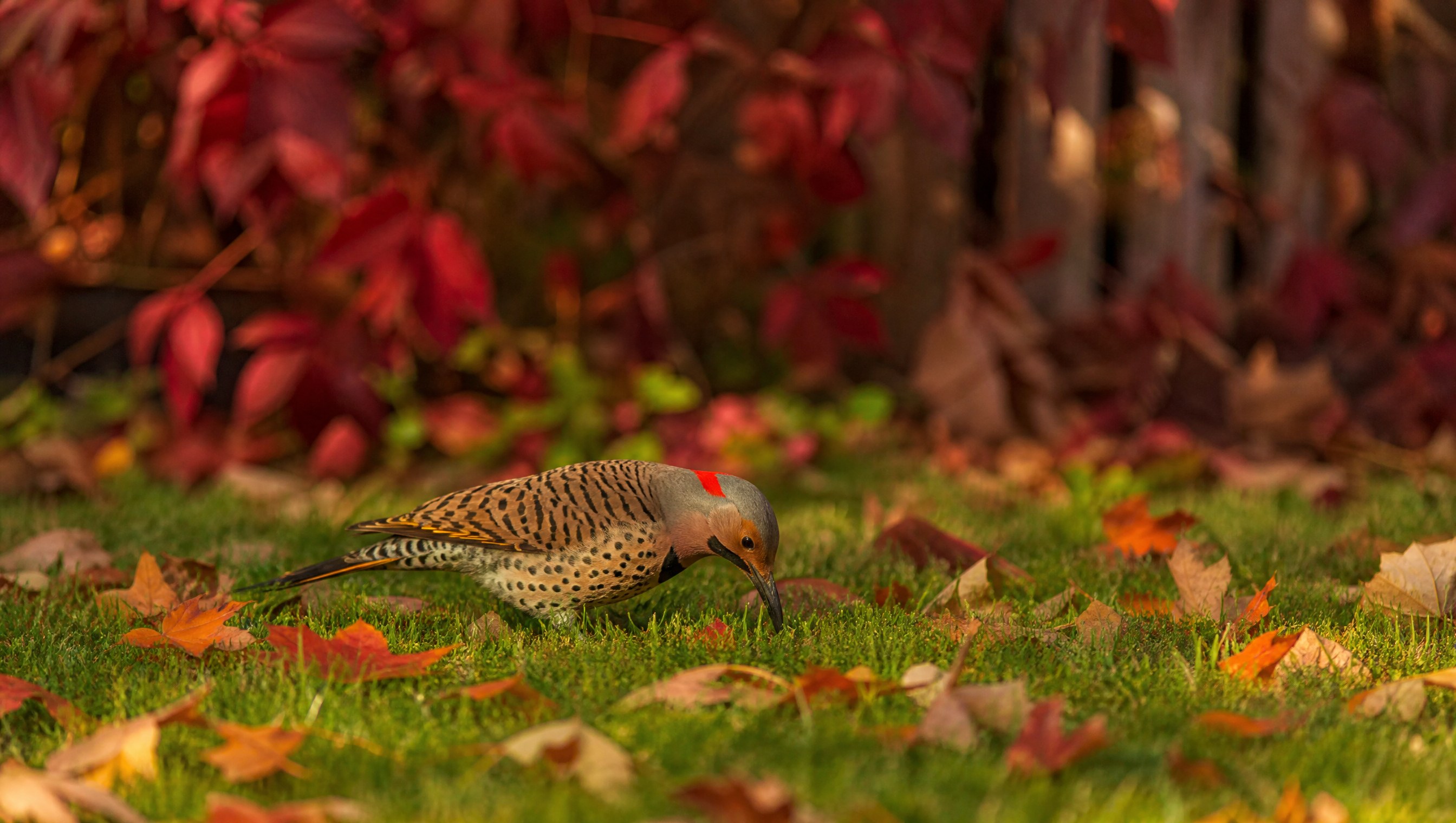

At first glance it looks like a robin: a brownish bird working the lawn, hopping a few steps, stopping, jabbing at the grass. Then it flies, and there is a flash of golden yellow under its wings and a patch of white on its rump as bright as a tail light. That is no robin. It is a northern flicker, a woodpecker that has figured out the best food in the yard is not in the trees at all, and this is the time of year to enjoy one, because many of them are about to leave.
A WOODPECKER ON THE GROUND
Most woodpeckers spend their lives clinging to bark. The flicker is different. The Chicago Botanic Garden explains that because the northern flicker especially loves ants, it prefers feeding on the ground, plucking its food from anthills, grassy meadows and lawns. Audubon's field guide describes the same habit: it forages by hopping on the ground, climbing tree trunks and limbs, and occasionally flying out to catch insects in the air.
Once you know to look for it, the flicker is easy to tell apart from the birds it shares the lawn with. The Chicago Botanic Garden lists the marks: a barred back, black spots on a white belly, a bold black chest bib and a red crescent on a gray neck. The male has a black mustache, and the female sometimes has a gray one. In flight you will see the golden yellow of the underwings. That yellow is why the eastern form is called the yellow-shafted flicker.
THE ANT SPECIALIST
The flicker's taste for ants is not a small preference. Audubon's field guide says the northern flicker probably eats ants more frequently than any other North American bird. Watch one at work and you will see it drive its bill into the soil again and again at the same spot. It has found a colony, and it is working it the way you might work a bowl of popcorn.
Ants do more than feed it. The Chicago Botanic Garden notes that flickers also squash ants and apply them to their bodies, because ants produce formic acid, which kills parasites on the bird's skin and feathers. Birders call this anting, and a flicker lying on the lawn with its wings spread, looking oddly unwell, may simply be giving itself a treatment.
This is one reason a flicker is a good bird to have around. It spends its days eating the insects many gardeners are trying to get rid of, and it asks for nothing in return except a lawn where the ants are still alive.
A WOODPECKER THAT MIGRATES
Here is the part that makes fall special. Most woodpeckers stay put for the winter, working the same trees in January that they worked in June. The flicker is an exception. The Chicago Botanic Garden says most North American woodpeckers do not migrate, but some northern flickers do, especially those that spend the summer in northern Illinois.
Audubon's field guide fills in the picture: the northern yellow-shafted flickers from Alaska and Canada are strongly migratory, most traveling east and then south, and big flights move down the Atlantic Coast in the fall, migrating by day. That daytime travel is a gift to anyone watching. On a clear fall morning you may see flicker after flicker pass over, flashing that yellow as they go.
Not every flicker leaves. Birds that nest farther south may stay the winter, and some from the north travel only as far as they need to. So the flicker on your lawn this week may be a year-round neighbor, a local bird about to leave, or a traveler from much farther north stopping to refuel.
HOW TO FIND ONE THIS WEEK
The trick is to stop looking up. Most of us scan the tree trunks when we think of woodpeckers, and the flicker is down on the grass the whole time, half hidden by its own brown, barred back. Watch the open lawn and the edges of paths, especially the thin, sunny patches where ants build their small mounds. A bird that looks like a robin but hops with a heavier, more deliberate step, and keeps returning to the same spot, is worth a second look.
If it flushes, you will know for certain. The golden flash under the wings and the white rump patch as it flies away are marks no other bird in the yard carries together. Many people see their first flicker exactly this way, as a burst of yellow and white lifting off the lawn, and then realize it has been visiting for weeks.
WHAT IT EATS ON THE WAY
Ants get scarce as the ground cools, and the flicker switches its menu. Audubon says it eats many fruits and berries, especially in fall and winter, and seeds and nuts at times. The Chicago Botanic Garden lists the berries of poison ivy, Virginia creeper and other fall fruits, along with insects such as ants and grasshoppers in fields. The red Virginia creeper on your fence and the berries on the wild edge of the yard are fuel for the trip.
WHAT YOU CAN DO
The flicker's needs are simple, and most of them come down to leaving things alone. A lawn that has not been treated for insects is a lawn with ants, and a lawn with ants is what brings a flicker down out of the trees. A wild corner with berrying vines and shrubs gives migrating flickers something to eat in fall. And a dead or dying tree left standing, where it is safe to do so, gives woodpeckers a place to dig a nest in spring.
Then there is the pleasure of waiting. The Chicago Botanic Garden expects its flickers back in April and counts them among the birds that can be called harbingers of spring. The one you watch on the lawn this week, flashing yellow as it goes, is the one you will be glad to see again when the ground thaws.
