
Watering & care · Sep 16, 2026 · By Nell Harding
The Tree That Turned Early
A field note from the back lawn. One of the two maples went orange on its west side in the first week of September while its twin stayed green, and the tree was not announcing the season. It was announcing a root. What I found at the base in the morning, which early colours are normal and which are a flag, and the three things to look for where the trunk meets the ground.
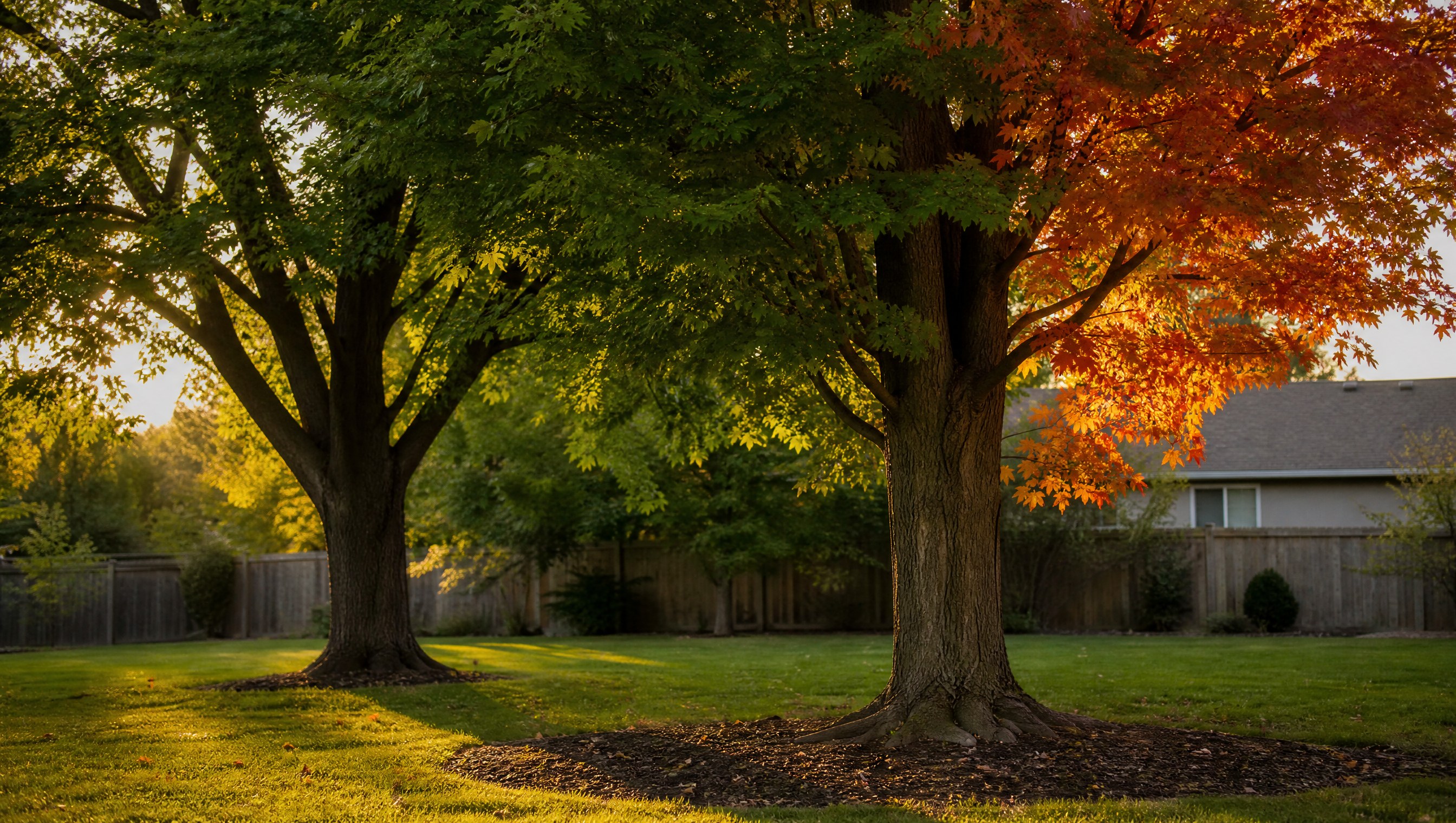

There are two red maples at the bottom of the lawn, planted the same spring from the same nursery, and for eleven years they have done everything together. This year the one on the left went orange on its west side in the first week of September. The rest of it was green. The tree beside it was green. It was eighty degrees.
The easy reading is that autumn is early, and every year somebody in the neighbourhood says so. But autumn does not arrive on one side of one tree. When a tree colours while its own kind next door is still in full summer green, or when one branch or one flank turns and the rest does not, the tree is not reading the calendar. It is under stress, and the side that turned is the side with the trouble.
The extension people in Illinois, Wisconsin and Michigan all say the same thing. A tree shuts down leaves early when it cannot supply them, and the usual reasons are ordinary. A root that has grown around its own trunk and is slowly strangling it. A wound at the base from the mower. Compacted soil. A summer drought the tree never got over. Construction that cut the roots on one side.
Some trees are exempt. Staghorn sumac goes scarlet in August on purpose, Virginia creeper is red by Labor Day, black gum and some dogwoods turn early every year. None of those is a flag. The flag is the tree that is early compared with itself and its neighbours.
So in the morning I went to the base of the left-hand maple and looked at where the trunk meets the ground. A healthy trunk flares at the bottom like the foot of a wine glass, the big roots visible as they leave it. This one went into the mulch straight, like a fence post. I pulled the mulch back with my hands, three inches of it, and there was the root, thicker than my thumb, wrapped a third of the way around the trunk on the west side and pressed into the bark.
That is a girdling root, and red maples are famous for them. It grows in a circle in the nursery pot, gets planted in that circle, and spends a decade slowly tightening as both it and the trunk get fatter. The side it wraps is the side that runs short of water, and the side that runs short of water is the side that gives up its leaves first. The tree had been telling me about it since the first week of September.
A root thinner than your thumb you can cut out yourself with a pruning saw, in the cool of the morning. Mine was bigger and I called the arborist, who blew the soil off the whole flare with an air spade, found a second one I had missed, and took them both out in twenty minutes. The tree will not recover this year. It should next year.
If the base is clean, the answer is almost always water. A tree that turned early after a dry summer wants a slow deep soak once a week until the ground freezes, a hose at a trickle at the drip line for an hour, not a sprinkler for ten minutes. It is too late for this year's leaves and exactly the right time for next year's.
Tonight the left-hand maple is half orange and the right-hand one is green, and for the first time in eleven years I know why.
