
Garden myths · Aug 26, 2026 · By Nell Harding
The Worm in Your Parsley Is a Butterfly
The fat green caterpillar stripping your parsley has been squished by generations of gardeners as a pest, and it is a black swallowtail butterfly about three weeks early. Here is the honest math on letting it eat.
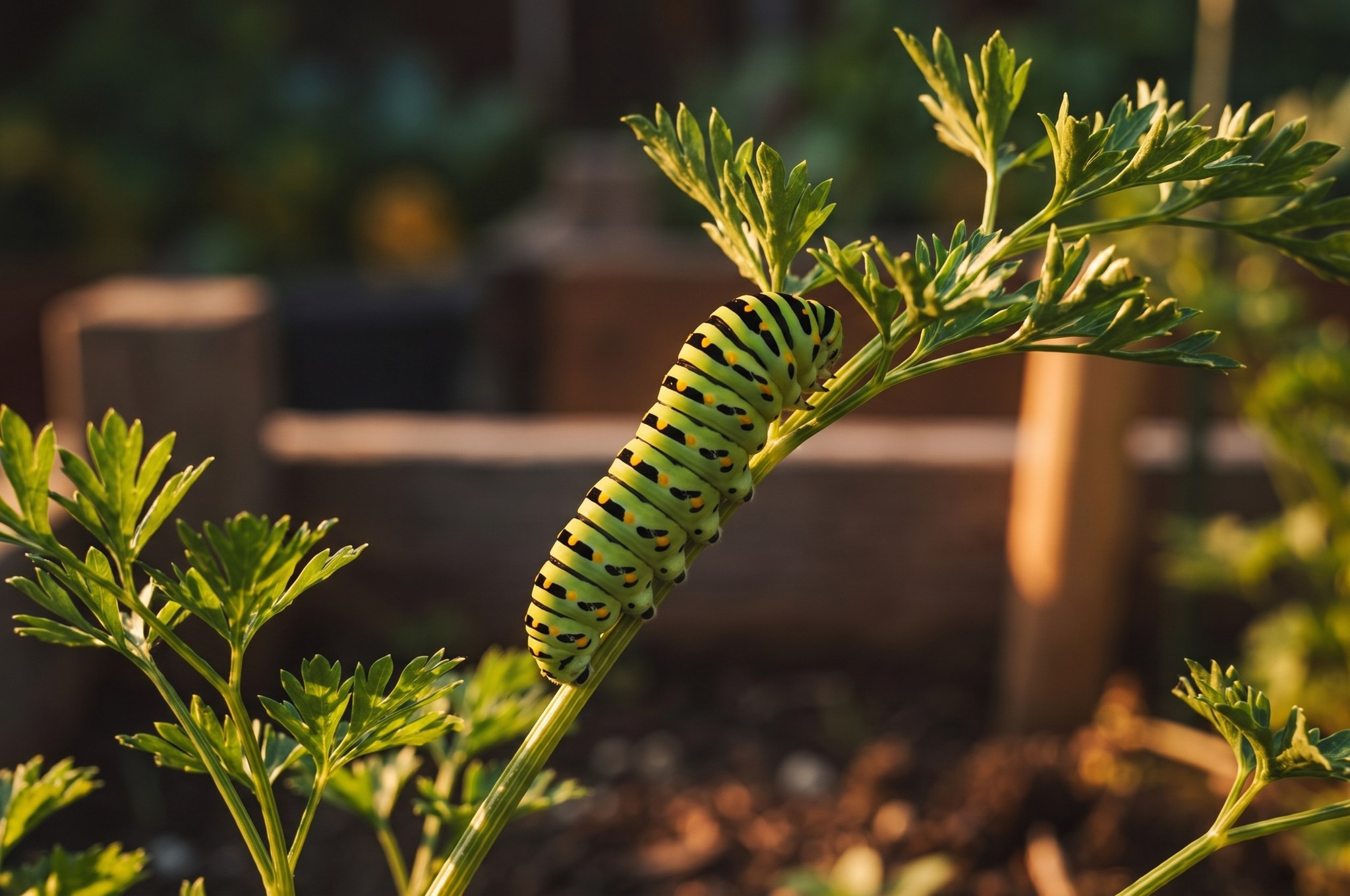

Somewhere this week a gardener is going to find a plump green caterpillar banded in black working through the parsley, and an old reflex is going to fire. The thing even has a pest's name. Old garden books call it the parsley worm, and they recommended dealing with it the way you deal with worms. Which is a shame, because it is not a worm, it is not much of a pest, and it is one of the prettiest butterflies in North America running about three weeks behind schedule.
The parsley worm is the caterpillar of the black swallowtail, the big dark butterfly with the blue and orange trim you have watched sail over the beds all summer. The adult is welcome everywhere. The youngster gets the jar of soapy water. Same animal, three weeks apart.
It ends up in your parsley for a reason worth respecting. Black swallowtail caterpillars can only eat plants in the carrot family: parsley, dill, fennel, carrot tops, and the roadside Queen Anne's lace. Those plants defend themselves with aromatic oils that most insects cannot handle. This one lineage cracked the chemistry, and the compounds that make parsley taste like parsley are now the only thing its caterpillars can live on. When one shows up on your herbs, you are not seeing a random pest. You are seeing a specialist visiting one of the only tables in town.
The honest math
Now the damage question, honestly. Yes, it eats. A big caterpillar in its last week can strip a few stems down to ribs, and two or three together can make a young parsley plant look rough. If you grow one small pot of herbs on a balcony, we understand the alarm.
But run the numbers from the plant's side. Parsley is a cut-and-come-again crop that regrows clipped stems in a week or two, and it does not mind the pruning. A caterpillar takes less than most of us harvest for a single batch of tabbouleh. The plant recovers. The butterfly does not, because there is no spare butterfly.
And what you get back has a longer season than what you gave. That caterpillar becomes a pollinator that works your flowers for weeks, and a mother that leaves the next generation in your garden rather than someone else's. The trade is a few stems of a plant that regrows for an ally that returns.
The old fix still works
The old-timers had a fix for the conflict that we have never improved on. Plant two rows of dill, one for the kitchen and one for the caterpillars. When you find a parsley worm on the plant you want, do not squish it. Move it ten feet to the sacrifice row. It will settle in and finish the job there. Dill is cheap, it self-sows, and a row of it buys peace for the whole carrot family in your beds.
If you handle one, you may get a show. A poked parsley worm can pop out a pair of soft orange horns from behind its head, along with a smell somewhere between rotten citrus and old cheese. That organ, the osmeterium, is its entire arsenal. No sting, no bite, no toxin that touches you. It is a bluff dressed up as a threat, which is more than most of us can say for our own defenses.
The ones you find in late August matter more than the June ones, and this is the part the old books missed. This is the year's last generation. The caterpillars feeding now will not become butterflies in two weeks like their summer siblings. They will wander off the plant, fasten themselves to a stem or a fence rail with a little silk sling, and harden into a brown, bark-colored chrysalis that stands through the whole winter.
Winter housing
That chrysalis is why fall cleanup deserves a light touch near the herb bed. A tidy gardener who cuts every dead stalk to the ground in October is very likely hauling next June's swallowtails to the curb without ever seeing them. Leave a margin of standing stems within a few yards of where the caterpillars fed. The chrysalis needs nothing from you but a post to lean on and permission to look like a piece of dead stick until May.
So this week, before the reflex fires, look twice at the worm in the parsley. Green body, black bands, little yellow-orange dots along each band. That is not a pest wearing a disguise. That is a butterfly still getting dressed, three weeks early, on the only food it can eat.
Squishing one has always been legal. It has just never been a bargain.
