
Planting & timing · Sep 25, 2026 · By Nell Harding
The Mockingbird Singing This Fall Is Claiming Its Winter Berries
The mockingbird's fall song is not about spring romance. It is about food. Here is why both males and females sing in autumn, what the bird is defending, and what it means for the berry shrubs in your yard.
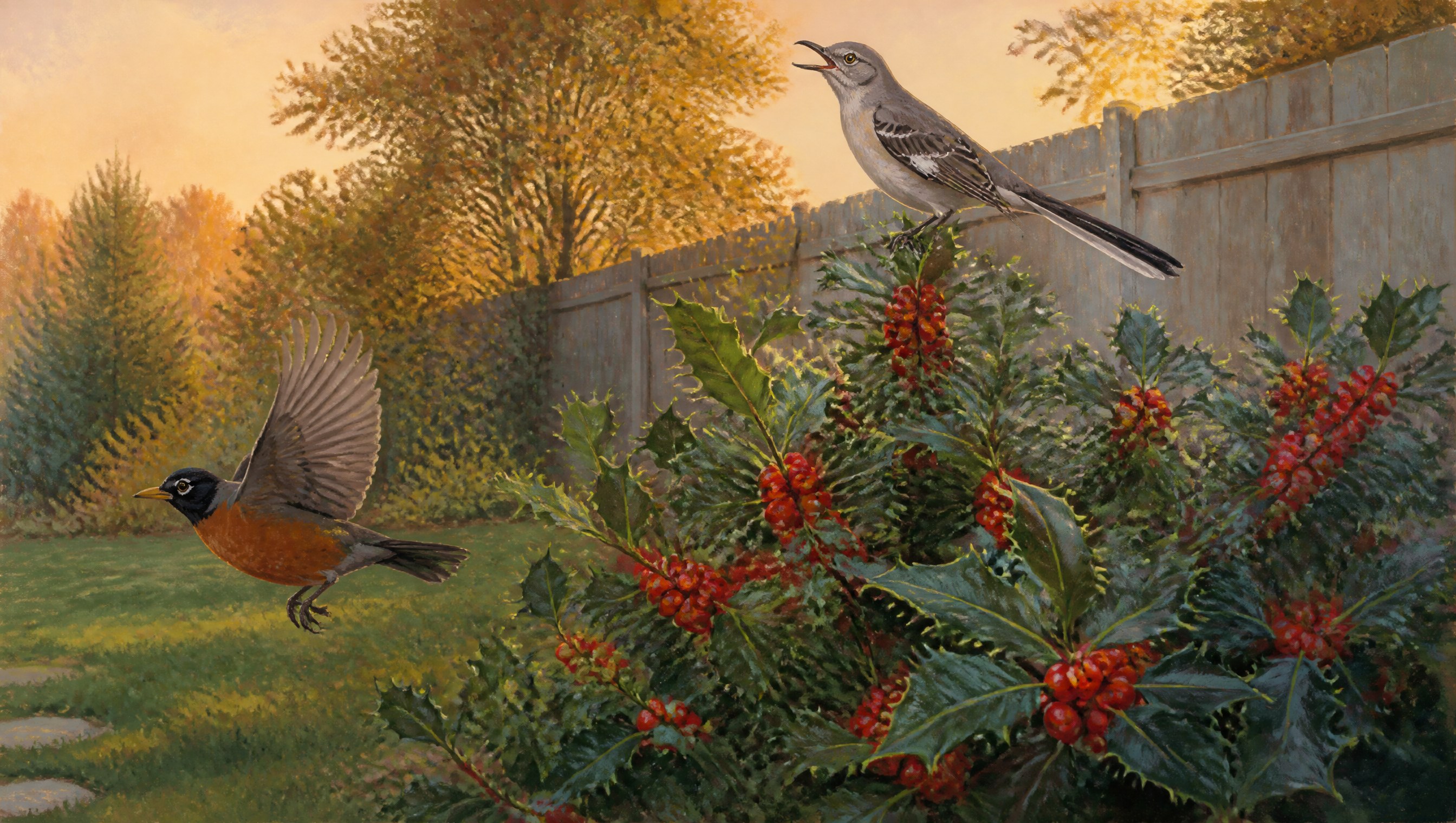

For a while it seemed the yard had gone quiet. Then, on a warm afternoon this month, the mockingbird was back on top of the holly, running through phrase after phrase, and diving at anything else with wings that dared to land in the bush. Spring song is easy to explain; it is about mates. The fall concert is a different piece of music with a different purpose, and once you know what it is for, you will never hear it the same way again.
THE FALL SONG IS ABOUT FOOD
Annie Reid, who writes the Nature Notes column for the Westborough Community Land Trust in Massachusetts, describes what is going on. In the fall, she writes, male and female mockingbirds set up wintering territories, either together or separately. These territories center on a tree or dense shrub that provides berries or fruit, and at this time both the male and the female sing to defend a chosen winter food source against other fruit-eating birds.
That last detail surprises most people. We tend to think of birdsong as a male business tied to spring. In the mockingbird's case, Reid notes that females also sing, though more quietly and more likely during the fall. The softer voice on the far side of the yard may be a second bird holding a territory of her own, not an echo of the first.
So the autumn song is less a love song than a property notice. It tells every other fruit-eating bird in earshot that this particular bush is spoken for, and the dives and chases that go with it are the notice being enforced.
WHY BERRIES
The reason is the menu. The Audubon field guide says the mockingbird's diet during fall and winter relies heavily on berries and wild fruits, occasionally supplemented with a few cultivated fruits. The National Wildlife Federation says the same thing in its own words: in the fall and winter, the mockingbird relies more heavily on berries and wild fruits.
Put those facts together and the fall song makes sense. A bird that will live largely on fruit through the cold months needs to know where that fruit is, and it needs to keep it. A shrub loaded with berries in October is a savings account, and every other fruit-eating bird that lands in it is trying to make a withdrawal.
Seen that way, the bird on top of your holly is not being bad-tempered. It is planning. The fruit it defends now is the fruit it will be eating in January, when there is far less of everything to go around.
HOW TO READ THE TERRITORY
You can often map a mockingbird's winter claim from the kitchen window. Reid's description gives you the starting point: the territory centers on a tree or dense shrub with berries or fruit. Look first at whatever in your yard, or just over the fence, is still holding fruit. Then notice where the singer perches, which bush it keeps returning to, and which birds it chases away.
Keep a note of what you see over a couple of weeks. The same perch, the same bush and the same chases, day after day, is the territory taking shape. It is one of the few bird dramas you can follow from start to finish without binoculars, and it plays out on your own property, over fruit you may have planted without a thought for who would end up eating it.
Listen to the song itself, too. Audubon describes it as a long series of musical and grating phrases, each repeated three or more times, and notes that the bird often imitates other birds. If you hear a run of borrowed calls, each one said three times over, you are almost certainly hearing a mockingbird rather than the birds it is copying.
And if it keeps going after dark, that is normal as well. Audubon notes that the mockingbird regularly sings at night, so an evening performance from the top of the holly is not a sign that anything is wrong.
WHAT IT MEANS FOR YOUR BERRY SHRUBS
If a mockingbird has picked a shrub in your yard, the most useful thing you can do this fall is leave it alone. A hard fall pruning of a berry bush removes exactly the fruit the bird has chosen to defend. The tidying can wait until the berries are gone, which is the bird's schedule, not the calendar's.
When you plan new plantings, think about fruit that hangs on. The mockingbird's winter depends on berries and wild fruits, so a shrub or small tree that holds its fruit into the cold months is, from the bird's point of view, a pantry worth fighting for. Audubon's note that the diet is occasionally supplemented with cultivated fruits is worth remembering too: the last apples on a backyard tree can end up on the menu.
A WINTER NEIGHBOR
Reid's phrase, either together or separately, is worth reading twice. A pair may share one winter territory, or each bird may hold its own. In a yard with more than one good berry shrub, it is possible to host two mockingbirds with two claims, the louder one and the quieter one, each singing over its own share of the fruit.
The fall song will fade as the weather settles and the territories are known. Until then, every phrase from the top of the holly is the same message, repeated three times for emphasis: this fruit is mine, and I will be here all winter to eat it. Leave the bush standing, and you will have a singer in the yard for months.
