
Garden myths · Sep 24, 2026 · By Nell Harding
The Bald Cardinal at Your Feeder Is Not Sick. It Is Dressing for Winter
Every September someone spots a cardinal with a bare, dark head and fears the worst. The usual reason is the yearly molt, and it is the first step in the cardinal's winter. Here is what the bird is doing now, and what it does month by month until it nests again in spring.
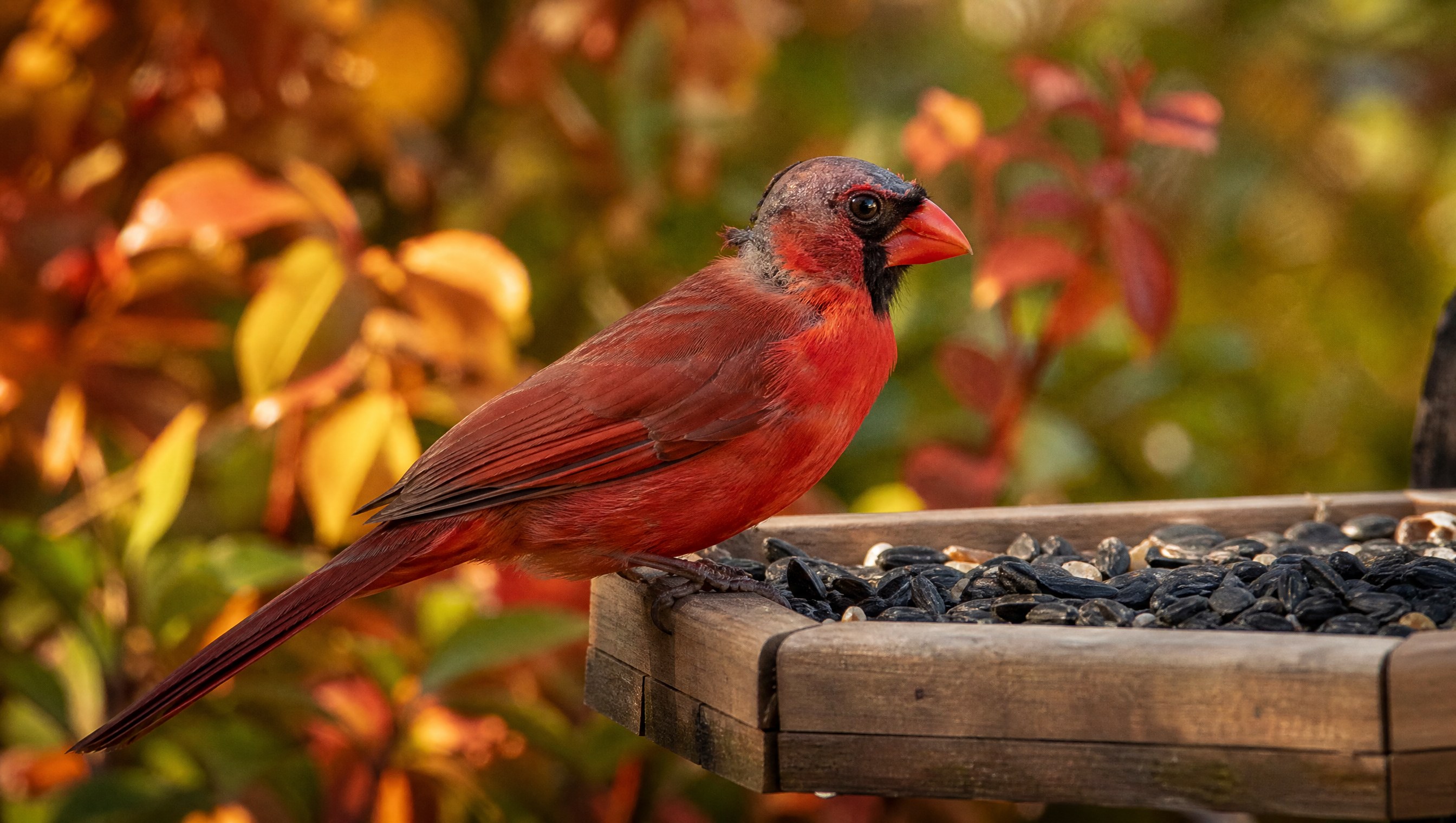

Sooner or later this month, a cardinal shows up at the feeder looking like it lost a fight. The proud crest is gone. The head is bare, the skin dark gray, and on a bird that is otherwise bright and busy it looks alarming, as if something is eating it alive. People write in about it every year. The good news is that in almost every case nothing is wrong. The bird is changing its clothes, and it is doing it on schedule.
WHY THE HEAD GOES BARE
Feathers wear out. A season of nesting, feeding young, pushing through shrubs and sitting out summer storms leaves them frayed and faded, and a bird with worn feathers loses heat and flies less well. So once a year, cardinals replace them. The naturalists at Cincinnati Parks explain that for cardinals this molt happens once a year, typically in late summer, after the breeding season is over.
Most birds drop and regrow their feathers a few at a time, so you barely notice. Some cardinals do it differently with the head. Cincinnati Parks notes that some molt all of their head feathers at once, which leaves them bald until the new ones come in. What you are seeing is the skin underneath, which is simply darker than you would expect on such a bright bird.
The timing makes sense once you think about the cardinal's year. As Cincinnati Parks puts it, better for them to look shabby in August than in April, when they need to appear their sharpest for courtship. Late summer and early fall is the slack season, after the last nest and before the cold, and food is still easy to find.
WHEN TO LOOK TWICE
We say the molt is the usual reason, not the only one. Birds can carry mites and other troubles, and a bird that is fluffed up and listless, struggling to fly, or showing swollen or crusted skin is a different story from a bright, active bird with a bare head. If yours is hopping around the feeder, cracking seed and chasing the neighbors off like always, it is almost certainly just molting.
Watch the same bird over the coming weeks. The bare patch is temporary: as Cincinnati Parks explains, the bird stays bald only until the replacement feathers come in. Keep an eye out and you can watch the crest return on a bird you have come to recognize, which is one of the quieter pleasures of a feeder in the fall.
THE CARDINAL'S WINTER, MONTH BY MONTH
Cardinals do not leave. The Indiana Department of Natural Resources describes the cardinal as non-migratory, a bird that stays through the winter, though it will often wander widely in the cold months. That is why the cardinal is the bird on the snowy branch in every Christmas card: it is one of the few bright colors still in the yard in January.
Once the molt is done, the social life changes. Indiana's DNR says that where food is plentiful, it is not unusual to see 30 or more cardinals together in a flock. If your feeder is the best food on the street, you may find that the one pair you watched all summer becomes six, then ten, then a red crowd at dawn and dusk. In winter, the DNR adds, cardinals visit backyard feeders and forage alongside mixed flocks of dark-eyed juncos, American tree sparrows, purple finches, Eastern towhees and other seed-eating birds.
The pair does not split up. The Indiana DNR notes that a cardinal is rarely seen without its mate and that the two remain together throughout the year, but that during the winter months the bond may be relaxed. Put that together with the wandering, and the flock at your feeder in January may not all be your summer birds. Some may have come from yards well down the road.
Then, as the days lengthen, the flock breaks back into pairs. The Indiana DNR puts the start of nest building in late March or early April. The female weaves the nest with bark strips, rootlets and grass while the male follows her around singing his most vibrant song. From there the season runs long: the DNR notes cardinal eggs have been found from April to September, which is why the same pair can raise more than one family in a summer. It is also why the molt waits: with eggs possible as late as September, the new feathers come only once the last young are raised, which puts the bald birds at our feeders right about now.
WHAT HELPS BETWEEN NOW AND SPRING
The cardinal's winter plan is simple: stay put, join the flock, and eat. A yard that offers a steady food source and good cover is the yard the flock settles into. Keeping the feeder filled through the cold months, not just in the first snow, is the single most useful thing a backyard can do, because a flock that finds food reliably comes back day after day.
It is also worth watching who arrives with them. Because Indiana's DNR describes cardinals foraging in winter with juncos, tree sparrows, purple finches and towhees, a cardinal flock at the feeder often brings a whole mixed crowd of seed-eaters with it. The winter feeder that looked quiet in August can become the busiest spot in the yard by January.
And the bald bird? Leave it be. A bright, active cardinal with a bare head does not need rescuing, just the same food as the rest of the flock. Once its new feathers are in, it will be the brightest thing in the winter yard again.
