
Watering & care · Oct 3, 2026 · By Nell Harding
That Thump on the Window May Be Your Bird Feeder
If birds keep hitting the same window, look at where the feeder hangs. A feeder between 3 and 30 feet from the glass gives a startled bird just enough room to build up speed. Here is why birds hit windows, the simple move that helps, and what to do for a stunned bird.
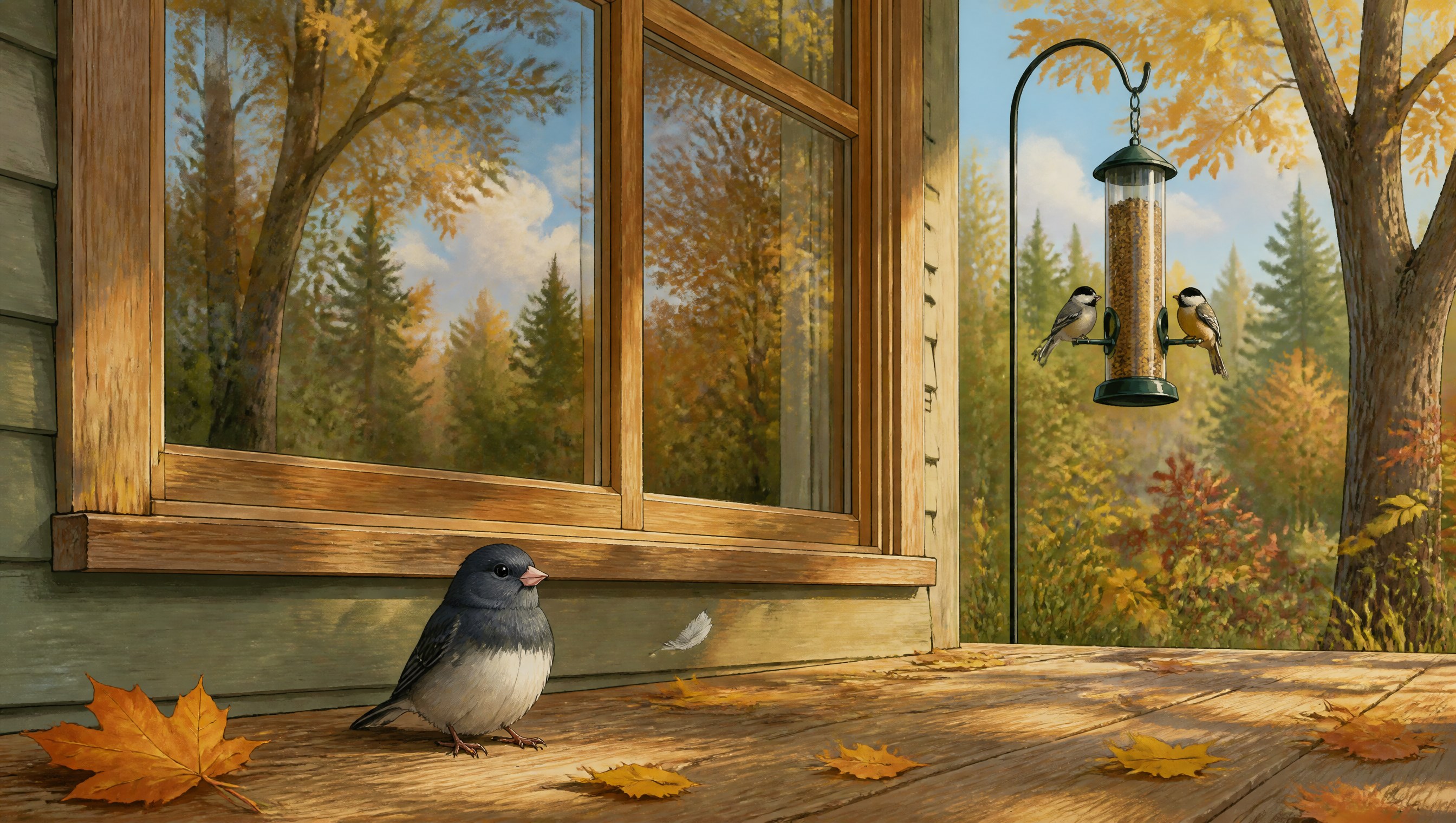

It is one of the worst sounds a bird lover can hear: a soft, hollow thump against the glass. You go to the window and there is a small bird on the deck below, sitting fluffed up and dazed, or worse. If it keeps happening at the same window, the cause may be hanging a few steps away from it.
WHY BIRDS HIT GLASS
The American Bird Conservancy explains that birds do not see reflective windows or clear glass the way we do. A window that reflects the sky and the trees of the yard looks, to a bird, like more sky and more trees, a place it can fly into.
The toll is enormous. The American Bird Conservancy estimates that more than 1 billion birds die from collisions with glass every year in the United States alone.
THE DANGER ZONE
Feeders change the odds, because they bring birds close to the glass and then startle them. Writing in Audubon magazine, Steve Kress says feeders placed within three to 30 feet of a window are especially dangerous, because that distance gives flushed birds enough room to build momentum for a fatal crash.
Think of what happens when a hawk swoops in or a door bangs. Every bird on the feeder bursts off at once. A bird that launches toward the house from 15 feet out has time to reach full speed before it meets the reflection.
THE 3 OR 30 RULE
The fix follows from Kress's reasoning. Move the feeder close, within three feet of the window, so a bird that flushes toward the glass cannot build up much speed before it touches it. Or move it well out, past 30 feet, so a startled bird has room to see the house and turn.
Close is often the easier choice for a deck or a kitchen window, and it has a bonus: the birds are right there to watch. Far works better in a big yard where a pole feeder can stand out in the open.
IF A BIRD HITS
A bird that hits a window is often only stunned. Writing for Audubon magazine, Carlyn Kranking advises placing it gently in a paper bag or a shoebox, then setting it in a dark, quiet room in your house, away from pets and people.
Then leave it alone. Kranking says to leave the bird undisturbed for about an hour. When you can hear it moving and making noise, take the container outside to the yard or a park and let the bird go.
Resist the urge to help it eat or drink. Kranking warns that putting water down a bird's throat can cause it to aspirate.
If the bird does not recover, or seems hurt, she recommends calling a licensed wildlife rehabilitator, using The Humane Society's state-by-state list or the Animal Help Now app to find one near you.
Most of all, if one window keeps catching birds, treat it as a sign. Moving a feeder costs nothing, and it may be the difference between a thump and a quiet morning.
