
Watering & care · Sep 20, 2026 · By Nell Harding
The Slugs on Your Hostas Are Laying Next Year's Crop Right Now
Grey field slugs and leopard slugs lay their eggs under pots, boards, and mulch edges through late September and October. Find the clusters this week and next spring's damage never hatches.
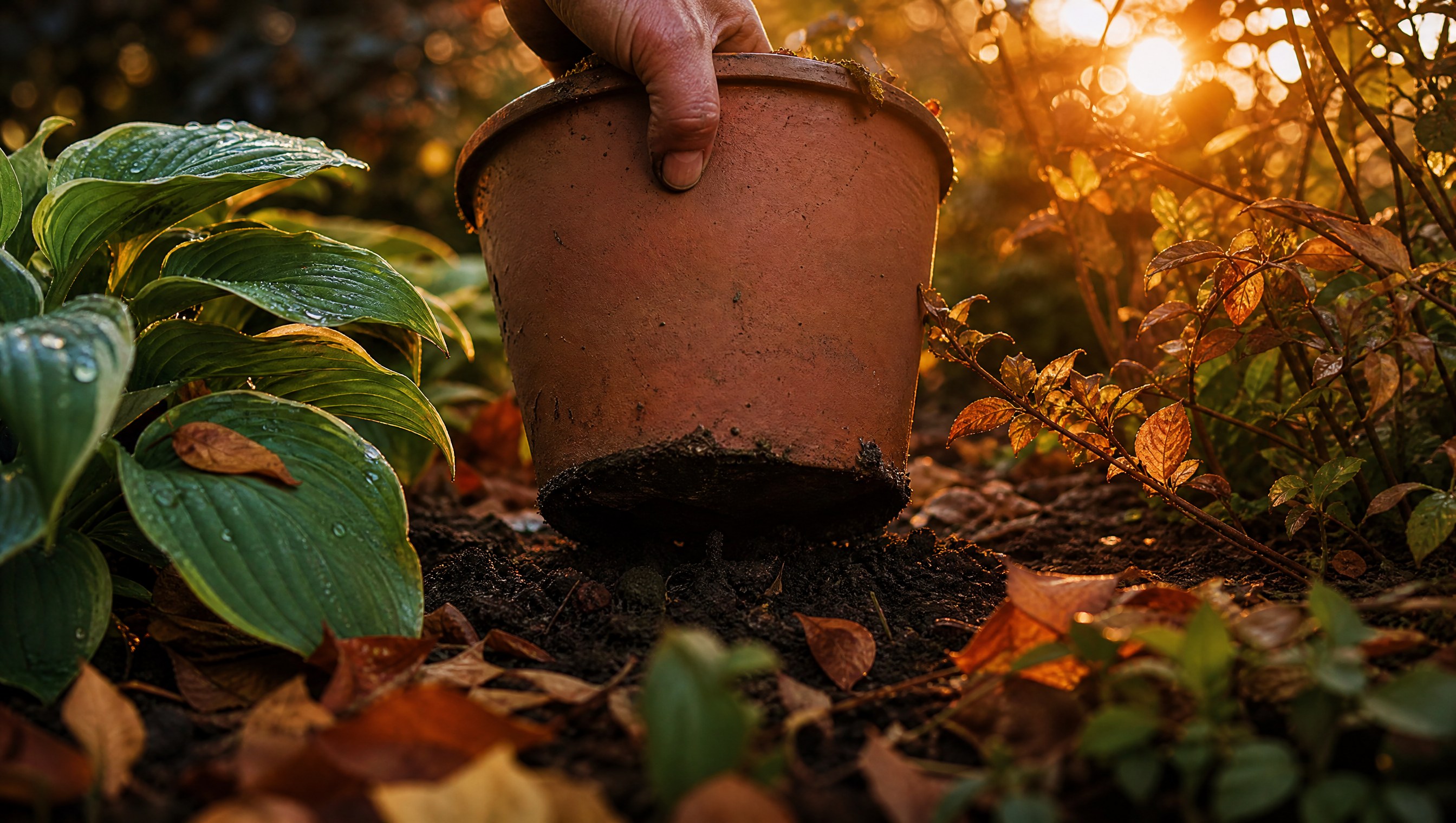

Lift the pot by your back door this week and you will very likely find a loose cluster of clear, jellylike eggs pressed into the damp soil underneath, and that cluster, not the slug that laid it, is next year's real problem.
The slugs working your hostas right now are not simply eating. Through late September and into October, the grey field slug and the larger leopard slug both shift from feeding to egg laying, and a single adult can leave several clutches of twenty to fifty eggs apiece before the season is done. The eggs are small, round, and nearly transparent, more like fish roe than anything you would think to call an egg, and they go into exactly the places a gardener stops looking once the growing season winds down.
Oregon State University Extension is direct about the timing on its publication "How to Control Slugs in Your Garden": slugs and snails lay eggs in the fall when the rains begin, generally at the end of September or the beginning of October, and the eggs are tucked into dark, moist places below plants, in cracks, and under plant residue. That window is open right now across most of the temperate US, and a damp, mild evening this week is close to the best night of the whole year to go looking.
Penn State Extension's guidance on reducing slug damage adds the piece that explains why the pass matters so much. Slugs usually lay eggs in the fall, and the adults themselves die from cold over the winter in a normal year. So in most gardens the eggs, not the adults, are the generation that carries the population into spring. Take out this fall's clutches and you are not managing this year's slugs at all. You are managing next year's, before a single one of them has hatched.
Penn State also notes the exception worth knowing: in a mild winter, adult slugs can survive and lay a second round of eggs in spring. That is the reason a fall egg pass is not a substitute for spring vigilance, only the cheapest, highest-leverage piece of it. One evening now against every one of those eggs beats a whole spring of chasing hatchlings that already got a head start.
Where to look
Eggs go wherever a slug can rest against damp soil in full darkness. Lift every terracotta and plastic pot on the patio and check the ring of soil the base was sitting on. Turn over the stepping stones you walk on to reach the beds. Roll back any board, brick, or edging material that has sat undisturbed for more than a few days. Pull back the mulch at the bed's outer edge, where it meets the lawn or the path, since that seam stays damper and darker than the mulch further in. A cluster looks like a small pile of translucent beads, sometimes tinted pale amber, stuck together and slightly domed.
You do not need every pot in the yard, only the ones near plants that took slug damage this season. Hostas, dahlias, lettuce, and the tender new growth on perennials are the giveaway. If a plant got chewed this summer, the slug or slugs responsible are very likely still within a few feet of it, and so are their eggs.
Running the pass
Do the walk after dinner on a mild, damp evening, ideally after a light rain or when the grass is already wet with dew starting to form. Bring a small container with an inch of soapy water for any adult slugs you turn up along the way, and a second, empty one for the egg clusters. Scrape clusters directly into the container with a stick, a plant tag, or a gloved finger. They come away from soil easily and do not need to be crushed individually. Once the container has what you found, either drown the load in the soapy water for a day or seal it and set it in the freezer overnight, then discard it with household trash rather than the compost, since eggs can survive a mild backyard compost pile.
Put every pot, board, and stone back exactly where it was. Slugs and the predators that eat them, including ground beetles, both use that same cover, and leaving the habitat in place matters more for the beetles than it costs you in slug shelter, since you have just removed most of what was breeding there.
Baits, honestly
If the fall pass is not enough on its own, both extension sources file baits under a real, if qualified, tool. OSU's guide lists metaldehyde, iron phosphate, and sodium ferric EDTA as the three active ingredients sold as slug bait, and it does not pretend any of them are harmless: all three can be toxic to children, pets, and wildlife if eaten in enough quantity. The difference that matters at your back door is the margin. Metaldehyde is the one associated with serious, sometimes fatal dog poisonings, in small quantities, and it belongs nowhere a dog, cat, or backyard bird can reach it. Iron phosphate baits take considerably more to cause the same kind of harm and are the safer everyday choice around pets and birds, but safer is not risk free. Treat any bait, iron phosphate included, the way you would treat any product you would not want a dog to eat: under a pot, in a bait station, never scattered loose on open ground.
Beer traps work exactly as well as their maintenance schedule, which is to say they need emptying and refilling every day or two or they stop pulling slugs in and start smelling like a bad decision. Copper tape gives a real deterrent on a pot rim or a raised bed edge, a mild shock a slug's mucus completes the circuit for, but it stops working once soil or debris bridges the gap, so it needs a clean strip to do anything. Crushed eggshells, the old standby, do not hold up under a hand lens or a controlled trial. Slugs cross them without much trouble once the shells go soft with dew, and neither extension source lists eggshells as a method worth the effort.
The spring payoff
None of this shows up as a dramatic before-and-after. The reward for an October egg pass is a spring where the hostas leaf out clean, where the lettuce seedlings survive their first two true leaves, and where you are not standing over a plant at 9pm with a flashlight wondering where forty slugs came from overnight. They came from the clusters you did not find last fall. Go find them this week instead.
