
Kitchen garden · Sep 10, 2026 · By Nell Harding
Why Seeds Saved From a Hybrid Do Not Come True
Every September somebody saves seed from the best tomato in the garden and gets a row of strangers the next summer. Here is what a hybrid actually is, which seeds are worth saving, and the jar method that keeps tomato seed clean for years.
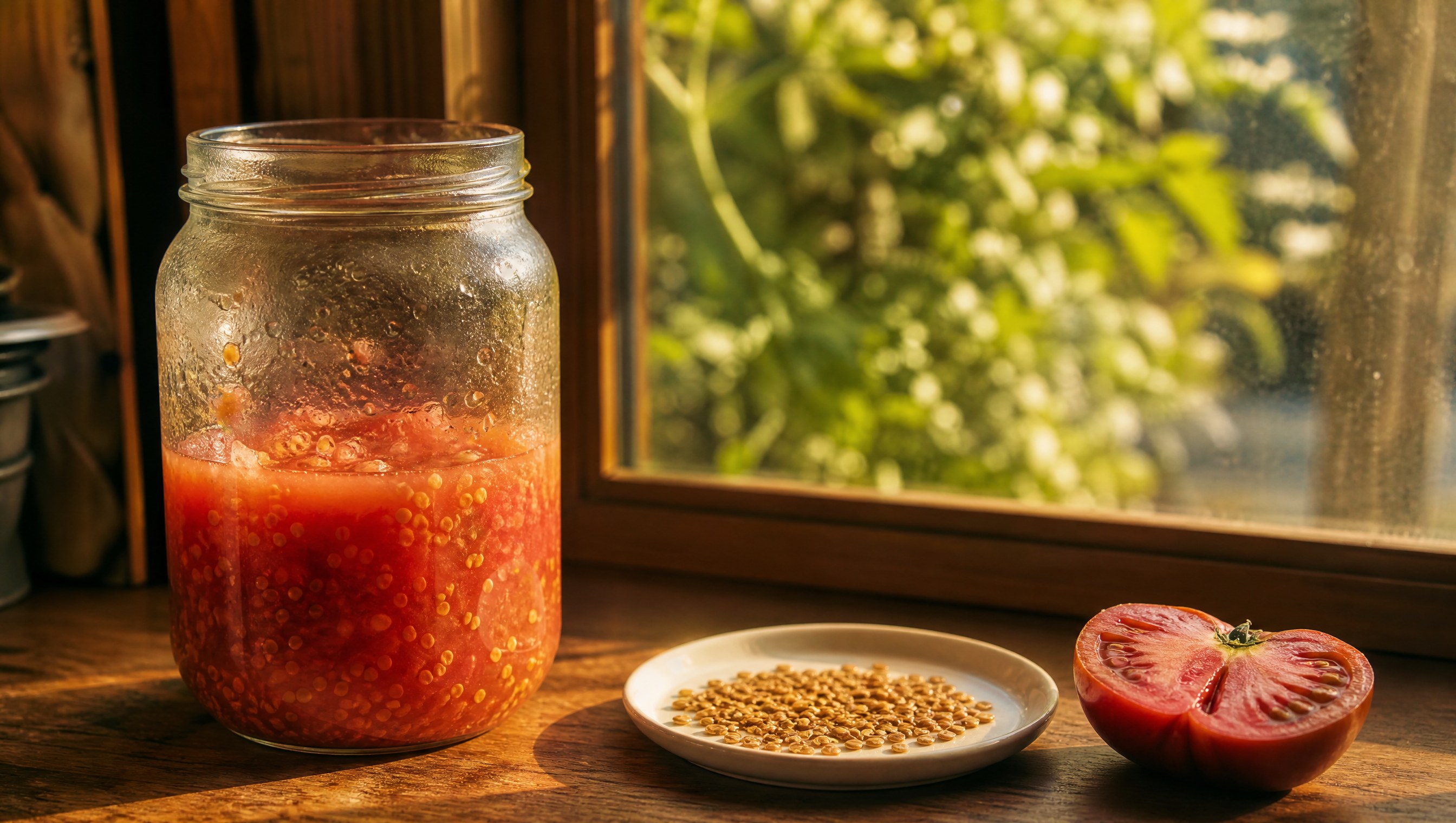

It happens every year in somebody's garden. The best tomato of the summer, a sweet orange cherry that split the skin it was so full, gets its seed squeezed onto a paper towel and saved with care. The next June the seedlings go in, and by August the row is a puzzle. One plant is red and mealy. One is yellow. One is a cherry, sort of. None of them is the tomato that was saved. Nothing went wrong with the saving. The tomato was a hybrid, and a hybrid cannot be saved, because it was never a variety in the first place.
What a hybrid is, and is not
A hybrid is a cross. A seed company keeps two inbred parent lines, each one uniform and predictable and each one unremarkable on its own, and every year it crosses them by hand, brushing pollen from one onto the flowers of the other. The seed from that cross is the hybrid, and the packet calls it F1, which only means first generation. The plants that grow from it are uniform, vigorous, and often better than either parent. That is the point of the exercise, and it is why so many of the tomatoes, sweet corn, and broccoli in the catalogue are hybrids.
The hybrid is not engineered. Nothing in a garden-centre seed rack is. A hybrid is the same thing a plant breeder has done with a paintbrush for a century and the same thing a bee does by accident, only controlled. The word gets tangled with genetic modification in conversation, and the two have nothing to do with each other.
The trouble comes one generation later. The hybrid carries one set of genes from each parent line, and when it makes seed of its own, those genes shuffle. The second generation, the F2, sorts itself back toward the grandparents in every combination. Some plants lean one way, some the other, and most land somewhere between. A packet of saved hybrid seed does not grow a variety. It grows a lottery, and the prize is usually smaller than the ticket.
What comes true
An open-pollinated variety is one that has been stable for long enough that its seed grows the same plant, year after year, as long as it has not been crossed with something else. Every heirloom is open-pollinated. That is what the word means: a variety old enough and steady enough to have been passed down. Brandywine, Cherokee Purple, Kentucky Wonder beans, Detroit Dark Red beets, any of the old names. Save seed from those and you get them back.
Reading the packet settles most cases. A hybrid will say F1, or hybrid, somewhere on the front or back. Heirloom always means open-pollinated. If a packet says neither, the variety name typed into a search box will tell you inside a minute. When the plant came from a nursery with only a plastic tag, the tag usually carries the name, and the name carries the answer.
There is one honest exception in favour of the lottery. A few gardeners save hybrid seed on purpose, grow the mixed second generation, and select the best plant from it for years until it settles into something new. That is how a great many of the open-pollinated varieties on the shelf were made. It is a hobby of patience, not a way to keep this year's tomato.
The other catch: crossing
Coming true only works if the flower was pollinated by its own kind. Here the crops split into two camps. Tomatoes, beans, peas, lettuce, and most peppers pollinate themselves, often before the flower even opens, so their seed stays pure in an ordinary garden with several varieties side by side. These are the seeds to start with. A tomato saved from an heirloom in a small backyard is that tomato again next summer, nine times in ten.
Squash, pumpkins, cucumbers, melons, corn, and the whole cabbage family are the other camp. They cross with anything of their species within a bee's flight, and the bee flies a long way. A zucchini next to an acorn squash will give seed that grows a warty green surprise. Sweet corn crosses with the neighbour's field corn over the fence. The seed from those crops is only worth saving with real isolation, a hundred yards or more, or with flowers bagged and pollinated by hand. Most home gardeners simply buy those every year and save the easy ones.
The jar method for tomatoes
Tomato seed comes wrapped in a gel that stops it sprouting inside the fruit. Fermenting it off is the old way, and it also kills some of the diseases that ride on the seed coat. Pick the best fruit from the best plant, fully ripe or a little past. Cut it across the middle and squeeze the pulp and seeds into a clean jar. Add a splash of water if the pulp is thick, cover the jar loosely, and leave it on the counter out of the sun.
In two or three days a white film forms on top and the jar smells like a bad idea. That is the fermentation finished. Add water, stir, and let it settle. The good seed sinks. Pour off the film, the pulp, and any seed that floats, refill and pour again until the water runs clear, then tip the clean seed onto a plate or a coffee filter. Not a paper towel, which it will glue itself to. Dry it for a week in a warm room, stirring once a day, until a seed snaps rather than bends.
Label it before anything else, with the variety and the year, because every tomato seed looks like every other tomato seed by October. Store it in a paper envelope inside a jar in a cool cupboard, or in the fridge with a packet of rice for dryness. Tomato seed kept this way stays good for four or five years, and the germination in year one is usually better than the packet you would have bought.
Beans and peas are easier still. Leave the pods on the plant until they are dry and rattling, shell them on a dry day, and give the seed another week on a plate before it goes into an envelope. Lettuce is a matter of letting one plant bolt and flower, then shaking the fluffy seed heads into a bag. Peppers are cut open ripe and the seeds scraped onto a plate to dry, no fermentation needed.
The garden that saves its own seed changes a little every year, and that is the quiet reward. A tomato saved from the plant that shrugged off the blight, or the bean that kept producing through the drought, carries that toughness forward. In five years an heirloom saved in one backyard is a slightly different, slightly better plant than the one in the catalogue, fitted to that soil and that weather. A hybrid can never do that, because it cannot be saved at all. Check the packet this week, before the last fruit is picked, and save the ones that will come home.
