
Watering & care · Sep 14, 2026 · By Nell Harding
Put the Mower Back Up to Three
A field note from the front lawn. My neighbour has been cutting his short since Labor Day because the season is nearly over, and by April his will be the lawn with the crabgrass. What a ruler in the grass told me, and why September is not the last cut.
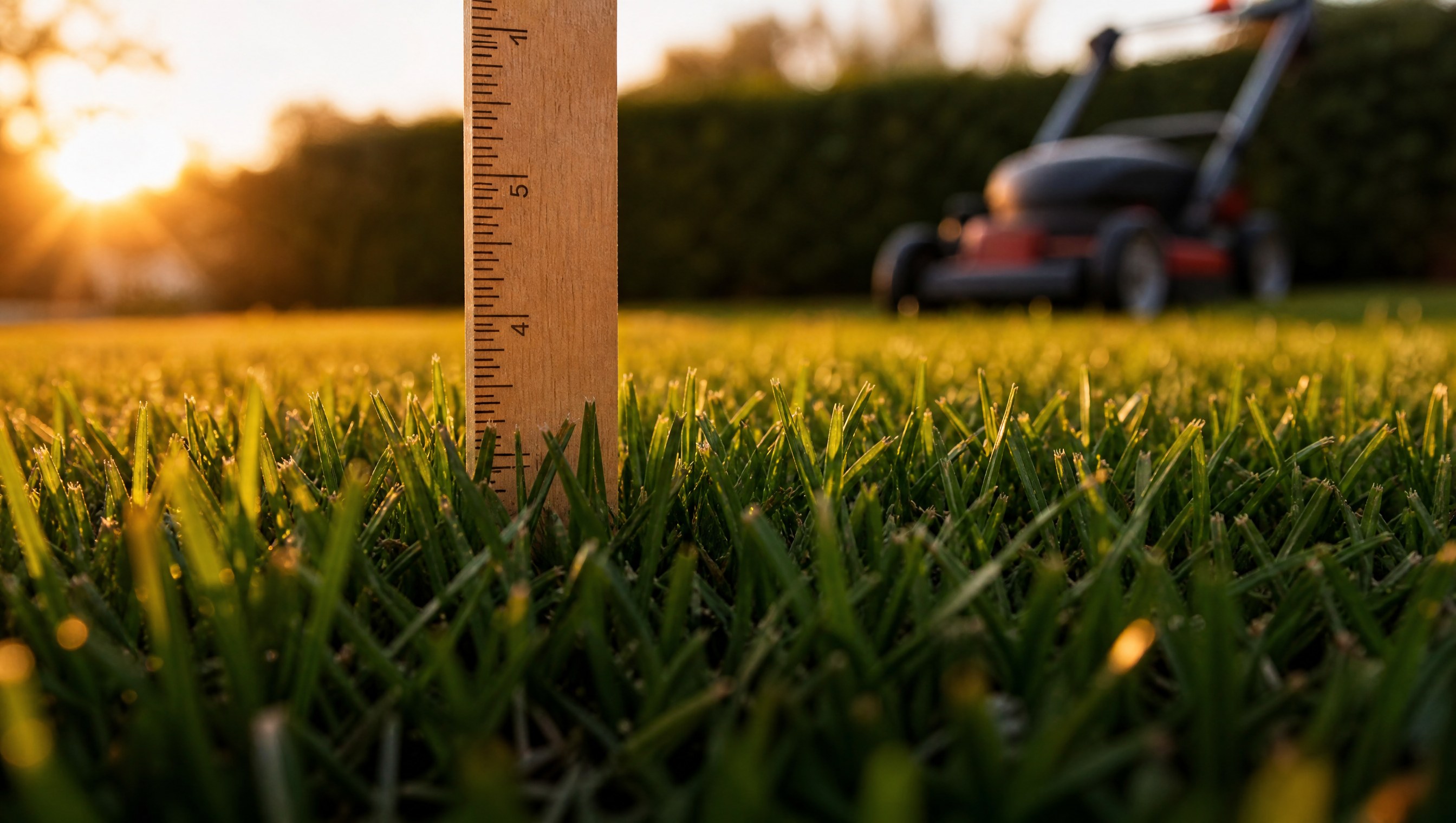

My neighbour dropped his mower deck the week after Labor Day. I know because I heard it. A mower at two inches on a September lawn makes a different sound than a mower at three, a harder, scalping note with the engine working, and I looked up from the bed I was weeding and watched him go back and forth leaving stripes the colour of straw. He waved. I waved. His lawn looked very tidy for about four days.
I went and stood a ruler in my own grass that evening. It read a little over three inches. His, I did not measure, but I could see from the sidewalk that it was under two, and in the low spots by the driveway the mower had taken it down to soil.
Here is what I know about that, most of it learned the hard way on this same lawn about eight years ago. A blade of cool-season grass, the bluegrass and fescue and rye that stays green here into November, is a solar panel, and the roots under it are about as deep as the panel is tall. Cut it to two in September and the roots stop growing at two. Cut it to three and they keep going down until the ground freezes, which in a mild fall is a long time. Those extra inches of root are what get the lawn through July next year, when I am on the porch and not watering.
The other thing that happens under a short lawn in fall is light. Crabgrass seed, and chickweed, and the little annual bluegrass that looks like your lawn until May and then dies in a brown patch, all of it is lying on the soil right now waiting for spring, and all of it needs light to start. A three-inch canopy in September shades it. A two-inch canopy lets it see the sun. My neighbour is not growing a lawn this month. He is growing next April's crabgrass, and he will blame the crabgrass.
I understand why he does it. Short looks finished. The season feels like it is winding down and a short lawn looks like a lawn that has been put away. And somewhere in the back of everyone's head there is the old rule that you cut it short before winter to stop the snow mould. The extension people have quietly walked that one back. Minnesota's turf office will tell you that a slightly lower last cut of the year is fine, and that a lawn scalped in September is stressed at the crown and open to weeds, and that the snow mould it was supposed to prevent is not much affected either way.
So the rule I keep is simple. The deck goes to three at the end of May and it stays at three, or as close as the lever goes, until the last cut of the year. That last cut can come down a half inch. It is not this cut. September has six or seven cuts left in it, and every one of them at two inches is a small withdrawal from next summer.
If you are reading this in Georgia with a bermuda lawn, ignore all of it. Warm-season grass runs at an inch or two by design and goes dormant on its own. This is a note for the grass that is still green when the leaves come down.
The check is the ruler. Stand it in the grass tonight. Under two and a half, and the deck is too low. Put it back up to three, leave it there, and let the clippings fall where they land. They are the fertiliser. My neighbour's lawn will look tidier than mine until about the first week of May. After that, I will be the one waving.
