
Kitchen garden · Sep 13, 2026 · By Nell Harding
Cure the Squash Before You Store It
A field note from the porch bench. A butternut off the vine is not finished, and the ten warm days you give it now are the difference between soup in March and a soft spot by Thanksgiving.
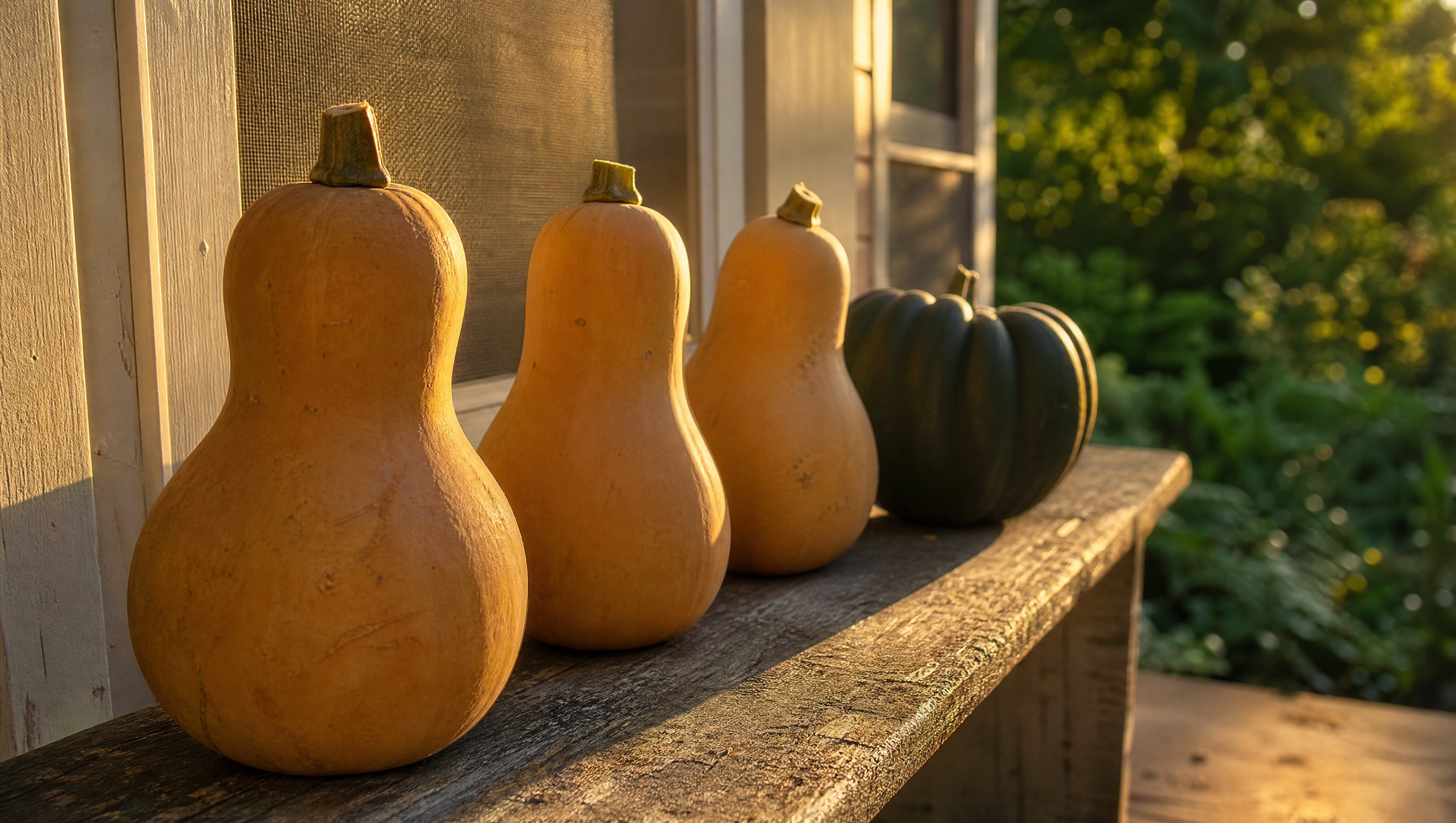

I lost a whole shelf of butternuts one November and blamed the variety. They had come in beautifully, a dozen of them off two vines, and I carried them straight down to the cellar the afternoon I picked them because the cellar is where squash goes. Three weeks later the first one had a soft grey patch by the stem. By Thanksgiving I had thrown out nine. The variety was fine. I had skipped the only step that matters.
A winter squash comes off the vine unfinished. The rind is still soft enough to mark with a thumbnail. The cut where the stem was is wet and open. The flesh inside is more starch than sugar, which is why a squash baked the day it is picked tastes of not much. It needs to cure, and curing is nothing more complicated than ten days somewhere warm.
The number the extension sheets give is eighty to eighty five degrees, with the air moving, for ten days to two weeks. Nobody has a room at eighty five in September. What I have is the south end of the back porch, under the roof and out of the rain, where the afternoon sun comes across the bench. The squash go there in a single layer, stems up, not touching. On a cool grey week they come in and sit on top of the fridge, which runs warm, and that works too.
Three things happen in those ten days. The rind hardens into a proper shell, which is what keeps the rot out for the next five months. The stem cut dries and seals over, and that cut is where nine of my ten losses started. And the starch inside begins turning to sugar, which is why a cured butternut is sweeter than one baked straight off the vine, and why the ones that come out of storage in January are better than the ones you ate in October.
What I do differently now
I cut them off the vine with an inch or two of stem, using the pruners, never by twisting. A squash with the stem torn out has an open wound the size of a quarter, and it will not keep no matter what you do with it afterward. I never carry one by the stem for the same reason. The stem is a handle that breaks.
After the ten warm days I do the thumbnail test. If I can still mark the rind, it gets another few days. If I cannot, it goes to the cool shelf. Not the cellar floor, which is concrete and sweats, and not the refrigerator, which is far too cold and turns the flesh stringy inside a month. The right spot is a shelf in a room that stays somewhere around fifty five, with a little air moving. In my house that is the back bedroom closet with the door cracked. Every house has one. Find it with a thermometer, not a guess.
Acorn squash is the one that breaks the rule. It does not want the long cure, a week at most, and it keeps two months rather than six. I eat the acorns first, the delicatas next, and the butternuts and the hubbards last, and the last butternut usually comes out of the closet in March looking exactly as it went in.
One more thing. A squash that ripened through a hot dry September on the vine has often cured itself out there. The ten days matter most for the ones picked ahead of a frost, the ones from a cool wet fall, and any with a green tinge at the stem end. When in doubt, give them the porch. It costs nothing, and a shelf of soft squash in November costs the crop.
