
Planting & timing · Aug 26, 2026 · By Nell Harding
Your Maple Is Already Choosing Its Colors
The first frost gets the credit for fall color every year, but the real trigger is the lengthening nights, and by late August that clock has been running in your backyard for weeks.
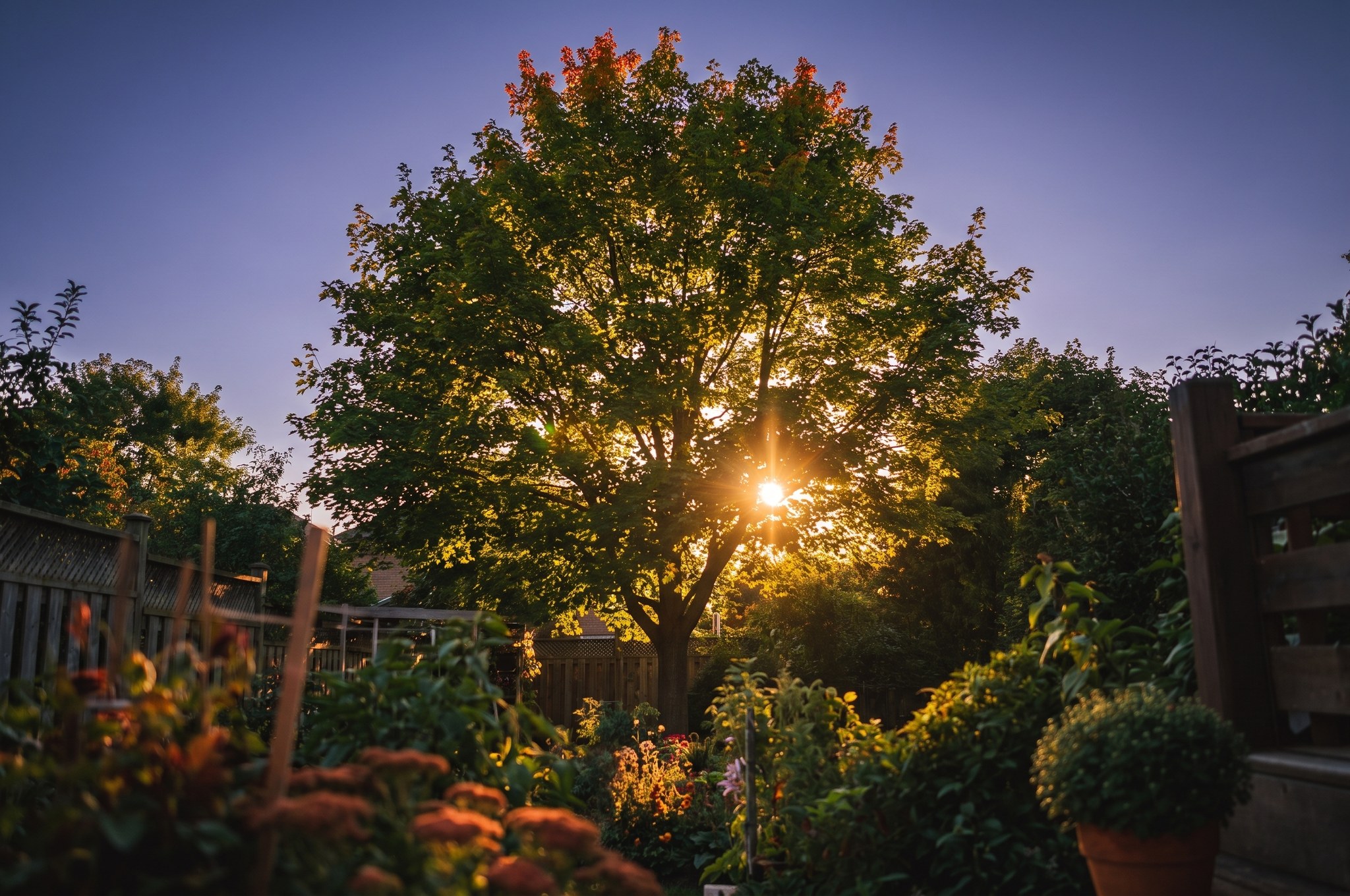

Every year the first frost takes a bow for the fall color, and every year it arrives late to a job that was already done. By the time frost touches your lawn, your maple has been working on its reds and golds for weeks. The tree was never waiting on the cold. It was measuring the nights.
Here is the machinery, and it is worth knowing because it changes what you watch for in your own yard. Every leaf on that maple carries light-sensitive pigments that track how long the darkness lasts. Once the nights stretch past the tree's set point, somewhere in the second half of August for most of the country, the leaf begins a quiet and very orderly shutdown.
The green goes first, but not the way most of us were taught. Chlorophyll, the pigment that runs photosynthesis, is expensive to build and full of nitrogen the tree does not want to lose. So the maple does not let its leaves die green. It dismantles the chlorophyll molecule by molecule and hauls the parts back into the twigs and branches for winter storage, the way we would carry the good tools in from the shed.
The colors were there all summer
As the green drains away, the yellows and oranges show through. Those pigments, the carotenoids, were in the leaf all along, doing quiet support work in the background. They are not made in fall. They are revealed by it, the way the pattern in old wallpaper shows when a picture comes down.
The reds are the exception, and they are the part that should change how you see the whole show. The red pigment, anthocyanin, is not uncovered. It is built fresh, on purpose, in the last few weeks of the leaf's life. The tree spends real sugar making a color for a leaf it is about to drop. Botanists still argue about exactly why, with sunscreen for the recycling operation as the leading theory, but the spending itself is not in dispute.
This is why the same maple turns within a few days of its own date every year, while the first frost wanders across the calendar by three or four weeks. The night length on August 26 is the same every year. The tree can count on it, and it does.
What weather actually decides
Weather still gets a vote, but on the volume, not the schedule. Bright sunny days and cool nights above freezing push sugar production up while slowing its export from the leaf, and trapped sugar is the raw material for those fresh-built reds. That is the recipe for a loud year. A warm, wet, cloudy fall mutes the reds and leans the show toward soft yellows.
A hard early frost does not brighten the color. It ends it. Freeze the leaf before the work is done and the pigments never finish, the recycling stops half complete, and the leaves brown and drop early. The folklore has that one exactly backward.
You can watch the opening moves this week if you know where to look. Color starts where the night signal is strongest and the leaf is most exposed, which is the very top of the crown. Step out at dusk and look at the tips of your tallest maple. One blushing branch at the crown in late August is the calendar at work.
Reading a single early branch
One caution from the almanac's margin. A single limb turning weeks ahead of the rest of the tree, especially low or on one side, is usually not the season arriving early. It is often stress on that limb, a girdling root, a wound, or dieback, sending that one branch to the finish line first. A whole crown warming evenly from the top is autumn. One odd limb in early August is a note to check the trunk below it.
Street trees tell the same story in reverse. A maple under a bright streetlamp will often hold green longest on the lit side, sometimes weeks longer. The lamp is voting against the calendar, telling those leaves the nights are still short. For a while, the lamp wins. The calendar takes the rematch.
So skip the frost forecasts for this one. The decision is being made in your backyard right now, at the top of the tree, in the dark. All the frost will do is tell you how the story ends. The maple already knows how it begins.
