
Kitchen garden · Sep 3, 2026 · By Nell Harding
Leave the Carrots in the Ground
Frost does not ruin a root bed. It sweetens it. Here is the chemistry behind the old rule about parsnips, which vegetables get better with every cold night, which one does not, and how to bank the row so you are pulling sweet carrots in January.
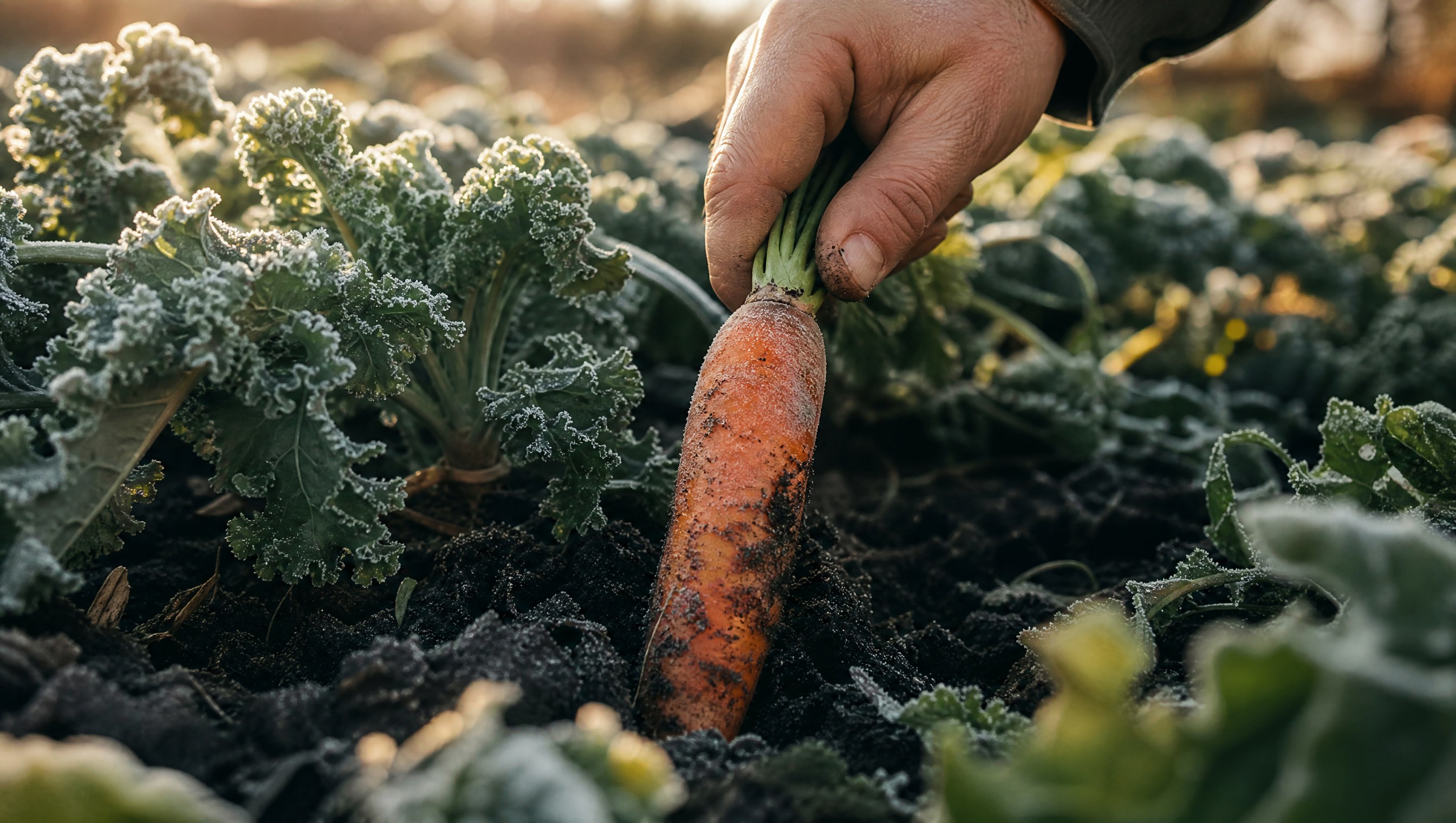

Never pull a parsnip before the first frost. It is one of the oldest rules in the vegetable garden, and it is one of the few where the chemistry agrees with the old gardeners on every point. Frost does not damage a root bed. It improves it. The carrot you pull in late October after a string of cold nights is measurably sweeter than the same carrot pulled in August, and the reason is that the plant has been busy protecting itself.
Most of us treat the first frost as a deadline. Get everything out of the ground before it hits. For tomatoes, peppers, squash, and beans that is exactly right, because those are warm-country plants and a hard frost kills them outright. But a whole second family of vegetables comes from cold places, and for those the frost is not the end of the season. It is the beginning of the best part.
What the cold does to a root
A carrot spends the summer storing energy in its root as starch. Starch is a compact way to store sugar, a long chain of sugar units packed together, and it does almost nothing for flavor. A midsummer carrot is starchy, a little woody, and mild. When the nights turn cold, the plant begins breaking that starch back down into simple sugar and moving it into the cells of the root.
It does this for a reason that has nothing to do with us. Water freezes at thirty two degrees. Water with sugar dissolved in it freezes lower. A cell packed with sugar water can sit through a night in the twenties without ice crystals forming inside it and tearing the cell apart. The sugar is antifreeze, and the plant makes it on purpose, night by night, as the cold deepens. The sweetness we taste is a side effect of a root defending itself.
The change builds. One light frost starts it. A week of nights in the thirties pushes it along. By the time the ground has had a string of hard frosts, a kale leaf has gone from something you would only eat cooked to something you would eat raw off the plant, and a parsnip has gone from a woody afterthought to the sweetest thing in the bed.
Who sweetens
The list is longer than most people expect. Carrots and parsnips are the famous ones. Kale and collards improve dramatically, and Brussels sprouts, which taste of sulfur and disappointment in September, become a different vegetable after frost. Turnips, rutabagas, and beets sweeten. Leeks stand through the cold and get milder. Cabbage, broccoli, and cauliflower all tolerate light frost and improve with it, though a hard freeze will eventually damage the heads. Spinach and the hardy lettuces sweeten and keep going under cover.
There is one important exception, and it is the potato. Potatoes also convert starch to sugar in the cold, which sounds like good news and is not. A potato that has been chilled fries dark, tastes oddly sweet, and stores badly. Dig potatoes before the first hard frost, cure them a week somewhere dark and airy, and store them cool but not cold. Fifty degrees is about right. The refrigerator is the wrong place for a potato for exactly the reason frost is the right place for a carrot.
Banking the row
Here is where the old rule becomes a winter plan. A root bed left in the ground and mulched is a pantry that improves as the season goes on. The roots do not grow after the ground cools, but they keep, and they keep sweetening, and you pull what you need when you need it. In much of the country a well-banked carrot row can be dug straight through December, and in milder zones straight through to spring.
The mulch is the whole trick. Once the tops have been touched by a couple of frosts, pile the row a foot deep with straw, shredded leaves, or a mix of the two. The point is not to keep the ground warm but to keep it from freezing solid, so you can still get a fork into it. Hold the mulch down with a board or a length of fence so the wind does not take it. Where the winters are hard, a cold frame or a low tunnel of row cover over the mulched bed adds another month or two.
When you want carrots, pull the mulch back from one end of the row, dig what you need, and pull the mulch back over. Do it on a day above freezing if you can. The roots come up cold and clean and sweeter than anything you can buy in January.
Two things that go wrong
The first is voles. A deep mulch over a carrot row is warm, dark, and full of food, and voles will find it. If you have had vole trouble, mulch less deeply, keep the mulch pulled back a few inches from the crowns, and check the row every couple of weeks. A row that suddenly has hollow carrots has been found.
The second is the thaw. Roots that sit in soil that freezes and thaws repeatedly can split or go soft, and a warm wet spell in late winter is the signal to dig whatever is left. In most places that means pulling the last of the bed in February or March, before the ground warms enough for the roots to try to grow again, which turns them woody in a hurry.
So do not race the frost to the root bed this fall. Let it come. Let it come three or four times. Then go out on a cold bright morning, pull the straw back, and taste what the cold has done.
