
Watering & care · Oct 8, 2026 · By Nell Harding
Leave Ironweed Standing for Winter
By October, the tall ironweed at the back of the native bed has traded its purple flowers for rusty seed heads. Before you cut it down, know what it is still doing: feeding winter birds at the top and housing native bees in its stems.
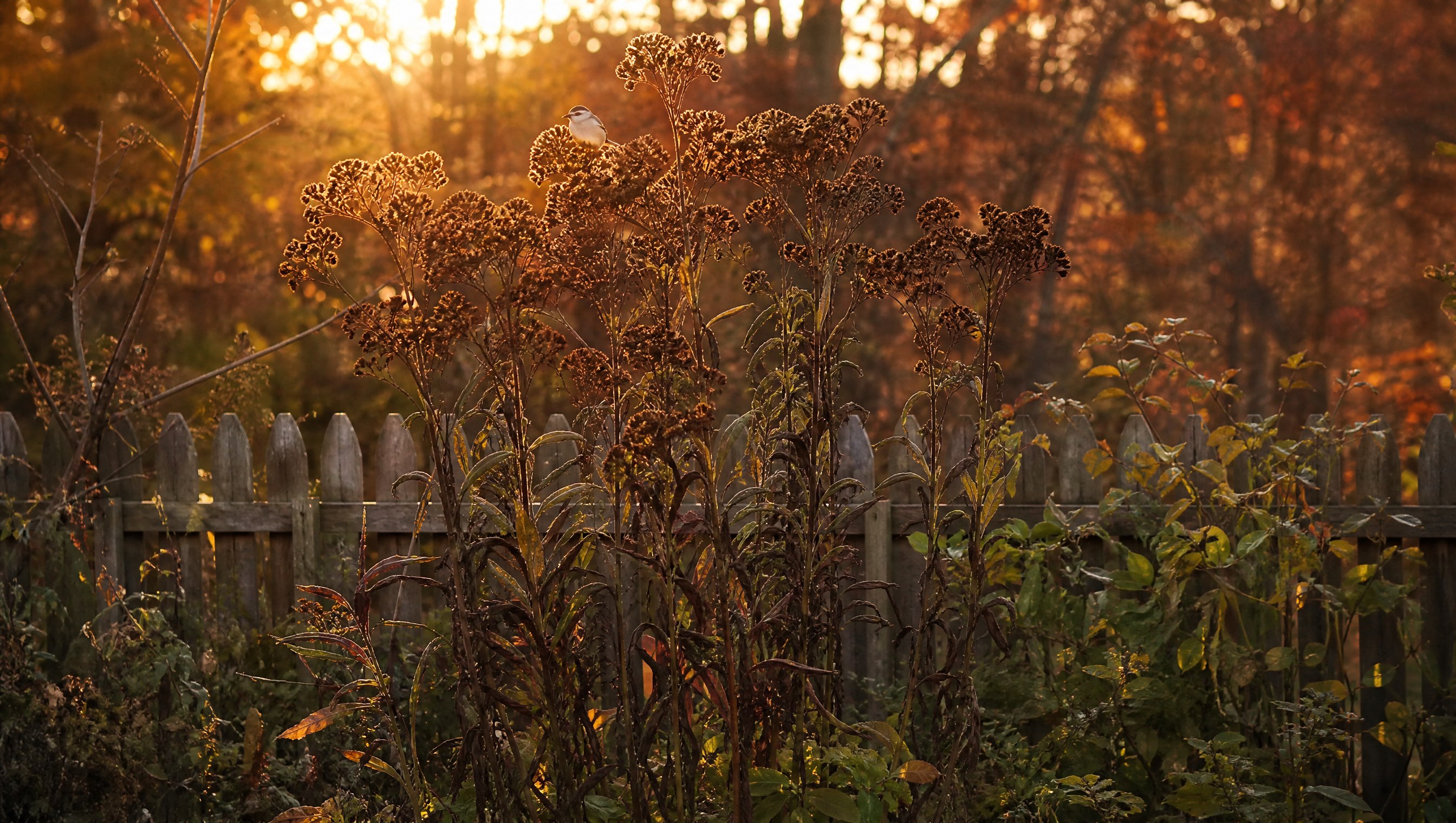

Ironweed is the tall one at the back of the native bed, the plant that tops out over the fence with clusters of deep purple flowers in late summer. By October those flowers have turned to rusty seed heads, and it is easy to see it as one more thing to cut down.
WHAT IRONWEED IS
NC State Extension's plant toolbox describes New York ironweed as an herbaceous native perennial wildflower in the aster family. It may grow 5 to 8 feet tall.
Its deep purple flowers appear in clusters from mid-summer to mid-fall, NC State says, and they are attractive to butterflies, bees and other pollinators.
Then come the seeds. NC State lists rusty colored seeds from August to October.
THE SEED HEADS FEED BIRDS
NC State puts it simply: songbirds eat the seeds.
Judy Isacoff, writing in The Berkshire Edge, describes it in action. She watched a flock of small gray birds fly into a stand of twiggy ironweed seed heads in winter: titmice and juncos.
When most of the titmice had flown off, she writes, the juncos stayed to pick up seed knocked to the ground. One stand fed birds in the heads and on the ground beneath them.
The plant is built for it. Isacoff says the seed heads hold on through harsh weather on their seemingly strong-as-iron stalks, creating a natural bird feeding station.
THE STEMS HOUSE BEES
The stems have a second job. NC State notes that native bees nest in the dead, hollow stems.
That is why its advice is not to cut ironweed to the ground at all. Gardeners are encouraged to cut back dead stems to 12 to 24 inches and allow them to remain standing until they disintegrate on their own.
HOW TO DO BOTH
The two jobs fit together. Leave the full stand up through the winter so the seed heads can feed the birds.
When you do cut, leave 12 to 24 inches of stem standing, as NC State advises, and let those stubs stay in place until they fall apart.
THIS WEEK
Skip the ironweed in your fall cleanup. Leave the seed heads for the titmice and juncos, and when the time comes to tidy, cut high, not low.
