
Kitchen garden · Oct 8, 2026 · By Nell Harding
American Highbush Cranberry Is Edible
The shrub with three-lobed leaves and drooping clusters of red berries may be one of two plants that share a name. The American kind makes good jelly. The European kind tends to be bitter. Here is why it matters, when to pick, and what to leave for the birds.
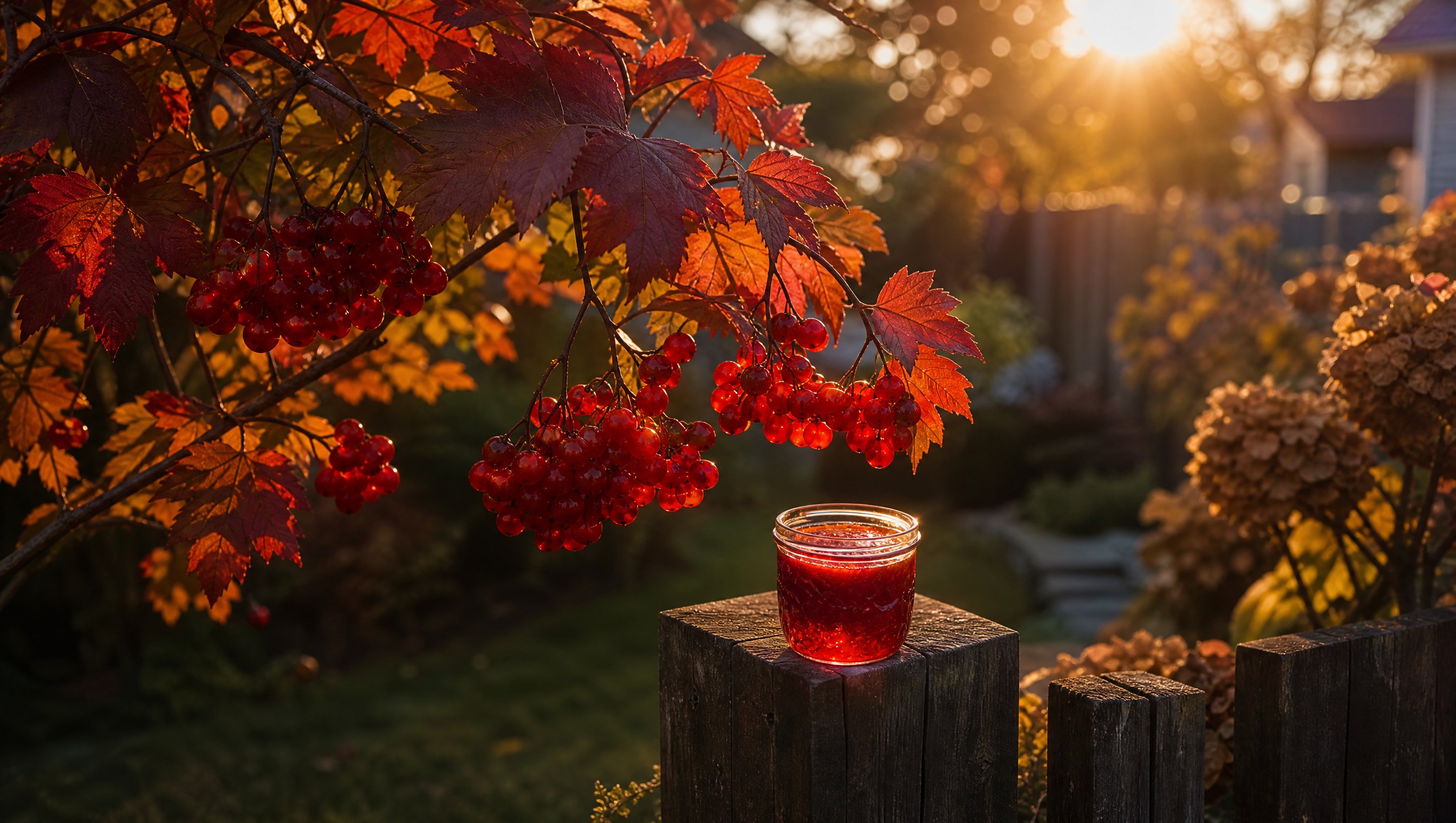

In fall, a tall shrub with three-lobed, maple-like leaves hangs heavy with clusters of glossy red berries. If it is American highbush cranberry, those berries are worth picking. If it is the European kind, they are best left to the birds.
TWO PLANTS, ONE NAME
The USDA NRCS plant guide, prepared by Guy Nesom, explains that the native American plants produce edible fruit, while fruit of the European plants tends to be bitter.
Cultivars derived from the European species, Nesom notes, are grown strictly as ornamentals.
River Bend Nature Center's Naturalist Notebook, from Faribault, Minnesota, puts the warning plainly: make sure you get the American variety, because the fruit of the European shrub is inedible and bitter.
If you planted the shrub yourself, the plant tag or the nursery record is the easiest way to know which one you have.
WHAT THE FRUIT IS LIKE
River Bend describes the fruit as small, about a third of an inch, with one or more seeds in the center. Like a cranberry, the taste is tart and slightly acidic.
Its leaves are 2 to 4 inches long with a simple three-lobed shape, the notebook says, which is where the maple-like look comes from.
WHEN TO PICK
The USDA guide says the fruit is commonly gathered from wild stands in late August or early September, best when picked slightly under-ripe and sour.
River Bend says the fruit ripens from August to September and is at its best after a light frost.
Wait too long and there is a trade-off. Nesom writes that fruit picked after a heavy frost is softer and more palatable, but develops a musty, somewhat objectionable odor during cooking.
HOW TO USE IT
Both sources point to the kitchen. The USDA guide lists sauces, jellies and juices; River Bend lists sauces, jams and jellies.
LEAVE SOME FOR THE BIRDS
Whatever you do not pick will not go to waste. Nesom notes that the bright red fruits often persist on the plants throughout the winter.
They are eaten by robins, cedar waxwings and other songbirds, he writes, but usually not until they have frozen and thawed several times.
THIS WEEK
Find the shrub, check the label if you have one, and pick a bowlful for jelly. Leave the rest hanging. Later in the winter, the birds will come for them.
