
Watering & care · Oct 8, 2026 · By Nell Harding
Leave the Sedum Standing for Winter
By October, Autumn Joy sedum has turned its broad flower heads from pink to deep mahogany, and it looks ready for the shears. Leave it. Here is what those dry heads do all winter, who uses them, and when to finally cut.
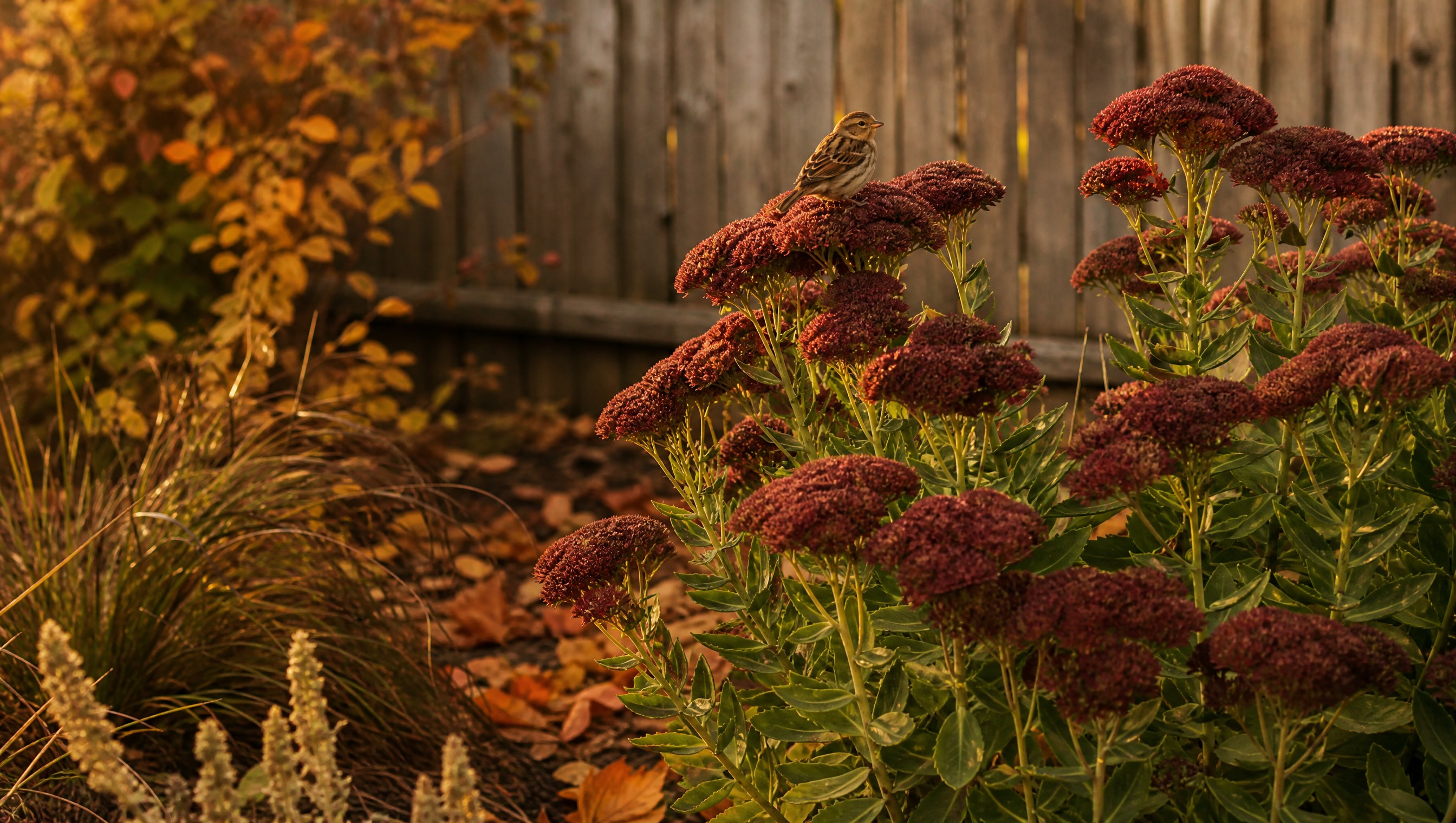

Fall cleanup has a rhythm: cut it down, rake it up, bag it. Autumn Joy sedum, with its broad flat flower heads gone from pink to rusty red, usually goes out with everything else. It is one plant worth walking past.
WHAT THE HEADS ARE FOR
The UC Master Gardener Program of Sonoma County says that if the flower stalks are left standing until spring, the deep mahogany seed heads give the garden winter interest.
They also feed birds. The UC gardeners describe birds sitting on the large, spent, flat heads and pulling out the seeds, which turns each stalk into a perch and a seed tray in one.
Those flat heads are a big part of why the plant works this way. Each one is a broad platform a small bird can stand on while it picks.
IT STANDS UP TO WINTER
Purdue Extension's LaPorte County Master Gardeners say sedums like Autumn Joy have thick, fleshy stems that hold up well throughout winter, and that their dried flower heads give the garden structure and visual interest in the colder months.
They add that sedums can tolerate cold weather without protection, so there is no need to cut them down or cover them for their own sake.
In other words, the clump you leave standing in October is built to still be standing, heads and all, when the cold comes.
BEFORE THE SEEDS, THE BEES
Before the heads dry, the same plant is a late-season feeder. The UC Master Gardeners write that bees and butterflies are non-stop visitors for many weeks.
Bees, they note, rely heavily on this and other plants that produce late-season nectar. In a yard that is winding down, a clump of sedum in bloom may be one of the last good meals around.
WHEN TO CUT
The UC gardeners' timing is late winter or early spring: cut or break off the old stalks at ground level, where new buds are forming a low clump.
Purdue gives the same advice: cut sedums back in spring before new growth begins.
That low clump of new buds at the base is your signal. It tells you the plant is ready, and it shows you where the old stalks end and the new year begins.
THIS WEEK
When you reach the sedum in your fall cleanup, leave it. Let the heads dry to mahogany, watch for the birds that come to pick at them, and save the shears for a mild day in late winter or early spring.
