
Garden myths · Aug 28, 2026 · By Nell Harding
Leaves Do Not Fall. The Tree Cuts Them Off.
The word autumn practically means the falling, and botany quietly disagrees with it. Every leaf that lets go this fall will be deliberately cut loose, drained, sealed, and dismissed. Here is the machinery, and how to see it work on your own trees.
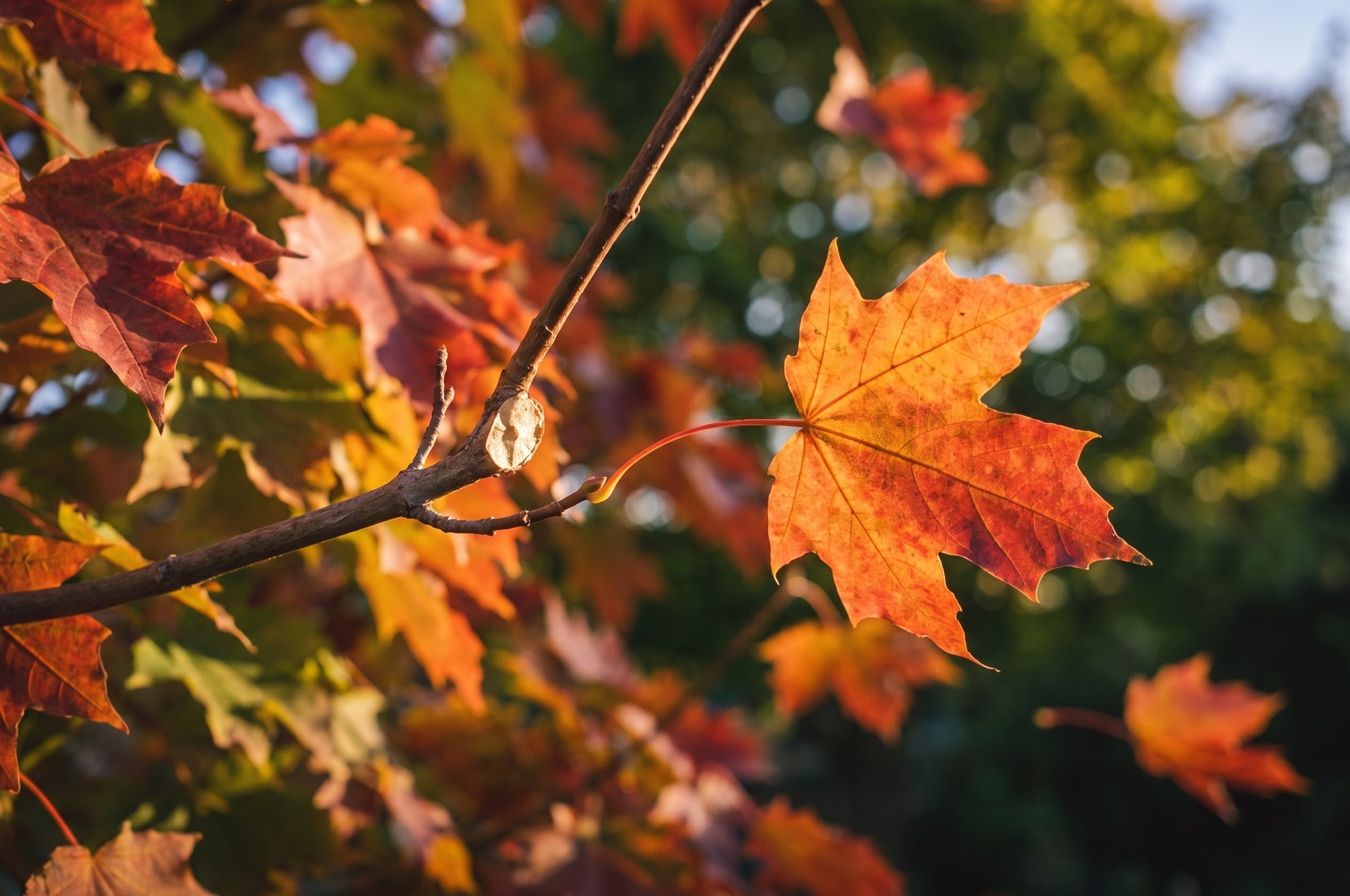

For a few hundred years the books have said that leaves fall, and the word autumn has practically meant the falling. Botany quietly disagrees. A healthy tree does not lose a single leaf by accident. It cuts every one of them off, on a schedule, with machinery built for the job.
The machinery has a name, abscission, and the name gives the game away. It comes from the same Latin root as scissors, abscindere, to cut off. Botanists have used it since the 1800s precisely because falling was the wrong word for what they were watching. A leaf in October is not a thing the tree failed to hold. It is a thing the tree dismissed.
Understanding why turns the whole season around. A leaf is a summer appliance. It is thin, wet, and enormous for its weight, which makes it superb at catching light and catastrophic at surviving winter. Left in place, leaves would freeze, die, and keep right on losing water through their pores while the frozen ground refused to supply any more. A tree that kept its leaves would spend winter bleeding to death through them.
The tree strips the leaf first
So the tree runs a shutdown, and it runs it thriftily. Weeks before any color shows, lengthening nights set the process going. The tree begins dismantling the green chlorophyll in each leaf and pulling the valuable parts back into its body: nitrogen, phosphorus, sugars, the working capital of next spring. Roughly half of a leaf's usable nutrients are drawn back down the stem before the cut. The famous color change is partly just this salvage operation showing. Strip out the green and the yellows and oranges that were there all along come through.
Only after the salvage does the cutting start, and the cut is a precise piece of work. At the base of every leaf stem, where it meets the twig, the tree builds a narrow band of special cells called the abscission zone. Think of a scored line on glass, or the perforation on a ticket. It was laid down when the leaf was built, a planned seam, waiting all summer for its one job.
Come the shutdown, the zone goes to work in two layers. The layer on the leaf side weakens itself: the cells swell, their walls soften and dissolve, and the stem's grip on the twig loosens cell by cell. The layer on the twig side does the opposite. It builds a plate of cork, waterproof and airtight, sealing the plumbing behind the departing leaf. The tree caulks the wound before it makes the wound.
The wind only signs the paperwork
When the seam has weakened far enough, gravity or the next gust finishes the job. This is the one small part the weather actually plays. The wind does not tear leaves from the trees, whatever the poets say. The tree spends weeks arranging the separation, and the wind merely signs the paperwork.
That is why healthy leaves let go so cleanly. Run your thumb over the twig after a leaf departs and you will find a neat, smooth leaf scar, already sealed, often shaped like a tiny shield or horseshoe. The dots inside it are the capped ends of the plumbing, the bundle scars where water and sugar once flowed. No torn tissue, no open wound, no infection risk. Compare that to a branch that dies suddenly in summer: it holds its dead brown leaves for months, sometimes all winter, because nobody was alive to cut them loose.
You can watch the seam give way yourself this fall. Find a leaf just turning color and pull it gently. If the zone has done its work, it pops off at exactly the base of the stem, the same spot every time, with almost no force. A green August leaf, pulled the same way, tears and fights you. The difference in your fingers is the abscission zone, present in one and not yet active in the other.
What this means for the gardener
For the gardener, abscission explains a few things worth knowing. Those oaks and beeches that hold brown leaves all winter are not confused. Their abscission zones simply stop partway, a trait called marcescence, common in young trees, and the retained leaves may help shield next year's buds from browsing deer and drying wind.
It also explains why an early hard freeze can be bad news for a tree's spring. Freeze the leaves before the salvage runs and the tree loses all that working capital, killed in place before it could be withdrawn. A long mild fall, for all our impatience with it, is a tree quietly getting its money out.
And it settles the raking question's timing. The tree is done with those leaves. Everything it wanted, it took before the cut. What lands on your lawn is the emptied husk, cellulose and leftover minerals, which is exactly why leaves make such honest mulch and compost. The tree banked its treasure and left you the paper.
So watch the maples this fall with the machinery in mind. Nothing out there is falling. Ten thousand small decisions are being executed, each one salvaged, sealed, and signed off. The tree is not losing its leaves. It is firing them, with severance.
