
Garden myths · Aug 27, 2026 · By Nell Harding
When the Hummingbirds Leave, and Why Your Feeder Should Stay Up
The busiest week your feeder will ever see is not the season peaking. It is the season leaving. Here is the departure schedule, what the birds are doing out there, and the one thing the old worry gets wrong.
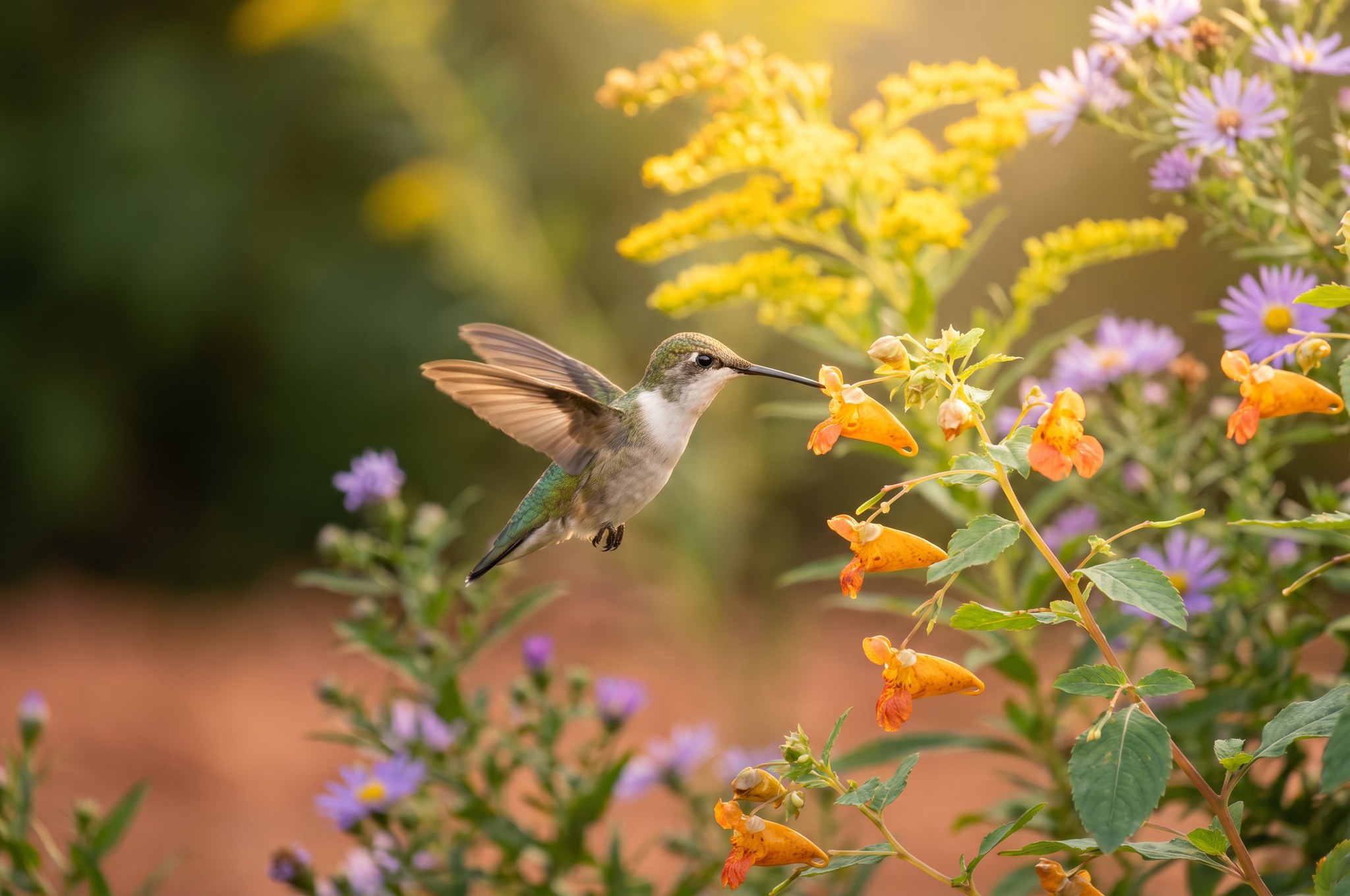

Some evening in the next few weeks, you will look at the feeder and realize nobody came. Not fewer of them. None. The departure is quiet, it is staggered, and it is running right now while the feeder looks busier than it has all summer.
That busy feeder is the tell, once you know how to read it. What looks like a boom is a send off. The birds crowding the ports in late August are not settling in. They are provisioning for the longest flight of their lives, and most of them are birds you have not met before this month.
The schedule nobody announces
The adult males go first, and they go early. Most of them slip south in late July and the first half of August, so quietly that few people notice the exact week it happens. One day the feeder chases simply stop, because the chief instigator has left the county.
The females follow through late August and September, once the last brood no longer needs them. The young of the year leave last, some lingering into early October in the northern states. A first year bird makes the whole trip alone, on a route it has never flown, to wintering grounds it has never seen, and finds them anyway.
So the crowd at your feeder this week is really a procession. Locals leaving, and northern birds passing through behind them, each one stopping a few days to refuel. You are not watching your summer hummingbirds anymore. You are running a way station on a flyway that stretches from Canada to Central America.
What the weigh in looks like
Before it leaves, a ruby throated hummingbird nearly doubles its body weight. It starts around three grams, roughly the weight of a penny, and builds to five or six. All of that gain is fuel, laid down as fat across the back and belly in a matter of days of relentless feeding.
The reason for the extravagance is the route. Many ruby throats cross the Gulf of Mexico in a single flight, about five hundred miles of open water with nowhere to land. That crossing takes something like twenty hours of continuous flying, wings beating around fifty times a second the whole way. The fat is the whole budget for it. A bird that leaves light does not arrive.
This is why the feeder frenzy of late August looks frantic. It is. The birds are on a deadline set by the calendar and paid in sugar. Every visit to your feeder, and every jewelweed and salvia blossom in the yard, is a line item in the fuel plan.
What actually tells them to go
It is not the cold. Departure begins in the warmest stretch of the year, with flowers still blooming and feeders still full. And it is not an empty feeder. The signal is the length of the night. As the nights lengthen after midsummer, the change triggers a hormonal shift that ornithologists call zugunruhe, a restlessness that ends with the bird pointed south. The clock is astronomical, which is why the schedule barely varies from year to year.
That brings us to the old worry, the one that empties feeders across the country every September. It says a feeder left up too long will tempt the birds to stay until the cold catches them. It gets the mechanism exactly backwards. No amount of sugar water overrides the day length signal. The birds leave on time whether your feeder is full, empty, or in the garage.
What a full feeder actually does in September is feed the stragglers. The birds passing through late are the ones that need calories most, some of them having flown in from the far north that morning. Taking the feeder down early does not hurry anyone along. It just closes a gas station on a long highway.
How to run the way station
Keep the feeder up and clean through September, and in the southern states into October. The standing rule of thumb is two weeks past your last sighting. Keep the mix plain, four parts water to one part white sugar, no dye, and wash the feeder every few days while the weather stays warm.
If the garden still holds late nectar, jewelweed, salvia, bee balm, cardinal flower, leave the spent stands standing a little longer. The flowers you did not deadhead in August are the roadside diner in September. And when the last visitor finally does not come back, write the date down. Next year, when the feeder goes quiet the same week, you will know it was never about your feeder at all.
