
Planting & timing · Oct 5, 2026 · By Nell Harding
Don't Cut Back Your Lavender in the Fall
By October the lavender looks gray and tired, and it is tempting to cut it back with the rest of the fall cleanup. Extension horticulturists say wait. Here is why a fall cut can cost you the plant, how to read winter dieback, and how to make the spring trim.
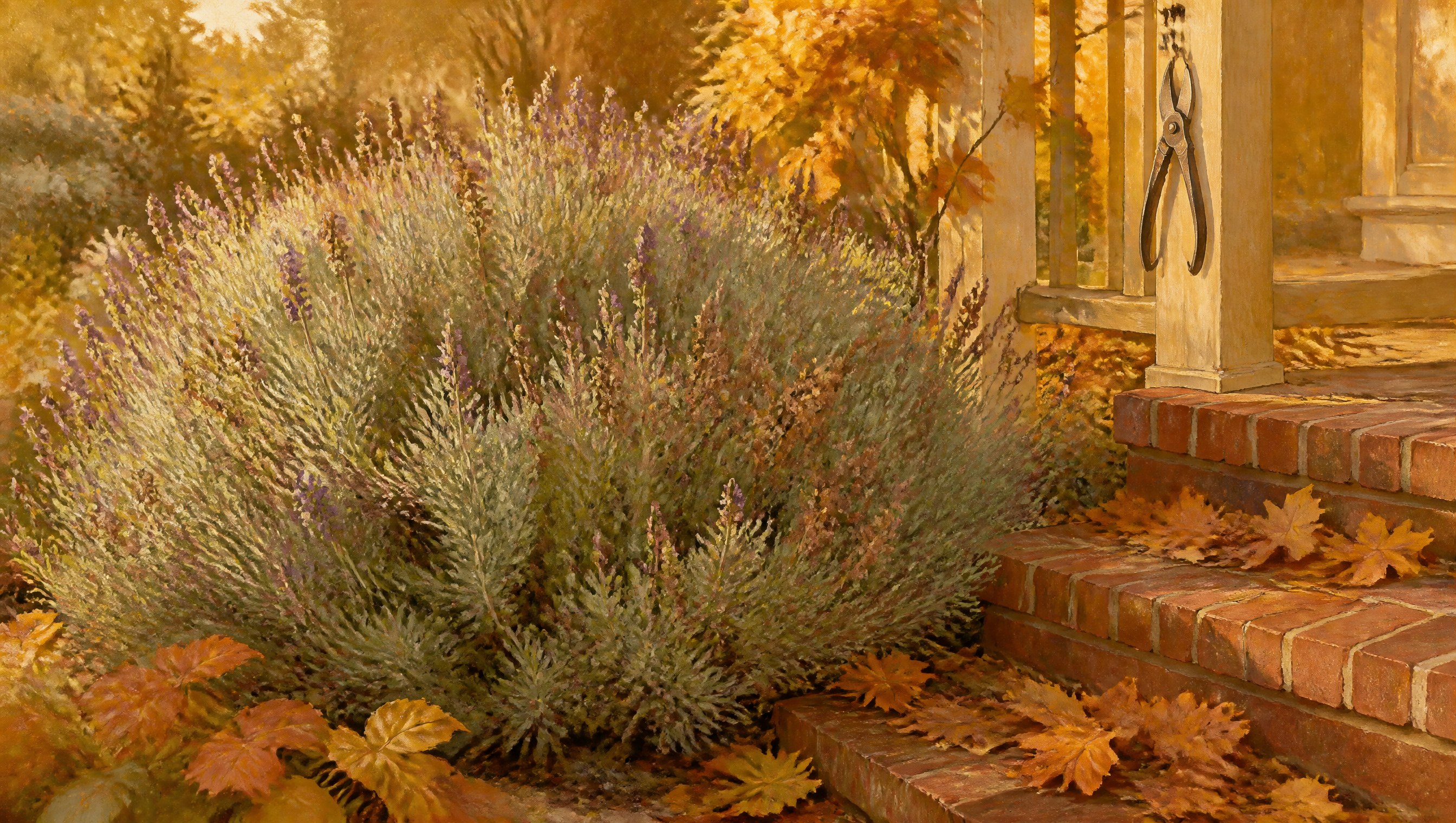

In October the lavender by the porch looks its worst: gray, a little floppy, the last flower spikes gone brown. It is tempting to tidy it up with the rest of the fall cleanup. For lavender, that is the one cut to skip.
A CAUTIONARY LETTER
A gardener in Knox County, Indiana, once wrote to Purdue Extension with a familiar story. They had pruned their lavender back one fall, and it killed the plants. They had replaced them and wanted to know whether to trim in fall or spring.
Rosie Lerner of Purdue Extension answered that lavender is only marginally hardy in Indiana, and that the plants should not be pruned until after new growth begins in spring.
In other words, the stems you leave on through the winter are not just untidy leftovers. On a plant at the edge of its hardiness, a fall cut is a risk you do not need to take.
WHY SPRING IS THE TIME
After a hard winter, Lerner explains, lavender often shows considerable dieback, and it can be hard to tell stems that are dormant but alive from stems that are dead.
Waiting solves that. Her advice is to hold off until the new growth is well underway, so you can see exactly what survived before you cut anything.
Kristena LaMar, a Master Gardener diagnostician with Oregon State University Extension in Clackamas County, gives the same timing from a milder climate. The best time to prune lavender, she says, is after all chance of frost has passed, which there means early March or so.
She also warns against the opposite mistake. Prune in July, she says, and you cut off the season's blooms in progress.
HOW TO MAKE THE SPRING CUT
Once new green shoots are showing, Lerner says to remove the dead or damaged stems first.
Then trim the live stems back to healthy sections that carry live buds. How far back depends on how much winter damage the plant took.
Cutting back to healthy wood, she says, encourages side branching.
UNTIL THEN
This fall, let the gray stems stand. Hang the shears up when you reach the lavender, and make a note to come back in spring, once the new growth has begun.
