Garden myths · May 8, 2026 · The 2026 edition
Companion planting: the honest version
Tomatoes do not love basil. But some garden pairings really do pay, and the reasons are better than the folklore.
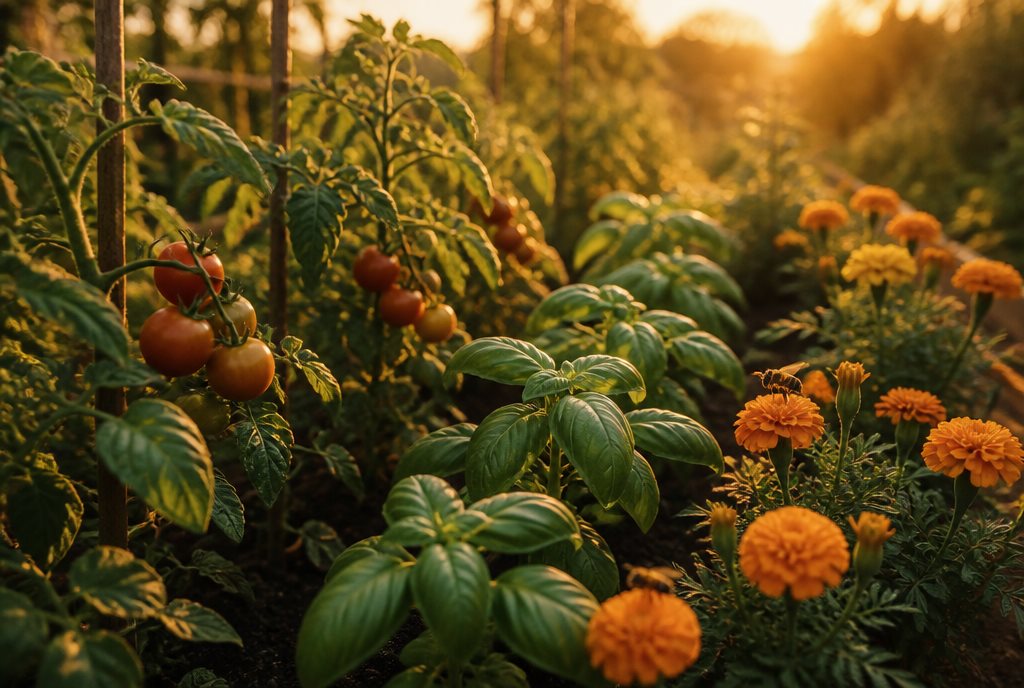
Somewhere on every gardener's shelf is a chart claiming tomatoes love basil, beans hate onions, and carrots love tomatoes, an entire social calendar for vegetables, mostly traceable to a 1970s book that reported the results of a divining technique, not field trials. It is the almanac's kind of target: beloved, half true, and overdue for the honest sort. Because here is the twist worth staying for: the charts are largely folklore, but companion planting itself, the real, tested kind, is one of the most useful ideas in the garden. You just have to swap the romance for the mechanisms.
First, the folklore audit. 'Tomatoes love basil' is the chart's greatest hit, and in trials the tomatoes are indifferent; the pairing earns its keep in the kitchen and in the bed's efficient use of space, not in any measured yield boost. 'Beans hate onions' has a kernel of sense, alliums can slow legume growth in close quarters, but at normal garden spacing it is a shrug. Carrots' affection for tomatoes, cucumbers' feelings about sage: untested poetry. Growing them together does no harm; expecting chemistry from the chart is where the disappointment lives.
What actually works, mechanism one: trap cropping. Some plants are so attractive to a pest that they pull it off your crop, concentrating it where you can act, the nasturtium-and-aphid play the flower-row entry already recommended. Blue Hubbard squash at the ends of cucumber rows soaks up cucumber beetles; a ring of radishes pulls flea beetles off eggplant seedlings. This is not friendship. It is a decoy, and it is field-tested farm practice.
Mechanism two: recruiting the army, which regular readers will recognize as the flower-row entry's whole argument. Small-flowered plants, alyssum, dill and cilantro in bloom, calendula, feed the parasitic wasps and hoverflies that hunt aphids and caterpillars. Interplanting them among the vegetables is companion planting with a supply chain: nectar in, predators out. The marigold, the charts' favorite cure-all, belongs here with an asterisk: its real, proven power is against root-knot nematodes in the soil, and it works as a season-long planting or a turned-under cover crop, not as a magic perimeter fence. Against everything else, a marigold is mostly a flower, which, as mechanism two says, is already worth something.
Mechanism three: masking and confusion. Pests find crops by smell and silhouette, and a bed that is all one crop is a billboard. Interplanting strong-scented herbs and onions among brassicas measurably cuts egg-laying by cabbage moths and root flies in multiple trials; a carrot row threaded with leeks confuses both the carrot fly and the leek moth. This is the grain of truth inside half the chart's pairings: not affection, camouflage. It works best in small gardens, which are the gardens this almanac is for.
Mechanism four: sharing space and light, the three-sisters logic. Corn grows tall, beans climb it while fixing nitrogen for next year's bed, squash sprawls below as living mulch, shading soil and slowing weeds, the deep-vs-often entry's moisture math, implemented in leaves. Modern versions work anywhere: lettuce in the shade of trellised cucumbers through summer, radishes harvested from between carrot seedlings before the carrots need the room, basil filling the sunny margin under staked tomatoes. This is the most reliable companion planting there is, and it asks for no chemistry at all, just geometry.
The honest 'do not pair' list is short and mechanical, not emotional. Do not put two heavy feeders of the same family in the same spot, that is crop rotation's territory, and the blight the tomato shares with the potato is the strongest reason to keep those cousins apart. Do not plant sprawlers where they will smother slow starters. Fennel genuinely does suppress the growth of most neighbors, the one allelopathy claim on the charts with solid footing, so give it its own corner. Black walnut trees poison nightshades for a wide radius; that is a tree problem, not a chart problem, but it explains some mysterious failures.
So the honest companion plan for a small garden reads like this: flowers and blooming herbs threaded through the beds on a few-feet rhythm for the predator supply chain; onions or leeks laced through the carrots and brassicas for scent camouflage; a trap row of nasturtiums or radishes stationed by whatever suffered worst last year; marigolds wherever nematodes or bare soil ask for them; and every vertical crop casting its summer shade on something that appreciates it. Every element is doing a job with a mechanism behind it, and the bed still ends up looking like the charming jumble the old charts promised.
That is the general shape of this almanac's myth entries, and it fits here perfectly: the folklore usually points at something real, then explains it wrong. Plants do not have friends. They have pest pressures, root zones, scent plumes, and shadows, and a gardener who plays those levers gets everything the chart promised, minus the disappointment. Plant the basil next to the tomatoes anyway. Not for love; for lunch.
New entries land here through the season.
Follow the garden day to day on Facebook