
Kitchen garden · Sep 15, 2026 · By Nell Harding
Bring the Basil In Before Fifty
A field note from the kitchen step. Basil is the one plant in the garden that dies of cold weeks before anything freezes, and the night it happens is the night the forecast says forty eight. What I found on the step the morning I did not listen, why the tomatoes next to it never noticed, and the two ways to keep the last of it.
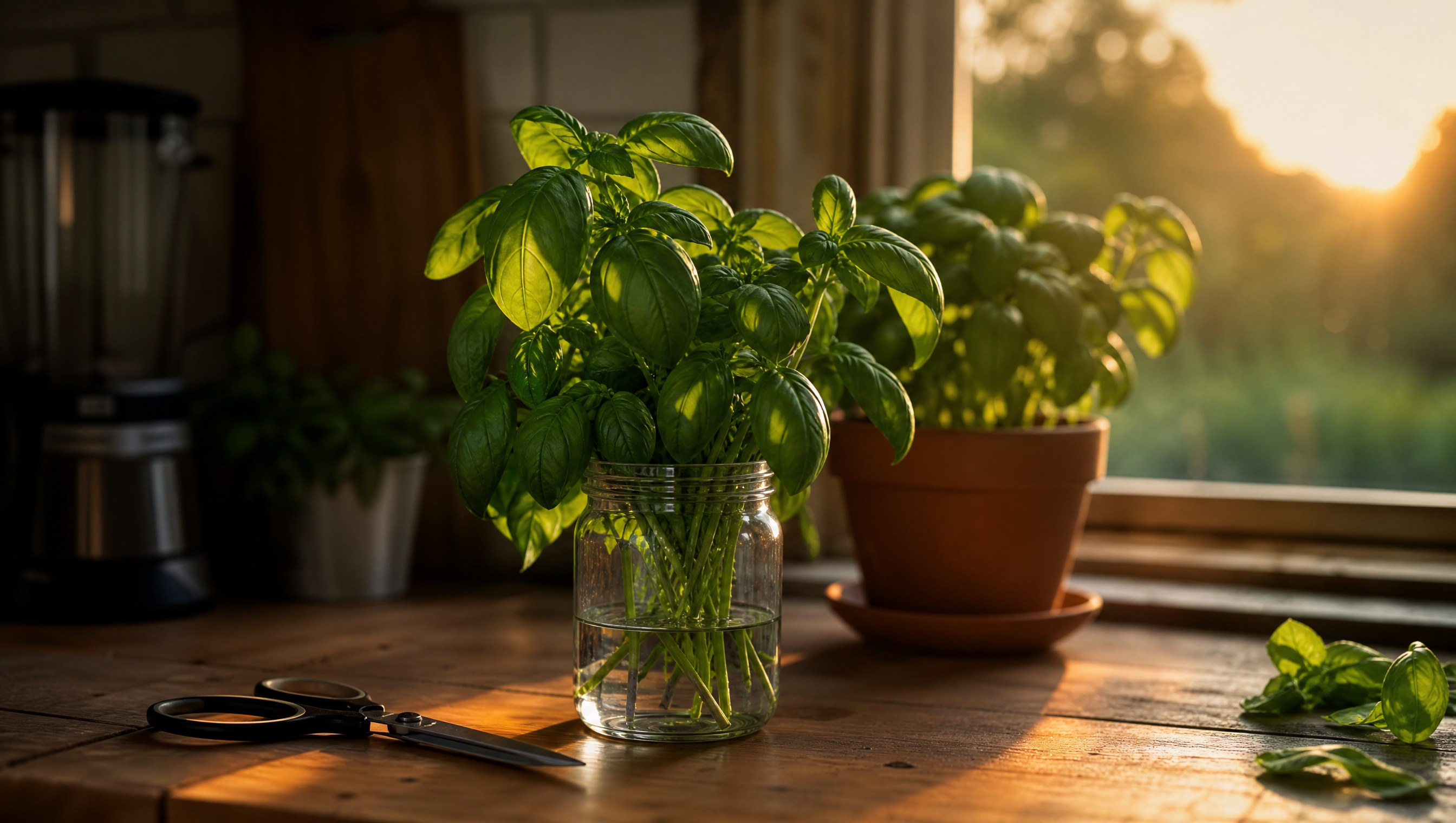

The forecast said forty eight and I said the basil would be fine. It was on the kitchen step in a big terracotta pot, against the house wall, under the eave, in the warmest spot the garden has. The tomatoes in the bed six feet away were still setting fruit. Frost was a month off. I went to bed.
In the morning the tomatoes looked exactly as they had the night before. The basil did not. The lower leaves had gone black at the edges, the way a leaf goes when you hold a match near it, and by lunchtime whole leaves had collapsed into dark wet rags. Nothing had frozen. The thermometer on the window frame had bottomed out at forty six. It was enough.
Basil is a tropical plant, from the warm parts of Asia and Africa, and it has never learned to expect cold. The Rutgers extension people, who handle it by the truckload for the New Jersey market, put the number where the trouble starts at about fifty degrees. Below that the cells in the leaf begin to leak, the leaf turns from green to grey-brown to black, and the smell goes with it. They call it chilling injury, to separate it from freezing injury, which is a different thing that happens at thirty two. Basil suffers the first one long before it ever meets the second.
That is why the tomatoes did not notice. A tomato plant will sulk in the forties but it does not die there. Basil quits at a temperature the tomato barely feels, and every September some gardener stands on the step in the morning learning that.
The lesson is not to watch for frost. Frost warnings come too late for basil by three or four weeks. The thing to watch is the overnight low on your own forecast, and the number to act on is fifty. I use forty eight because the step, for all its eave and its wall, ran two degrees colder than the forecast.
So the night the forecast reads under fifty, the basil comes in, one way or the other. The quick way is to cut every stem down to a few inches, strip the lowest leaves, and stand the stems in a jar of water on the counter. Out of the sun, they keep a week and often longer, and half of them will root. The slower way, if the plant is in a pot, is to bring the pot into the brightest window you have. It will not thrive there, but it will hold, and you will be pinching leaves off it at Thanksgiving.
Two things not to do. Do not put the cut stems in the refrigerator, because a refrigerator is forty degrees and the leaves will go black in there in two days, exactly as they did on the step. And do not wait to see whether the forecast was right. You find out in the morning by looking at the one plant you left out on purpose, not the one you needed.
If you have more basil than jars, which in September everyone does, blend the leaves with olive oil and freeze the paste in an ice tray. It keeps the taste and loses the look, which in January nobody minds. The plant from the step, cut back hard and brought into the kitchen window, put out new leaves within the week, smaller and tougher and tasting of exactly what it always tasted of.
Tonight the forecast says fifty one. The basil is coming in anyway.
