
Garden myths · Aug 18, 2026 · By Nell Harding
Why Swallows Fly Low Before Rain
The old rhyme about low-flying swallows is one of the few weather proverbs physics grades out almost perfectly. The birds are not reading the sky. They are following their groceries.
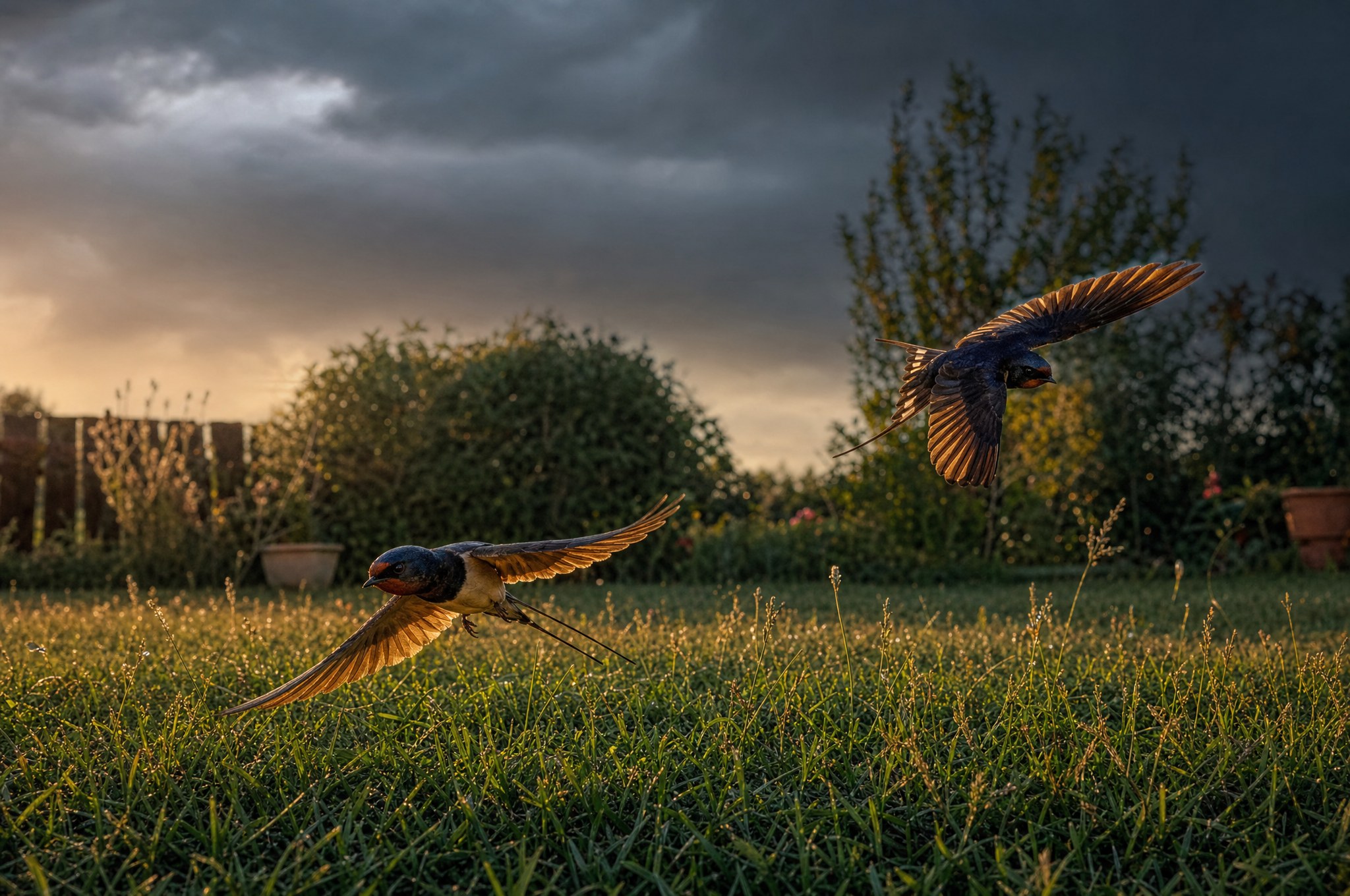

When the swallows fly high, the weather will be dry. When they skim the ground, rain is coming round. Sailors kept the rhyme, farmers planned hay by it, and grandmothers delivered it from porches with total confidence. It sounds like superstition. It is very nearly instrumentation.
The first thing to understand is that the swallow has no idea it is forecasting anything. A swallow is an aerial feeder, one of the most specialized on earth. It eats, drinks, and courts on the wing, taking flying insects out of the air at twenty miles an hour. Where the insects go, the swallow goes, to the foot.
The insects are the actual barometer. On a fair, settled afternoon under high pressure, warm air rises off sunbaked fields and parking lots in invisible columns, and the small flying insects ride those thermals up. Midges, beetles, flying ants, ballooning spiders, all carried hundreds of feet aloft. The swallows climb after them, which is why on the finest evenings the birds are wheeling specks against the blue.
Ahead of a wet system, the column collapses. Pressure falls, the air loads up with moisture, and the thermals that were lifting the insect buffet weaken and die. Humid air is harder work for a tiny flier: wings dampen, everything flies heavier and lower. The whole insect layer sinks toward the grass tops, and the swallows sink with it, cutting low passes over the lawn, the pond, the ballfield, sometimes nearly brushing the clover.
That is the whole trick. The rhyme works because it is three honest links in a chain: pressure and humidity move the insects, the insects move the birds, and you can see the birds from the porch. The swallow is a gauge wired to the one thing that always tells the truth about tomorrow, which is the air itself.
Like any good instrument, it has a range. The sign reads the few hours to a day ahead of an approaching system. It cannot see next weekend, and it will not warn you of a dry cold front. Treat it as tonight's forecast for tomorrow, not an almanac for the month.
There are honest caveats, and the almanac deals plainly. Swallows also fly low over water in the cool of early morning, low into a stiff wind, and low during fledging season when the young are clumsy. One low pass means nothing. What you are looking for is the change: birds that hunted high yesterday evening working the grass tops tonight.
The sign also travels well. Chimney swifts play by the same rules over town rooftops, and purple martins over their colonies. Any aerial insect-eater is wired to the same insect layer, so the forecast works even in neighborhoods the barn swallows have left.
There is a seasonal footnote worth knowing in late August: the swallows themselves are leaving. They gather on the wires in growing committees, feeding hard ahead of the trip south, and one September evening the wires are simply empty. Enjoy the instrument while it is on the wall.
If you want to test the rhyme like the old-timers did, do it properly. On the next two evenings, step out at the same hour and note the hunting altitude. High and wheeling, mark it fair, and hang tomorrow's laundry with confidence. Skimming the grass on a soft, still evening, mark it rain, and get the mower in the shed.
Score it honestly over a couple of weeks and you will find what generations of hay farmers found: the birds are right often enough to act on, which is all any forecast has ever offered.
And when the rain does come in on schedule, spare a thought for how the news arrived. No radar, no app, no barometer on the wall. Just a bird chasing its supper an inch off your lawn, telling anyone who bothered to look exactly what the sky was about to do.
