Watering & care · May 12, 2026 · The 2026 edition
The soil test: ten dollars of answers under every garden
Most struggling gardens are guessing at a question the soil will answer for the price of lunch.
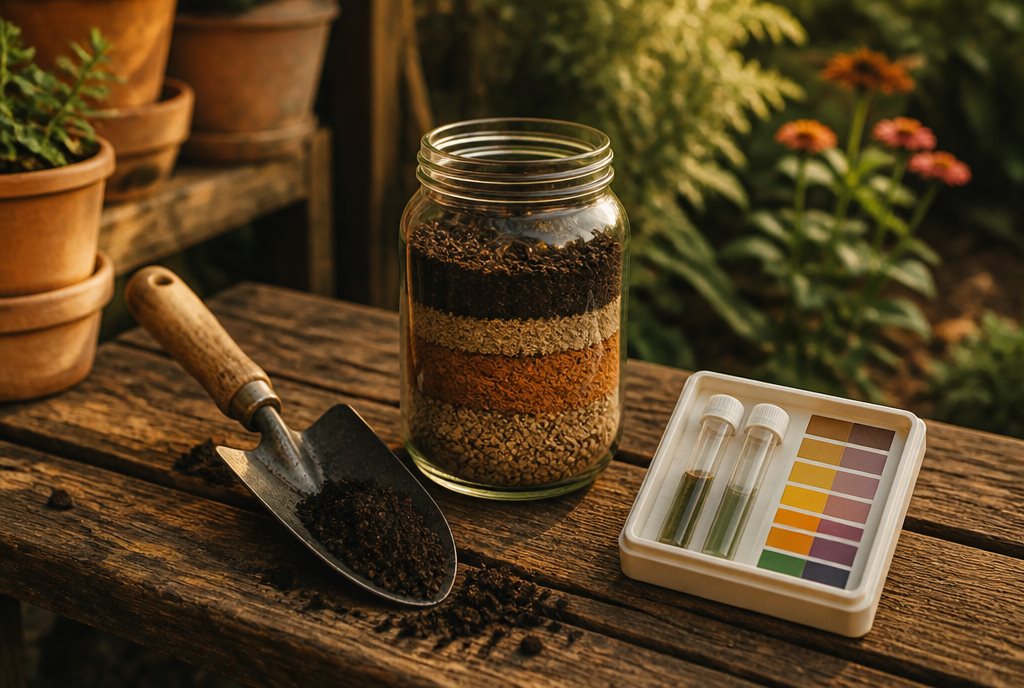
Gardens mostly fail underground, and gardeners mostly shop above it. When a bed sulks, the reflex is to buy something, fertilizer, amendments, a different variety, and try again. The raised-beds entry told anyone gardening near an old house to test their soil first; this entry is the promised how, and the case for why the humble soil test is the best ten dollars in gardening.
What a real test tells you: your soil's pH, its levels of the big nutrients, phosphorus, potassium, calcium, magnesium, its organic-matter percentage, and, if you ask, its lead level. Each of those is a dial you cannot read by looking, and each has ruined seasons for gardeners who guessed. The classic silent thief is pH: soil that is too acidic or too alkaline locks nutrients away from roots even when the nutrients are present, so fertilizing an off-pH bed is buying groceries for a locked pantry. Blueberries yellowing in sweet soil and hydrangeas refusing blue in it are the visible tips of a mostly invisible problem.
Where to test matters as much as whether: your state's cooperative extension service. Every state runs a soil lab or partners with one, and for roughly ten to twenty dollars you mail a bag of dirt and get back numbers plus, crucially, recommendations written for your region: add this many pounds of lime per hundred square feet, or none at all. The big-box-store test strips and dial probes are better than nothing for pH and nearly worthless for nutrients; the twenty-dollar lab report beats the twenty-dollar gadget every time, and the gadget does not test for lead.
Taking the sample properly is a five-minute job with two rules. Rule one: sample the root zone, not the surface; scrape aside mulch and take a slice from the top six inches. Rule two: one sample is a portrait of a spot, not a garden; take small slices from six or eight places in the bed, mix them in a clean bucket, and send a cup of the blend. Sample when the soil is neither soaked nor bone dry, and do not sample right after fertilizing, which is like weighing yourself holding the groceries.
Read the report in this order. First pH: most vegetables want 6.0 to 7.0, and if you are outside it, fix this before anything else, since every other number is filtered through it. Lime raises pH, sulfur lowers it, both work over months not days, and the report tells you the pounds; the eggshell entry already warned that kitchen amendments move this dial too slowly to count. Second, phosphorus and potassium: the common surprise in older gardens is too much phosphorus from years of habitual balanced fertilizer, and the fix is a nitrogen-only feed, not another scoop of 10-10-10. Third, organic matter: under about three percent explains compaction and thirst better than any pest theory, and the prescription is the compost entry, applied annually, not a product.
Nitrogen deserves its own paragraph because most reports do not test it: it moves through soil too fast for a number to hold. Nitrogen is managed by eye and by habit instead: pale, slow, older-leaves-first yellowing means hungry; lush jungle foliage and no fruit means overfed. The compost-and-mulch rhythm this almanac keeps prescribing holds nitrogen in the comfortable middle for most beds, with a side-dress of feed for the heavy eaters, corn, squash, brassicas, midseason.
The lead test is the one nobody enjoys and old-house gardeners need. Decades of leaded paint dust and leaded gasoline settled into the soil within arm's reach of pre-1978 walls and old roads, and vegetables, especially roots and greens, will carry it to the table. Ask for the lead screen when you submit; it is a few dollars more. A moderate number means manage it, mulch bare soil, wash and peel roots, plant fruiting crops there instead of lettuce; a high number near the house is exactly the case where the raised-beds entry's lined bed of clean fill stops being a style choice and becomes the answer.
While the mailed sample is away, two free tests read the soil's structure, which no lab report covers. The jar test: a cup of soil and water in a lidded jar, shaken hard, then left to settle overnight; sand lands in minutes, silt in an hour, clay by morning, and the layer widths tell you what you are working with, and whether the drainage advice in the watering entries needs adjusting up or down. The squeeze test: a damp handful pressed in the fist should hold its shape, then crumble at a poke. A ball that stays a ball is clay asking for compost; a handful that will not hold at all is sand asking for the same thing. Every soil problem, conveniently, shares one prescription.
How often: every three years is plenty for an established garden, or once now and once after any big renovation. Test in fall if you can, so slow amendments like lime have winter to work, and keep the reports; watching organic matter climb from one test to the next is the most honest report card gardening issues, better than any single season's harvest, which weather can fake in either direction.
The quiet argument for testing is what it stops you from buying. The garden center sells a remedy for every symptom, and an untested gardener is the ideal customer, treating a pH problem with fertilizer, a structure problem with pesticide, a phosphorus surplus with more phosphorus. Ten dollars of numbers replaces a hundred dollars of guesses, and it points every later dollar at the actual problem, which was underground the whole time, waiting to be asked.
New entries land here through the season.
Follow the garden day to day on Facebook