
Watering & care · Sep 19, 2026 · By Nell Harding
Skunk Holes in the Lawn: What the Cone Shaped Digging Means
Small cone shaped holes appearing across the lawn in September and October are almost always a skunk following the smell of grubs fattening up underground, not the lawn itself failing. What the holes are telling you, and what is worth doing about it.
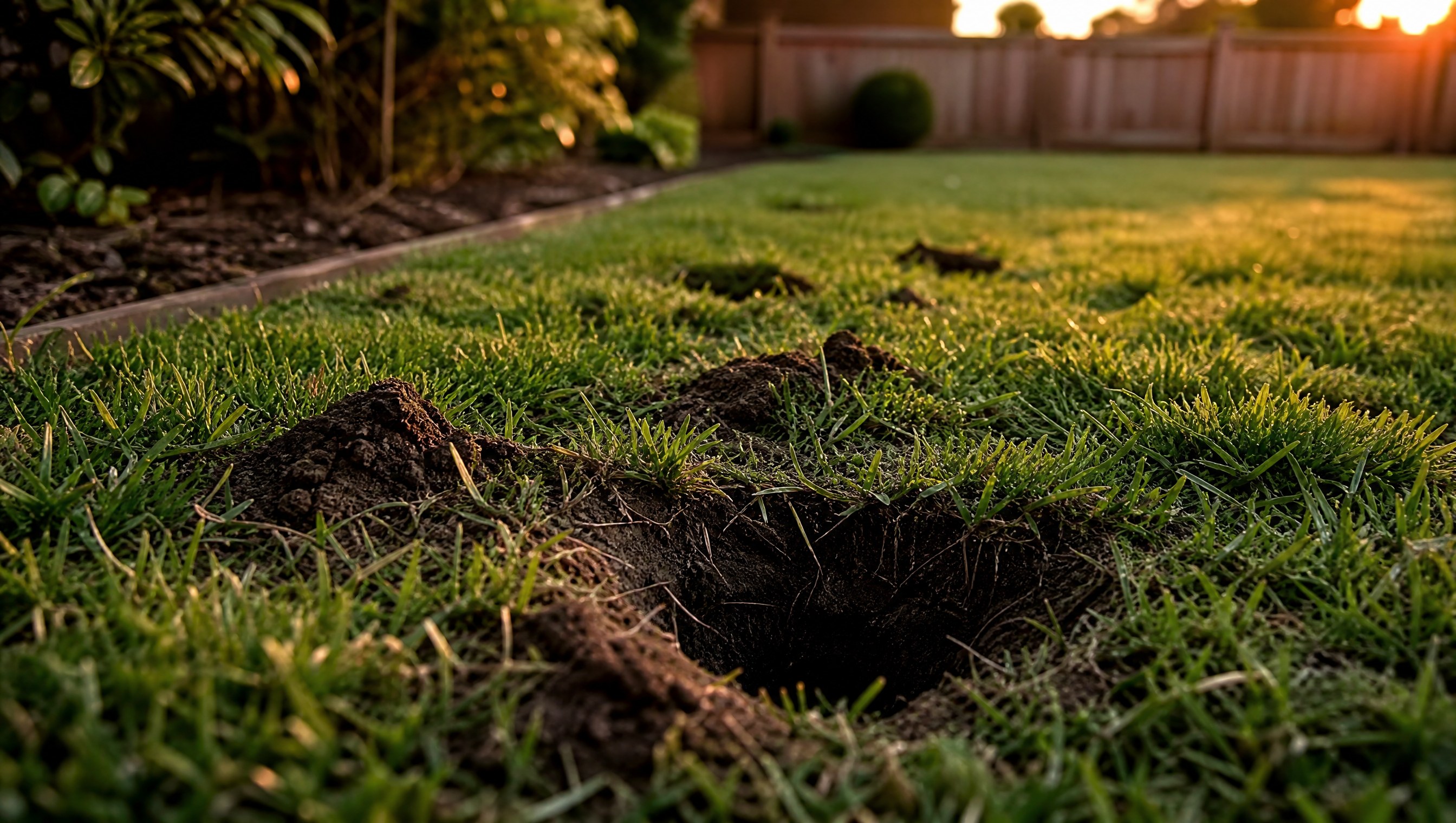

If your lawn has started looking like it took a light case of buckshot overnight, small round cone shaped holes an inch or two across scattered across a patch of grass, the cause is very rarely the lawn. It is almost always a skunk, and it is working on a schedule that runs from late September through October.
White grubs, the C shaped larvae of Japanese beetles and June beetles, spend late summer feeding on grass roots close to the surface. UMass Extension turf management guidance places the peak grub feeding window in September, right as grubs are putting on the weight they need before moving deeper into the soil to overwinter. That shallow, fattening population is exactly what a skunk is smelling and digging for, and the timing of the holes lines up with the grubs, not with anything the grass did.
The shape of the hole is the tell for who is doing the digging. A skunk uses its front claws to punch a narrow, neat, cone shaped hole straight down into the turf, usually leaving the surrounding grass mostly intact, just a small crater an inch or two wide and an inch or two deep. Ohio State University Extension's guidance on nuisance lawn digging draws a clear line between that and raccoon damage, which instead pulls up whole flaps or strips of sod, rolling the turf back like a rug to get at the same grubs underneath. If you are finding small tidy cones, it is a skunk. If you are finding lifted sod, it is a raccoon, and often the same lawn hosts both over a season.
The number of holes is a rough population signal worth taking seriously rather than a cosmetic problem to rake over. A skunk does not dig for entertainment; it digs where the smell is strongest, so a lawn peppered with dozens of holes in one section is reporting a real grub population in that section, not a random nuisance. That is useful information even if you decide to do nothing else about it, because it tells you which part of the lawn is thinning from root damage underneath, sometimes before the yellowing shows up on top.
What you do next is genuinely a choice between two reasonable paths, not a problem with only one right answer. Tolerating it means accepting a rough looking lawn for a few weeks; the holes are shallow, they do not kill grass on their own, and most turf recovers on its own once the digging stops. Treating it means addressing the grubs directly, and the timing matters: a targeted grub treatment applied in September, while grubs are still small and feeding near the surface, is far more effective than the same product applied later once grubs have moved deeper to overwinter. A soil sample or a simple turf pull test, lifting a square foot of sod to count grubs underneath, tells you whether the population justifies treatment or whether the digging is a handful of holes from a skunk passing through rather than a real infestation.
One thing not to do is try to confront or chase off the animal doing the digging. Skunks are most active at dusk and after dark, exactly when a homeowner is most likely to walk outside and startle one, and a startled skunk sprays first and identifies the threat second. If you see one working the lawn, the right move is to go back inside, turn on an outdoor light if you have one, and let it finish and move on; skunks are not territorial about a single yard and rarely return to the same spot for more than a few nights running once the shallow grubs in that patch are gone.
The digging itself has a natural end date that does not require any intervention at all. As soil temperatures drop through October, grubs stop feeding near the surface and burrow down below the frost line to overwinter, and skunks lose the smell trail that was drawing them to the lawn in the first place. The holes stop appearing on their own once the ground cools, usually within a few weeks of the first hard frost, regardless of whether you treated for grubs or simply waited it out.
It is worth separating this from the deeper, wider excavations that show up around foundations, under sheds, or along fence lines in the same season, because those usually mean a skunk or a groundhog is looking for a place to den for winter rather than looking for food. Den digging tends to be a single larger opening with a mound of displaced soil at the entrance, not a scatter of small shallow cones across open turf. If you are seeing one obvious burrow start rather than dozens of pinprick holes, the conversation shifts from grub management to exclusion, and the timing for blocking off a spot under a structure is best handled before the animal commits to it for the winter, not after.
A reasonable middle path, if a full insecticide application feels like more than the situation warrants, is a nematode treatment for the grubs specifically, which several extension programs list as an effective option for light to moderate grub populations without the broader residue of a synthetic grub killer. Beneficial nematodes applied to moist soil in September, while grubs are still feeding near the surface, seek out and kill the larvae directly, and because the treatment targets grubs rather than the skunk, it also removes the food source without any direct action against the animal doing the digging.
The other quiet upside worth naming is that a skunk working your lawn for grubs is, in a narrow sense, doing free pest control on a problem you might not have noticed yet. A lawn with no grubs holds no interest for a passing skunk, so the holes are also a kind of early warning you would otherwise only get once the turf started browning and pulling up in loose mats next spring, by which point the grub damage is well past the easy September treatment window.
So the honest read on a lawn full of small cone shaped holes this month is that something in the grass got successfully turned into skunk dinner, not that anything is broken. The grass will fill back in. The question worth answering with a shovel and a square foot of sod, before reaching for a bag of insecticide, is simply whether the grub population underneath is large enough to matter to you next spring, or whether this is one skunk's opinion of one bad patch that time will settle on its own.
