Planting & timing · Jun 9, 2026 · The 2026 edition
The case for wasting a row on flowers
Five square feet of the right blooms buys pollination, pest control, and cut flowers. The vegetables profit.
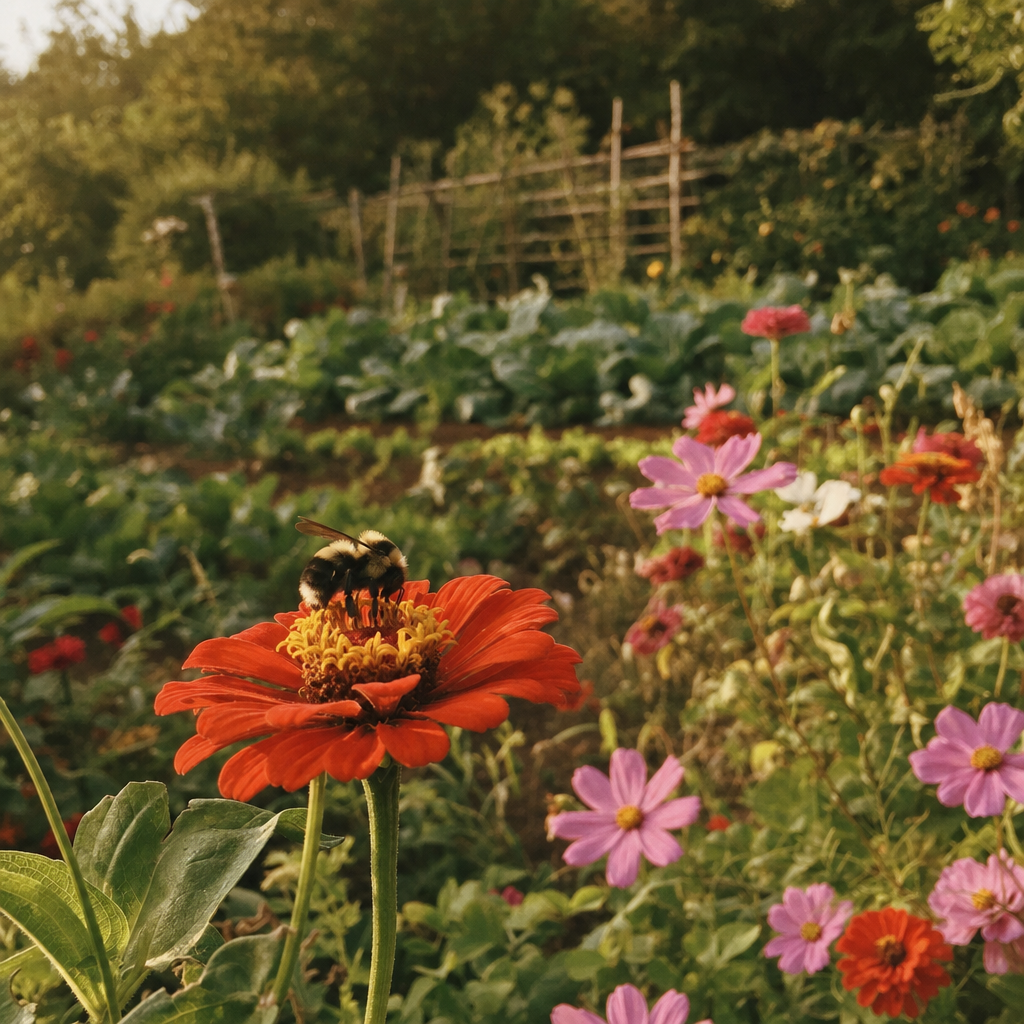
Every serious vegetable gardener eventually faces the accusation, from a spouse, a neighbor, or their own spreadsheet brain, that the flower row is wasted space that could be growing food. This entry is the rebuttal. A strip of the right flowers is not decoration bolted onto a vegetable garden; it is infrastructure, and it pays its rent three ways before you ever cut a stem for the table.
Payment one is pollination, and it is the least optional. Squash, cucumbers, melons, and pumpkins produce separate male and female flowers and set exactly zero fruit without an insect ferrying pollen between them; tomatoes and peppers self-pollinate but set measurably more and better-shaped fruit when bumblebees buzz them. If you have ever grown a squash plant that bloomed magnificently and fruited barely at all, or picked cucumbers curled like commas, you have seen a pollinator shortage wearing a disguise. Flowers are how you hire the workforce: a garden with continuous bloom nearby simply sets more fruit than one surrounded by lawn.
Payment two is the one that surprises people: pest control. The tiny wasps and hoverflies that parasitize aphids, caterpillars, and other pests are not carnivores their whole lives; the adults run on nectar, and specifically on the small, shallow flowers their short mouthparts can reach. Sweet alyssum, dill and cilantro left to bloom, cosmos, and calendula are their filling stations. Plant them and the predator population moves in and patrols; skip them and you fight the aphids alone. This is the quiet reason organic market farms edge their fields with alyssum: it is not for the looks.
Payment three is morale, which sounds soft until you audit it. Zinnias from a two-dollar packet produce armloads of cut flowers from July to frost, the more you cut the more they make, and a garden that hands you a bouquet every week is a garden you visit daily, which, as the harvest-signals entry argued, is itself a yield strategy. Gardens get tended in proportion to the pleasure they give. Flowers compound that.
So which flowers? The list is short, cheap, and deliberately unfussy, all direct-sown annuals happy in vegetable-bed conditions. Zinnias: the workhorse, beloved by butterflies and bees, endless bloom, immortal in heat. Cosmos: feathery, drought-proof, hoverfly heaven. Sunflowers: the branching kinds, not the single-stalk giants, bee magnets and bird feeders that double as a windbreak on a bed's north edge. Sweet alyssum: the ground-level carpet the beneficial wasps prefer, tuck it at bed edges and under tall crops. Calendula: blooms in the cool shoulders of the season when little else does, and self-sows politely. Add borage if you grow squash (bees abandon almost anything else for it) and nasturtiums for the bonus trick below.
Placement matters more than quantity. Pollinators work in patches, not scavenger hunts: a three-foot clump of one flower out-recruits the same plants scattered singly down a row. Put clumps at bed ends and corners where they shade nothing, string them so something is always blooming within twenty feet of the squash, and let a few dill, cilantro, and carrot plants bolt into bloom on purpose; their umbrella-shaped flowers are beneficial-insect banquets that cost you nothing but the pulling you were going to do anyway.
Nasturtiums earn their own paragraph for playing offense: they are a trap crop. Aphids, especially black bean aphids, prefer nasturtiums to nearly everything you actually care about, so a patch near the beans and brassicas concentrates the pests on sacrificial foliage where ladybugs find them in bulk (and where a strong hose blast settles the rest). The flowers and leaves are peppery-edible besides. A plant that absorbs pests, feeds pollinators, and garnishes a salad is not wasting anyone's row.
Two honest cautions so this stays an almanac and not a brochure. First, skip the 'wildflower meadow mix' cans for this job: they are mostly filler grasses and one-season wonders, and the vegetable garden wants specific workers, not confetti. Buy straight packets of the six above. Second, if pest control is half your motive, the flowers only recruit an army; they do not deputize you to spray one. Broad-spectrum insecticide on a flower strip kills the very hires you made, pollinators and predators alike. Plant flowers or spray broadly; you cannot usefully do both.
The math to leave with: five square feet given to zinnias, alyssum, and a borage plant costs perhaps two pounds of potential green beans, and buys fuller squash set, a standing anti-aphid patrol, cut flowers all summer, and a garden loud with bees. Nobody who runs that trade for one season goes back. Waste the row. It is the most productive waste in the garden.
New entries land here through the season.
Follow the garden day to day on Facebook