
Watering & care · Sep 12, 2026 · By Nell Harding
Stop Deadheading the Roses in September
All summer the snips told the rose to make another flower. Now the rule flips. What a rose does in September, why the hips matter, what to stop, what not to stop, and when the mulch goes on.
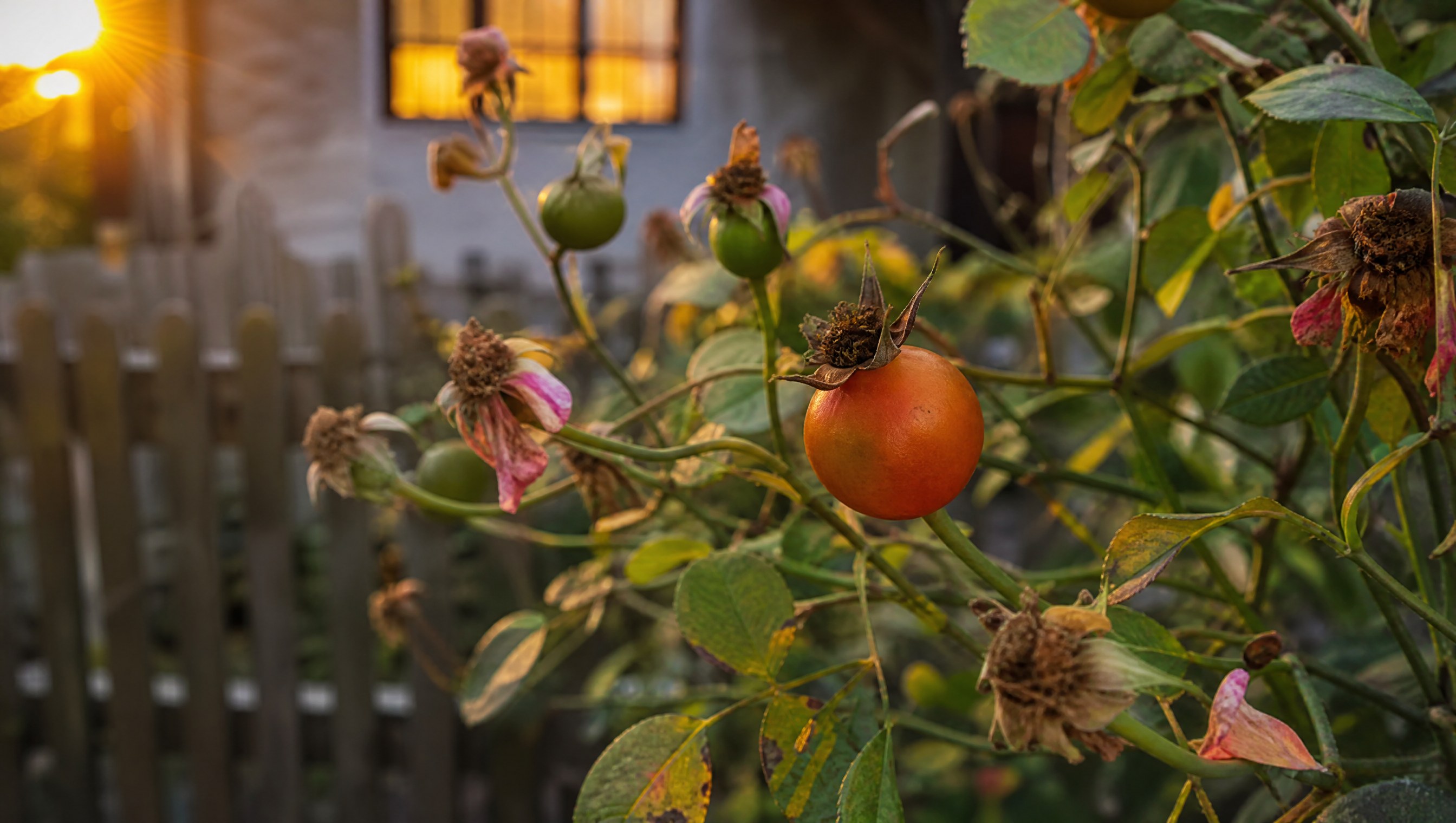

Since June the rose has been running on a simple deal. You cut off the spent flower before it could set fruit, and the plant, denied its fruit, made another flower to try again. Deadheading is nothing more than that: a rose trying to reproduce and a gardener quietly preventing it. It is the reason a repeat-blooming rose repeats. And in September, in most of the country, it is time to stop, because the flower the rose would make next is one it cannot afford.
What a hip does to a rose
Leave a spent flower on the cane and the swelling at its base fattens into a hip, which is the rose's fruit, a small round or oval berry that goes from green to orange to red through the fall. Iowa State University Extension puts the effect plainly: the development of hips slows plant growth and helps prepare the rose for winter. A rose with fruit on it stops behaving like a plant in June and starts behaving like a plant in October, which is what you want it to be.
The growth it stops making is the important part. A rose that is still being deadheaded in late September keeps pushing new canes, and those canes are soft, red, full of water and weeks away from the woody hardness that survives a freeze. The first hard frost blackens them. In April you prune off the dead ends, and the plant has spent the last of its summer energy on wood it never got to use.
When to stop, by where you live
The rule in most of the fall rose guides is six to eight weeks before your first expected frost. Iowa State says September outright for hybrid teas, grandifloras and floribundas, because in Iowa the frost comes in early October and September is the six-week mark.
If your first frost is in mid-October, stop now. If it is the end of October, you have until about the middle of the month. If you garden on the Gulf Coast or in the low desert and the roses bloom until Thanksgiving, count back six weeks from your own first frost date and stop then, which may be late October or later. The rule is the same everywhere. The date is not.
The bush will tell you when it has taken the hint. Within two or three weeks of the last deadheading the new growth slows, the leaves at the tips stop coming out red and start coming out green, and the swellings under the old flowers go from the size of a pea to the size of a marble. A rose that is still throwing red shoots in the middle of October was deadheaded too late for its climate, and the note for next year is to stop two weeks earlier.
Stop the feeding too
Fertilizer does the same thing deadheading does, from the other direction. It tells the rose to grow. The same guides that say stop deadheading six to eight weeks before frost say stop feeding six to eight weeks before frost, for the same reason. If the last feeding of the year went on in August, that was the last one. If you are still tempted, a rose that has been fed all summer has everything it needs in the cane and the root already.
Do not stop the water
This is the one that catches people. The top of the rose goes quiet in the fall, and it is natural to assume the whole plant has. The roots have not. They keep growing until the ground freezes, and a rose that goes into winter dry is a rose that comes out of it weak. Keep watering deeply, once a week if the fall is dry, right up until the soil is frozen. September and October rain usually does this for you, but a dry fall is the time to pay attention.
Do not prune yet either
Hard pruning is a spring job. Cutting a rose back in the fall opens wounds that do not heal before the cold, and it removes cane that the plant would use as insurance over winter. If a cane is so long it will whip around in the wind and rock the roots loose, shorten that one cane by a third and leave the rest. Everything else waits for April, when you can see what died.
What the hips are for
Beyond what they do to the plant, hips are food. Finches, waxwings and thrushes take them through the winter, and a rose bush with a hundred red hips on it in January is one of the few things in the yard still feeding anything. The rugosa roses and the old shrub roses make the biggest ones, fat and red as a cherry tomato, and those are the ones people dry for tea. Rose hip tea was a wartime ration in Britain when the oranges stopped coming, for the vitamin C. The hybrid teas make smaller hips that are not worth the kitchen but the birds still find them.
When the mulch goes on
Not yet. Winter protection for a tender rose, the mound of soil or mulch over the graft, goes on after the ground has frozen, not before. Put it on in September and you keep the base warm and growing when it should be going dormant, and you make a snug home for mice. Wait for a hard freeze, usually November in the middle of the country, then mound eight to twelve inches over the crown. The point is to keep the plant frozen and asleep, not to keep it warm.
So the September list is short. Hang up the snips. Put the fertilizer away. Keep the hose. Leave the pruning saw in the shed. And go and look at the bush in three weeks, when the first hip has turned orange and the rose has finally been allowed to finish what it has been trying to do since June.
