
Planting & timing · Aug 24, 2026 · By Nell Harding
Your Mums Are Measuring the Night
Chrysanthemums do not bloom by thermometer. A pigment in their leaves counts the dark hours each night, and the buds on your porch pot are the paperwork of a season that has not visibly arrived.
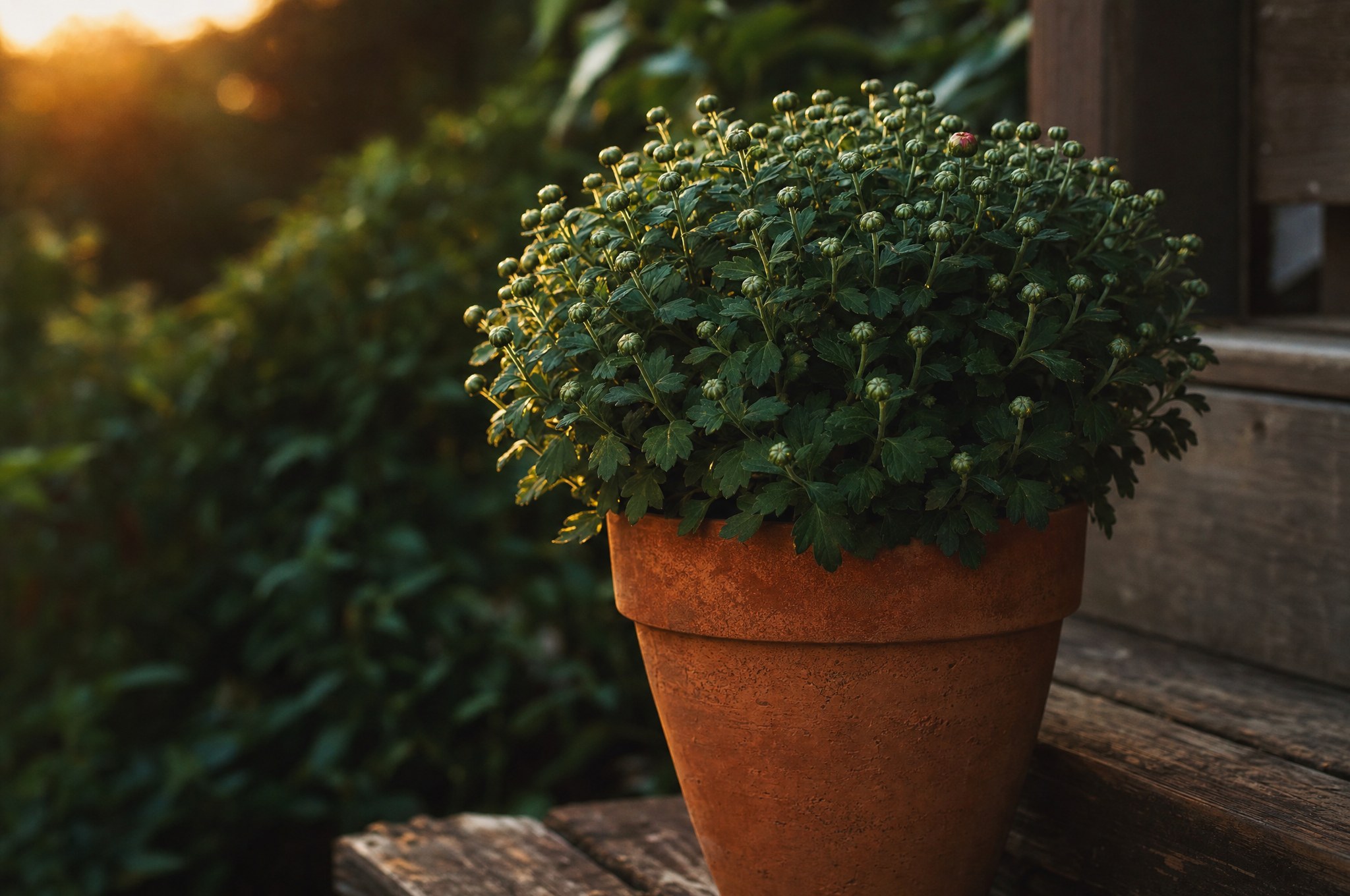

Look under the leaves of a pot of garden mums this week and you will find the whole crown knuckled with tight green buds. The maples are still green, the tomatoes are still coming, and the mums have already filed their paperwork for fall. They did not guess. They measured, and what they measured was the night.
Chrysanthemums belong to a class botanists call short-day plants, which is a slightly crooked name for what is really going on. The plant is not timing the day at all. It is timing the darkness. Once the unbroken night stretches past a threshold, roughly nine and a half hours for most garden mums, the growing tips get a standing order: stop building stems, start building flowers.
Nobody knew plants could do this until two American government scientists got stuck on a tobacco problem. Around 1920, Wightman Garner and Harry Allard were working with a giant variety that grew ten feet tall in the Maryland summer and stubbornly refused to flower until winter greenhouse season. They tried heat, nutrition, and moisture, and nothing moved the date.
So they tried time itself. They grew plants in pots, and every afternoon wheeled one group into a dark shed, artificially shortening its day, while the control group stayed in the sun. The shed plants flowered. The others did not. Summer soybeans behaved the same way. The two men had found the switch, and they named the phenomenon photoperiodism.
The measuring instrument turned out to be a pigment called phytochrome, sitting in the leaves. It flips to one form in daylight and slowly relaxes back to the other in darkness, which makes it, quite literally, an hourglass made of molecules. The leaves take the reading and send the order up to the tips. The flower does not decide. It is told.
The proof of how strict the count is borders on comedy. Interrupt the middle of a long night with even a brief spell of light and the plant scraps the whole measurement and starts over. Not a shorter count. Cancelled. To a mum, a night with a flash of light in the middle is two short nights, and two short nights mean it is still summer.
Which is why your porch light is not a small thing. A bright security lamp burning close to the pot can genuinely stall a mum, interrupting the count night after night while the same variety two houses down blooms on schedule. If your mums run late every year and the light by the door runs all night, the mystery has an off switch.
Greenhouse growers run the whole system on purpose. Black cloth pulled over the benches in late afternoon fakes long nights and forces mums into bloom for any week of the calendar, and lamps burning through the small hours hold other crops back. Every florist mum you have ever bought in April was told a long, patient lie about what month it was.
Your porch pot needs no tricks, because it has been reading the actual sky. The nights have been stretching since the June solstice, quietly crossed the threshold in the last weeks of July, and the buds you can see now are the accumulated paperwork of that crossing. The plant knew fall was coming before any visible sign of it existed.
The mums have relatives on the same clock. Poinsettias and Christmas cacti are short-day plants too, which is why the houseplant advice for both always involves weeks of strict, uninterrupted darkness. And the system runs the other way as well: spinach and lettuce are long-day plants that read June's short nights as the order to bolt, which is exactly why they sulk in summer and sow so happily now.
Knowing the mechanism changes how you shop and where you set the pot. Buy plants budded tight, showing color on only a few, and the show unfolds for weeks on your steps instead of finishing in the store. Keep the pot where night is actually night. Cool evenings stretch the bloom; a warm porch and a bright bulb both shorten it.
And if you want the measurement to repeat, put the plant in the ground. Hardy garden mums planted by early September root in before frost and return on their own clock for years, no purchase required. Water the pot daily until then, plant it a hand deeper than it grew, and next August, while the maples are still green, the buds will appear again, right on the count. Not decoration. Instrumentation, in a clay pot, by the door.
