
Kitchen garden · Aug 31, 2026 · By Nell Harding
Every Squash Flower Lives One Morning. Spend Ten Seconds of It Wisely
A squash blossom opens at first light and closes for good by early afternoon, pollinated or not. When a plant covered in flowers hands you nothing but yellowing stubs, the morning shift is being missed. Here is how to tell the male flowers from the females, and the ten second hand pollination that fixes an empty vine.
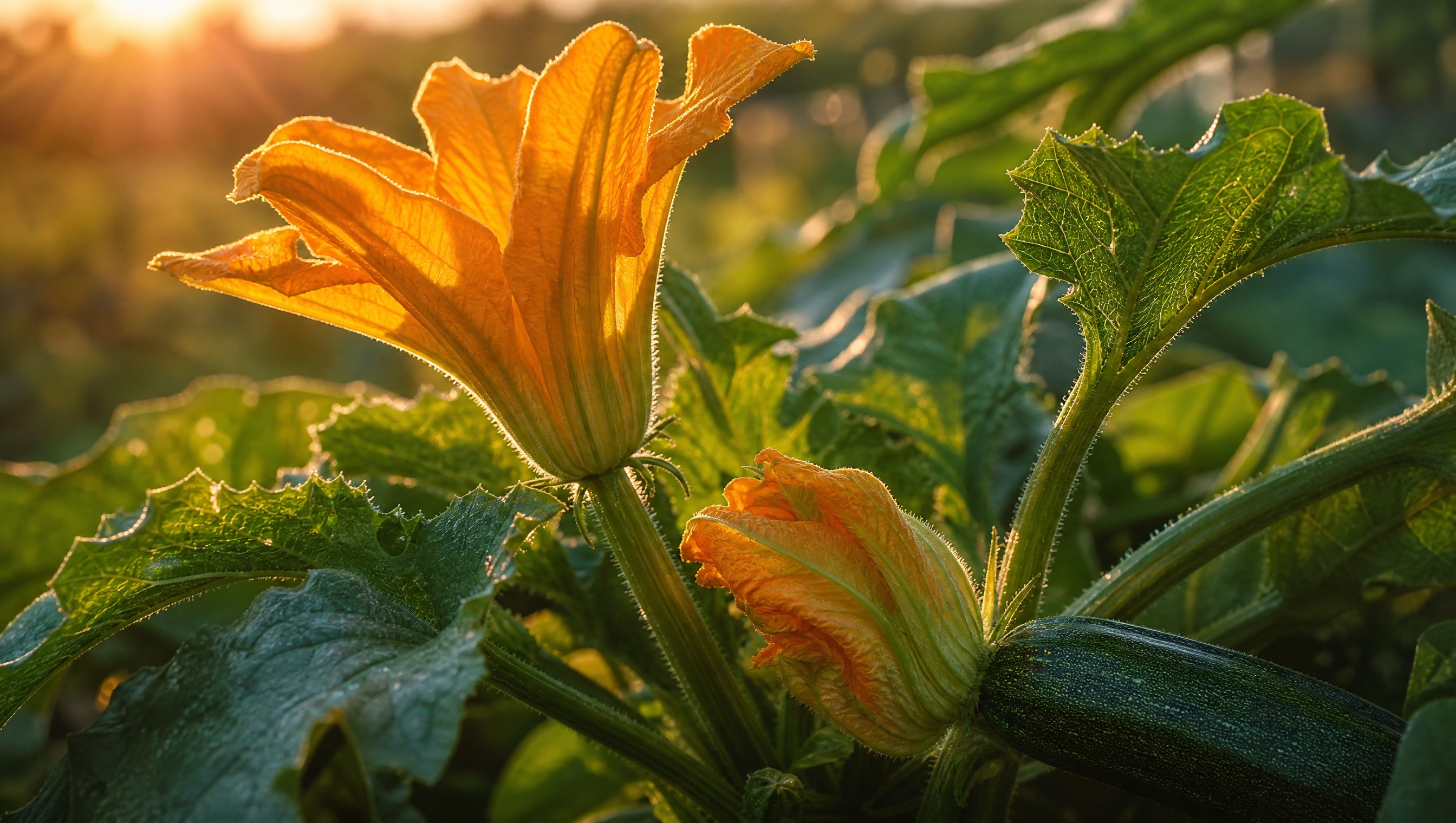

The big orange trumpets on your zucchini opened at dawn today, and by the middle of the afternoon every one of them will have closed for good. One morning each. That is the entire working life of a squash flower, and it is the single fact that explains the most common complaint in the late summer kitchen garden, a plant covered in blooms that hands you nothing to pick.
One flower, one morning
Squash, zucchini, pumpkins, and their cousins all run on the same clock. A bud swells for days, then opens at first light, holds open through the morning, and folds by early afternoon whether anything visited it or not. It never reopens. Tomorrow's flowers are different flowers, and today's are finished.
This is not a flaw. The plant is spending its bloom budget one morning at a time, keeping the pollen fresh and the timing synchronized with the insects that fly in the cool early hours. But it means the whole transaction of fruit set has to clear before lunch, every single day.
Two kinds of flowers
Walk out and look at the plant and you will see the flowers come in two builds. The males stand tall on long, thin, plain stems, usually in loose crowds. The females sit low and close to the crown, and each one carries the tell that makes this whole subject easy. Behind the female petals is a miniature squash, already shaped like the fruit to come, waiting on a decision.
There is also a specialist worth knowing about. Native squash bees, which look like small quick honeybees, run their entire lives on this one morning schedule. They fly at first light before honeybees are properly awake, work only squash family flowers, and the males famously spend their nights asleep inside the closed blossoms. A garden that sets fruit reliably without your help usually has them. A garden that does not is often just outside their range or short on the bare, undisturbed soil they nest in.
Weather runs the morning shift too. Bees fly reluctantly in rain and hardly at all in a cold dawn, and pollen itself clumps and moves poorly when it is soaked. A cool wet week in September can zero out fruit set on a perfectly healthy plant, which is exactly the week the ten second fix below earns its keep.
That little fruit is the whole story. If pollen crosses from a male flower to that female during her one open morning, the tiny squash starts swelling within a day or two. If the morning passes without a visit, the same little fruit stalls, yellows from the tip, and drops. Gardeners often read this as disease. It is almost always just a missed appointment.
It is also worth knowing that plants run male heavy on purpose, especially early in the season and again in stressful weather. A week of all male flowers on a young plant is normal patience, not failure. The problem worth fixing is females aborting after they open.
The ten second fix
When the bees are scarce, cool mornings, wet weeks, or a neighborhood short on habitat, you can do a morning's bee work yourself in about ten seconds. Go out early, while the flowers are wide open. Pick one fresh male flower, snap it off at the base of its long stem, and peel the petals back so the pollen covered center stands clear like a paintbrush.
Now touch that center gently to the middle of each open female flower, a soft dab all the way around the sticky structure at her core. That is the entire technique. One male can serve two or three females before he is spent. Done before mid morning, the strike rate is close to perfect, and the little squash behind the petals will tell you within two days that the message arrived.
A small artist's paintbrush works just as well if you would rather not pick the flower. Swirl it in the male, dab it in the female, and rinse nothing. The pollen is meant to travel dry.
The bonus harvest
Here is the part the old kitchen gardens never wasted. Those surplus male blossoms are one of the oldest vegetables almost nobody harvests anymore. Picked at mid morning, after they have done any courting you need, they can be stuffed with soft cheese and fried, or torn into eggs, without costing you a single future zucchini. Take only the long stemmed males. The short stemmed flowers are carrying the crop.
One more September note. Fruit that sets in these last warm weeks races the calendar, and a zucchini needs roughly a week from a successful morning to picking size, a winter squash a good deal longer. Anything your hand pollinates now through mid month will make it to the table in most of the country. Later than that, favor the zucchini and summer types with their short sprint, and let the last female flowers on the pumpkins go to the fritters instead. The plant is going to spend those mornings either way. The only question is whether you collect.
Through September, the plant will keep offering one morning windows until the first real frost closes the season. Each warm dawn between now and then is another small appointment you can keep. Ten seconds, before lunch, and the vine stops handing you excuses.
