Watering & care · May 5, 2026 · The 2026 edition
What the three numbers on the fertilizer bag mean
N-P-K is the whole alphabet of plant feeding. Learn three letters and the fertilizer aisle stops shouting.
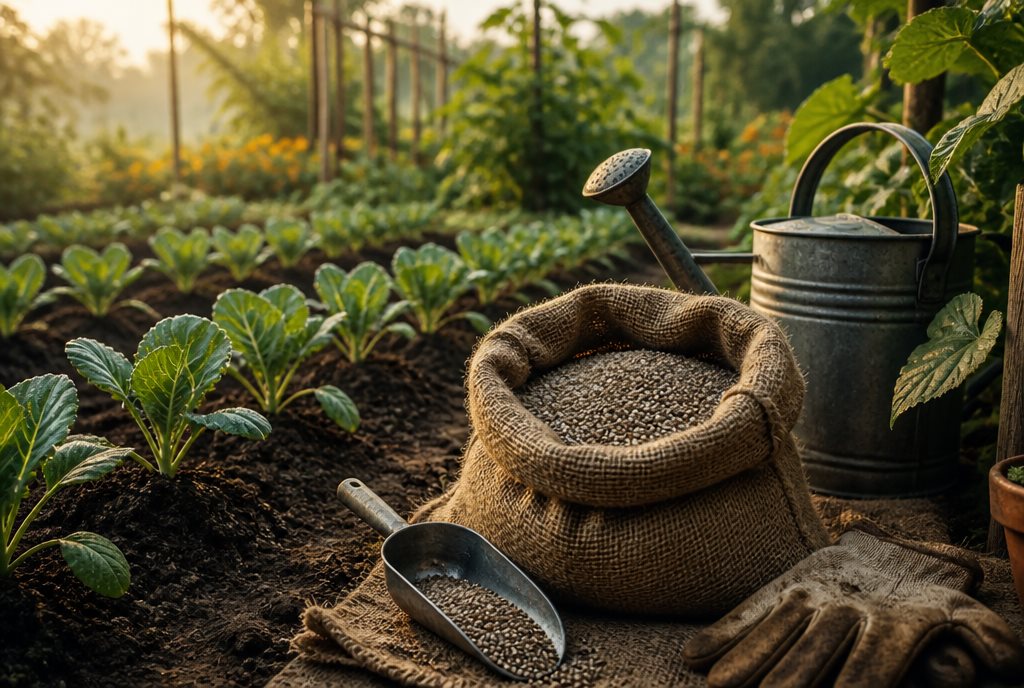
Every fertilizer package, from the fifty-pound farm sack to the boutique bottle of tomato elixir, carries the same three numbers, and most of the aisle's confusion dissolves the moment you can read them. They are N-P-K: the percentage by weight of nitrogen, phosphorus, and potassium, always in that order. A bag of 10-10-10 is ten percent of each; the rest is carrier. That is the entire code. The rest of this entry is what to do with it.
Each letter has a job, and an old saying holds the jobs in order: up, down, and all around. Nitrogen (N) is up: leaves, stems, green growth, the engine of the salad bed. Phosphorus (P) is down: roots, and the energy chemistry behind flowers, fruit, and seed. Potassium (K) is all around: water regulation, disease resistance, cold hardiness, the plant's constitution. Deficiencies read the same way: pale older leaves reaching yellow is hungry-for-N; purple-tinged, stalled seedlings lean P; scorched leaf edges on an otherwise fed plant lean K.
The saying also explains the aisle's marketing. 'Lawn food' is high first number, because lawns are leaves. 'Bloom booster' is high middle number, because flowers answer to phosphorus, at least on the label; more on that below. 'Winterizer' leans potassium. Tomato foods run modest N and higher P and K, because a tomato plant fed hard on nitrogen becomes the neighborhood's most impressive producer of leaves. There is no secret formula behind any of it; there are three dials, and each product turns one up.
Now the correction the soil-test entry already set up: most established gardens do not need the middle number. Phosphorus binds tightly to soil and accumulates; decades of habitual 10-10-10 leave many older beds carrying years of P reserves, and adding more buys nothing except algae blooms in the nearest creek, which is why several states now restrict phosphorus lawn fertilizer outright. This is exactly what the ten-dollar soil test reads: if your P and K rows come back 'high,' the honest purchase is a nitrogen-forward bag, and the bloom booster stays on the shelf. Feeding P you already own is the aisle's most reliably wasted dollar.
Organic versus synthetic is a slower-versus-faster question, not a stronger-versus-weaker one. Synthetic granules and blue-water mixes are salts: fast, precise, cheap, available to roots within days, and gone within weeks, with nothing left behind for the soil. Organic sources, composted manure, feather meal, bone meal, kelp, alfalfa, carry lower numbers (a 3-4-4 is respectable) and release over months as soil life digests them, feeding the microbe economy the compost entry described while they feed the plant. The almanac's practical split: organic matter as the base diet every year, synthetic as the espresso shot for a heavy feeder in-season, and never the espresso alone, which is how soil becomes an inert growing rack.
Numbers also hide in the dose, which is where most real damage happens. More is not faster: over-fed plants grow soft, sappy tissue that aphids adore, shrug off fruiting in favor of foliage, and in bad cases burn, the browned leaf edges of a root zone turned briny. Granular feeds want scattering at the labeled rate and watering in; liquid feeds forgive best at half strength, twice as often, as the container entry already prescribed for pots, whose small soil volumes concentrate everything, mistakes included. When in doubt, halve the label; no vegetable ever failed from a week's patience.
Timing beats quantity. Feed when growth is actually accelerating: a nitrogen side-dress when corn hits knee height, when squash starts to run, when brassicas begin heading, and a settling-in feed at transplant. Skip late-season nitrogen on anything you want to ripen rather than grow, and stop feeding perennials and shrubs by late summer so the new growth they push has time to harden before frost, a rule the calendar pages repeat each fall. A plant fed at the wrong moment converts fertilizer into work: more pruning, more staking, more aphids.
So the shopping trip, decoded: soil test first, as the soil-test entry argued, because it tells you which of the three dials your garden actually needs. For most vegetable beds the honest cart is compost in quantity, one bag of a balanced or nitrogen-forward organic granular for the heavy feeders, and nothing with 'booster' on it. Read the three numbers, halve the label rate, feed at the growth spurts, and let the soil, not the shelf, decide the formula. The bag was never complicated. It just counted on you not reading it.
New entries land here through the season.
Follow the garden day to day on Facebook