
Garden myths · Aug 29, 2026 · By Nell Harding
Do the Bees Really Go Home Before Rain? The Old Sign, Tested
Beekeepers have sworn by it for centuries: when the foragers quit the flowers early, weather is coming. Modern hive research says they are right, and the reason is stranger and better than the folklore. Here is how to run the check from your own goldenrod patch.
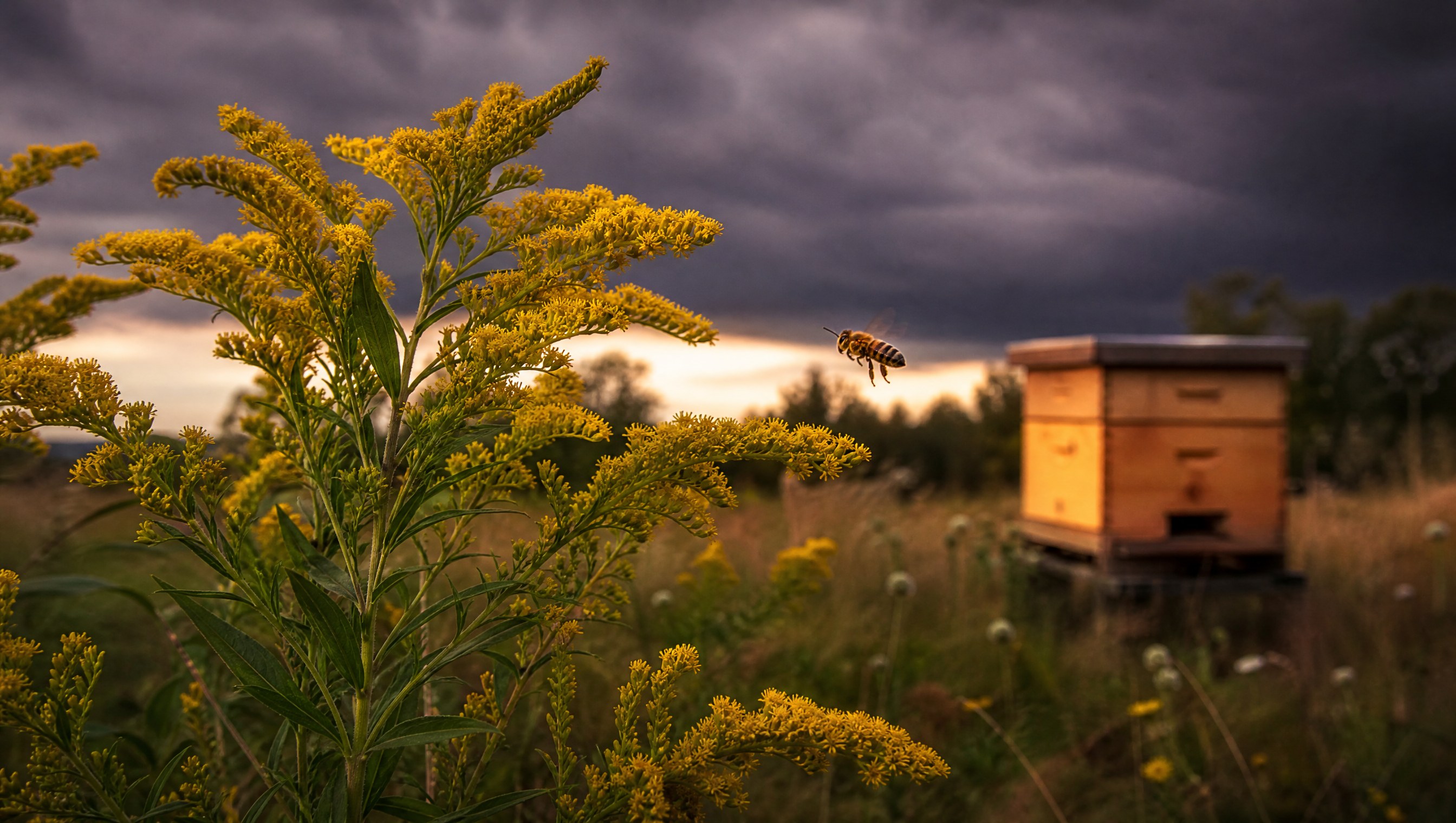

Of all the old weather signs, this one has the best witnesses. Beekeepers, who stand beside the same hive every day for years, have said it for centuries: when the bees come home early and the flowers go quiet, rain is on the way. It turns out they were not imagining it.
A honeybee is a flying barometer. She is sensitive to falling air pressure, to rising humidity, to the flattening of light as clouds thicken, and she reads all three at once while she works. A wet forager is a grounded forager, and a chilled one is a dead one, so the colony treats approaching rain as a schedule change, not a surprise.
Watch a working patch of goldenrod on a fair afternoon and it hums like a small economy. Dozens of foragers, each making trip after trip between the flowers and the hive. Then, sometimes while the sky still looks perfectly harmless, the shift ends. Traffic thins, the last workers lift off and line out for home, and the patch sits strangely still. Very often the first drops land within the hour.
This is not just anecdote anymore. Researchers who tagged hives, including a well-known study out of the University of Sussex, found that colonies change their working pattern around storms. Foragers return ahead of rain, frequently just minutes before it starts, responding to the atmospheric slide rather than to the drops themselves. The bees feel the pressure drop before your knees do, and long before your phone sends the alert.
The part the folklore missed
Here is the finding that makes the old sign even better. The day before a major storm, hives do not slow down. They speed up. Tagged colonies foraged harder and kept working later into the evening ahead of big weather, stocking the pantry before a long confinement. The colony is not merely hiding from rain; it is provisioning for it.
So the sign actually has two readings. A suddenly empty flower patch on a warm afternoon means rain soon, likely within the hour. A patch that is frantic at dusk, still busy when the light is nearly gone, can mean the bees are banking against tomorrow. One instrument, two forecasts, and both come free with the goldenrod.
How to run the check
Pick a patch of late-summer bloom you pass anyway. Goldenrod is ideal right now because it is the biggest nectar counter still open, but asters, sedum and even a flowering herb bed will do. Glance at it on a warm, still afternoon and give it ten seconds. Humming means carry on with your plans. Strangely quiet, on a day warm enough that it should be busy, means look west and bring the cushions in.
Calibrate honestly. Bees also stay home when it is cold, below roughly fifty five degrees, when it is blowing hard, or early in the morning before the day warms. The sign only means something when conditions are otherwise good for flying. An empty patch on a raw, windy morning is just a raw, windy morning.
Bumblebees, for what it is worth, play by rougher rules. They fly colder and damper than honeybees and will sometimes work right up to the first drops, so an empty patch reads most reliably where honeybees are the main traffic. If your patch mixes both, watch the striped commuters specifically.
It will not beat the radar for precision, and it does not need to. What it gives you is a reason to actually look at the garden you built, and a forecast written in behavior rather than pixels. The colony has been running this system for millions of years without a single software update.
There is a practical bonus for the gardener beyond the forecast. Reading the patch daily tells you how well your late-summer plantings are actually feeding the neighborhood. A goldenrod stand that hums every fair afternoon is doing more for the local hives than a whole tray of summer annuals, and it will do it again next year without being asked.
Try it against the weather app this weekend. Stand by the goldenrod, make your call, then check the radar. Keep score for a week. Most gardeners who try it come away treating the flower bed as a second, older instrument panel, one that happens to pollinate the squash while it works.
