Kitchen garden · Jun 12, 2026 · The 2026 edition
The honest guide to growing food in pots
A patio can feed you more than you'd think, if you skip the crops that hate containers and fix the one thing that kills the rest.
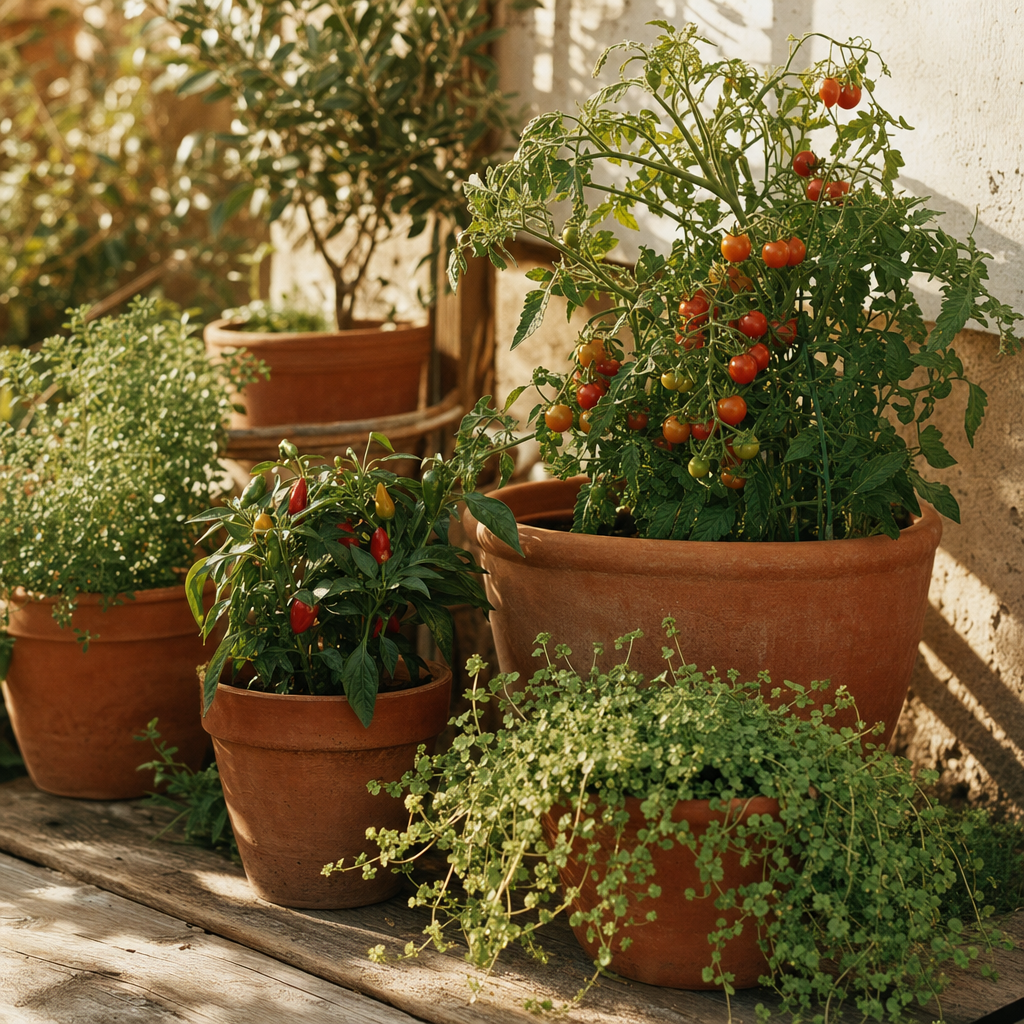
Container gardening gets sold two ways, both wrong. The catalogs promise a full vegetable garden on a balcony, which sets people up for stunted disappointment. The soil purists dismiss pots as gardening with training wheels, which is snobbery. The truth: a container garden is a real garden with one altered law of physics, and everything that succeeds or fails in pots traces back to that law. A pot is an island. Its plant can only ever have the water, food, and root-room you put inside the rim.
That law's first casualty is the word 'soil.' Garden dirt in a pot compacts into an airless brick, because the soil life and worm channels that keep ground soil breathing do not fit in a bucket. Containers want potting MIX, the fluffy bagged stuff that is mostly no soil at all, and this is the one purchase where cheaping out ruins the season. The second casualty is pot size, and the beginner error is always the same direction: too small. Small pots are not humble; they are cruel. They swing from soaked to bone dry in an afternoon and cook roots in the sun. When in doubt, go one size bigger; a five-gallon bucket is the honest minimum for a tomato.
Watering is where containers stop being easier than beds and become more demanding. An island has no water table to sip from, and a big plant in July can empty its pot daily, sometimes twice in a heat wave. The finger test still governs (dry two knuckles down means water), but the rhythm is daily checking, and the technique is: water until it runs from the drainage holes, which guarantees the whole root ball drank, then stop until dry again. Which requires drainage holes, no exceptions, no gravel-layer folklore: a rock layer does not create drainage, it just raises the soggy zone closer to the roots. Holes or a different pot.
Feeding follows the same island logic. Beds feed plants from a pantry of decomposing organic matter; a pot's pantry is six weeks deep, and every thorough watering rinses a little more of it out the bottom. From about a month in, container crops live on what you bring: a half-strength liquid feed every week or two through the fruiting months. The gardener who waters religiously but never feeds gets a lush green June and a fruitless August, and it looks like mystery when it is arithmetic.
Now the crop list, sorted honestly. The container all-stars: herbs (better in pots than beds, since basil, mint, and rosemary all enjoy the drainage, and mint NEEDS the containment), cherry tomatoes, peppers, eggplant, lettuce and other cut-again greens, radishes, bush beans, and strawberries, which were practically designed for pots. The doable-with-care tier: full-size tomatoes (huge pot, daily water, real support), cucumbers (pick a bush variety), potatoes in grow bags (a genuinely fun harvest, like digging treasure), and carrots if the pot is deep and the variety short.
And the skip list, where the island law wins: sweet corn (needs a crowd for pollination that no balcony holds), watermelon and winter squash (one plant wants more root than a barrel offers), asparagus and other deep perennials, and anything you eat by the pound rather than the handful, storage potatoes, bulk onions, a winter's worth of anything. The bed grows quantity; the pot grows quality within arm's reach. Fighting that division is where container disappointment lives.
Placement is the container gardener's superpower, so use it like one. Fruiting crops want your six-plus-hour sun pocket, wherever it is, and pots can chase it around a patio through the season in a way no bed can. Greens prefer the spot that gets morning sun and afternoon mercy. And everything on wheels or within a saucer's reach of the kitchen door gets watered, harvested, and noticed; the pot around the corner quietly dies. The best container garden is the one in your daily path.
Two cheap upgrades change the game more than any gadget. Light-colored or double-walled pots keep roots cooler than black plastic, which can hit root-killing temperatures on a July patio (or simply shade the pots' sun side with the plants themselves or a board). And self-watering containers, the kind with a reservoir below, convert the daily-watering chore into an every-few-days top-up; for anyone who travels or forgets, they are the difference between a garden and a regret.
Done honestly, a dozen well-chosen containers produce something real: daily salads, all the herbs a kitchen can use, bowls of cherry tomatoes, a steady pepper supply. That is not a lesser garden. It is the concentrated version, and for the crops that suit it, arm's-reach beats a back forty every time.
New entries land here through the season.
Follow the garden day to day on Facebook